Conwy County Borough Council has taken a formal step to strengthen the presence of Welsh in its workplaces by signing the TUC Cymru Twf Charter on 16 June. The move commits the council to working in partnership with trade unions and staff to increase opportunities for employees to use and develop their Welsh language skills.
What the charter means locally
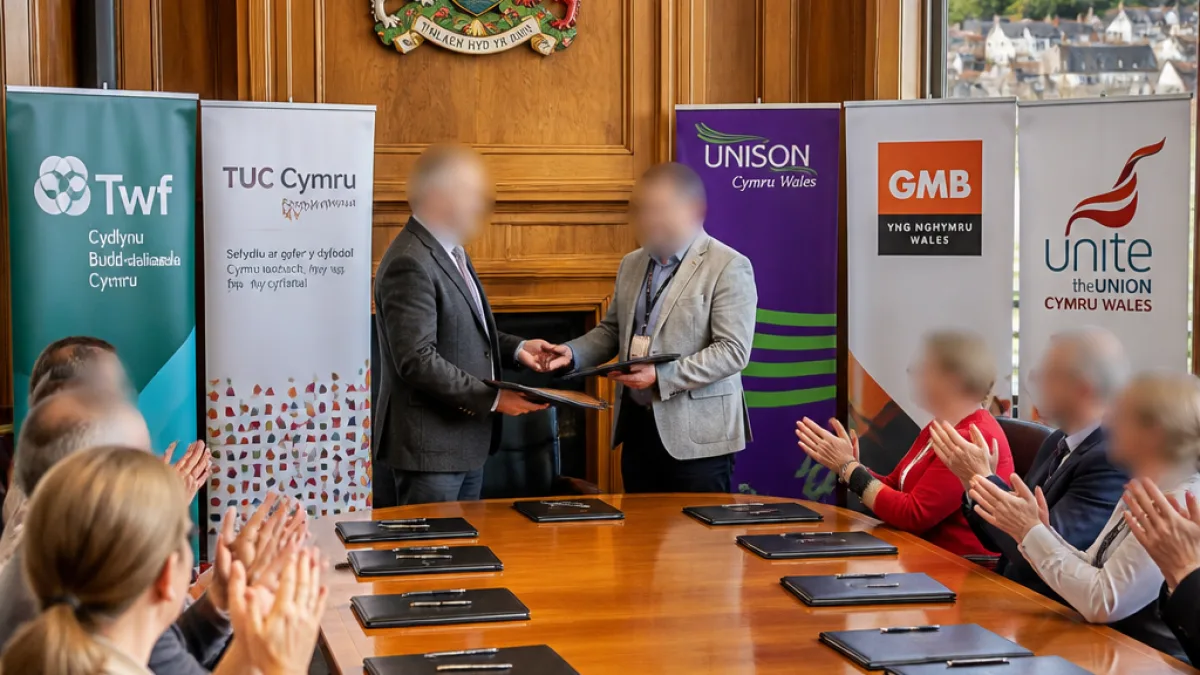
The charter provides a practical framework intended to help employers embed bilingual practice at work. At a signing event held in the Council Chamber, the council’s leader and chief executive joined representatives from the TUC and local branches of Unison, GMB and Unite to mark the commitment.
Council leaders said the agreement aligns with corporate objectives and reflects the role of Welsh in the county’s identity and public services. The council described the aim as ensuring staff feel "welcomed, valued and supported" to use Welsh whether they are fluent, learning or developing their skills.
“Being an inclusive bilingual workplace contributes towards our Corporate Goals, because Cymraeg is part of who we are and everything that we do. It’s our language and belongs to us all.”
Four core principles
The Twf Charter is organised around four central principles intended to shape workplace practice and partnership working. These are:
- Growth and Welsh language rights
- Inclusion and linguistic justice
- Leadership and accountability
- Continuous learning and confidence building
Supporters say the framework aims to normalise the use of Welsh at work by clarifying rights and expectations, offering training, and encouraging managers to create environments where the language can be used day-to-day.
| Committed partners | Role |
|---|---|
| Conwy County Borough Council | Employer; implementation across council services |
| TUC Cymru | Charter author and partner for union engagement |
| Unison, GMB, Unite | Trade union signatories; represent staff interests |
Practical impact and next steps
The council says the charter will increase awareness of Welsh-language rights and the support available to employees, and will encourage fair opportunities for staff to learn and use Welsh at work. TUC Cymru has described the step as an example of social partnership in action, endorsing the four principles as a route to inclusive bilingual workplaces.
For employees, the immediate effects are likely to include clearer guidance on language use at work, opportunities for training, and union involvement in shaping how Welsh is supported across services. For residents, the long-term expectation is a workforce better equipped to provide bilingual services.
The council's adoption of the Twf Charter places it alongside other public bodies in Wales pursuing proactive language policies and reflects continuing local efforts to preserve and promote Welsh within public institutions.