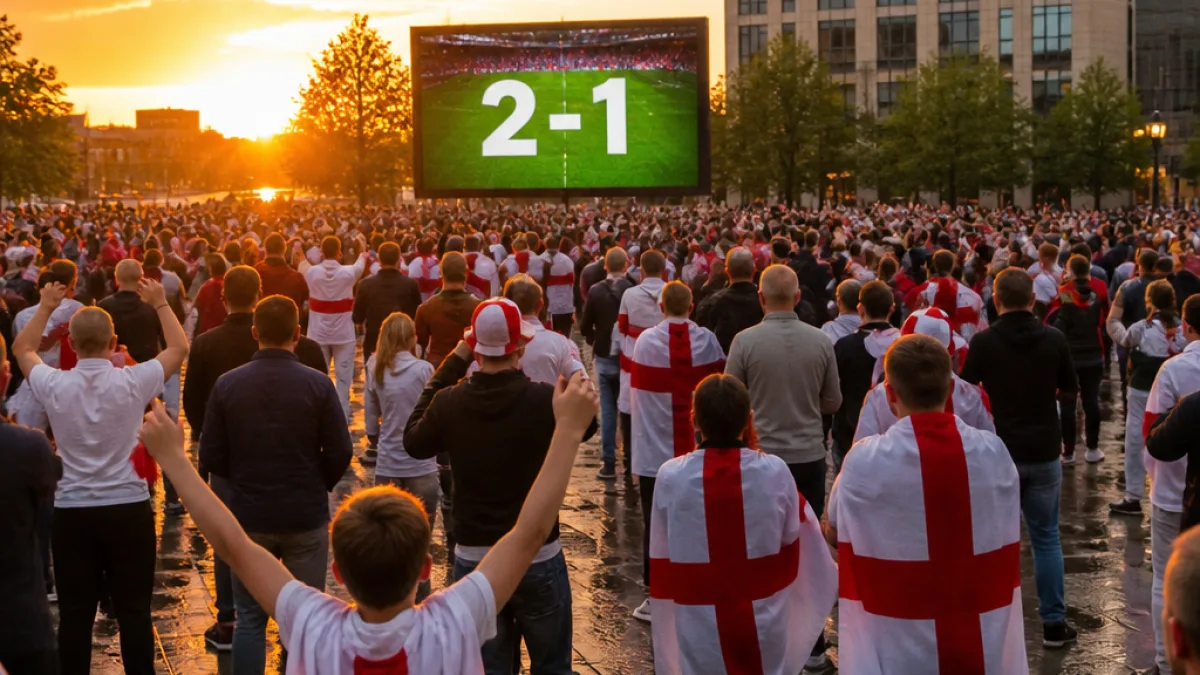
Hundreds converged on Keel Square in Sunderland to watch England’s World Cup semi-final, a public viewing that swept from jubilation to despondency as Argentina overturned an early deficit to win 2-1.
From hope to heartbreak in the city centre
The atmosphere in the square was electric when England took the lead early in the second half. Photographs from North News & Pictures show groups of friends and families, faces alight, flags and scarves raised as supporters cheered what they hoped would be a decisive moment.
That optimism was replaced by disbelief and silence after Argentina scored twice late in the match. The sudden change in mood was visible across the square as people processed the result and spectators began to drift away.
Public viewing and civic life
Keel Square has increasingly become the focal point for city-centre public viewings of major sports fixtures. The gathering on Wednesday evening underlined Sunderland’s appetite for communal football-watching and the role such events play in local civic life — from volunteers and stallholders to families organising an evening out.
- Location: Keel Square, Sunderland
- Event: England v Argentina, World Cup semi-final
- Outcome: Argentina 2, England 1
Local reaction and context
Photographs captured a wide range of responses: elation during England’s early lead, tense concentration on the screens as the contest unfolded, then stunned silence as the late turnaround unfolded. For many attendees the evening combined the excitement of a major international fixture with the shared experience of watching it in the city centre.
Such public gatherings can have immediate practical effects on local services and businesses. Pubs and cafes around the square will have seen increased trade before and during the match; meanwhile, city authorities and event organisers face the usual tasks of stewarding crowds and ensuring public safety during large viewings.
While the result will disappoint many supporters, the turnout affirmed the appetite in Sunderland for communal sporting occasions. Whether the city sees further public screenings will depend on fixture schedules and council or organiser plans for future events.