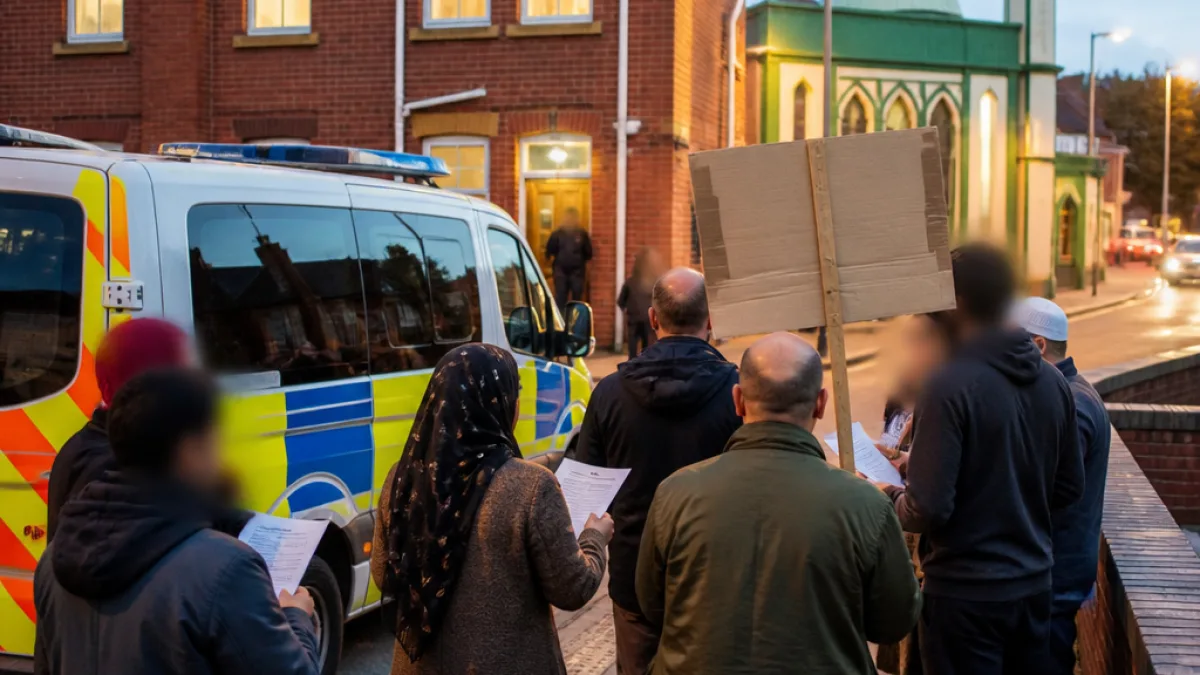
Residents and community leaders in Accrington have expressed deep concern after Shabir Ahmed, the convicted leader of the Rochdale grooming gang, was reported to have been temporarily housed in a local hostel following his release from prison earlier this month. The placement prompted urgent representations to police and action by the local MP.
Community alarm and official reaction
Kamran Mahmood, general secretary of the Ghausia Rizvia mosque on Higher Antley Street, wrote to Lancashire Police’s East Division chief superintendent to register the community’s “grave concern and condemnation” at Ahmed being placed in the town. Mahmood warned that the decision had caused “significant distress, fear and anger” and risked stoking tensions among residents.
“Parents are deeply worried about the safety of their children, and there is a real risk that these legitimate concerns will lead to rising community tensions if not addressed with urgency and transparency.”
Sarah Smith, MP for Hyndburn, confirmed that Ahmed had been moved from the hostel after she lobbied for his removal. She said she had worked to secure the relocation once she became aware he was placed within her constituency and described the original decision as unacceptable.
Facts about the case
Key factual points about Ahmed’s conviction and recent status are straightforward:
- Conviction: Found guilty in 2012 for multiple sexual offences related to child grooming in Rochdale.
- Sentence and time served: He had been given a lengthy custodial sentence and was released earlier this month.
- Recent movement: Reported placement in an Accrington hostel on release, subsequently moved after interventions by local representatives.
| Detail | Information |
|---|---|
| Conviction year | 2012 |
| Known offences | Sexual offences linked to grooming |
| Recent status | Released from prison; housed briefly in Accrington hostel; later moved |
Local impact and wider context
The episode has reignited concerns in communities affected by the original offences and highlighted tensions that can arise when notorious offenders are reintroduced into populated areas. Mosque representatives emphasised the distress felt by families and called for transparent communication from authorities to manage safety concerns and calm fears.
Local MPs and police are key actors in responding to these situations: representatives can press for rehoming decisions to be reviewed while policing and probation services have responsibilities for risk management and safeguarding. Residents often expect clear information about any local measures being taken to protect children and vulnerable people.
InfoRadar has approached Lancashire Police and the relevant housing and probation services for comment on the process that led to the initial placement and the arrangements now in place following the move. Any further official responses will be published when received.
The community reaction in Accrington underlines the continuing sensitivities around high-profile historic child sexual abuse cases and the challenges for authorities balancing resettlement, public safety and community cohesion.