Students gather to share work on menstrual health
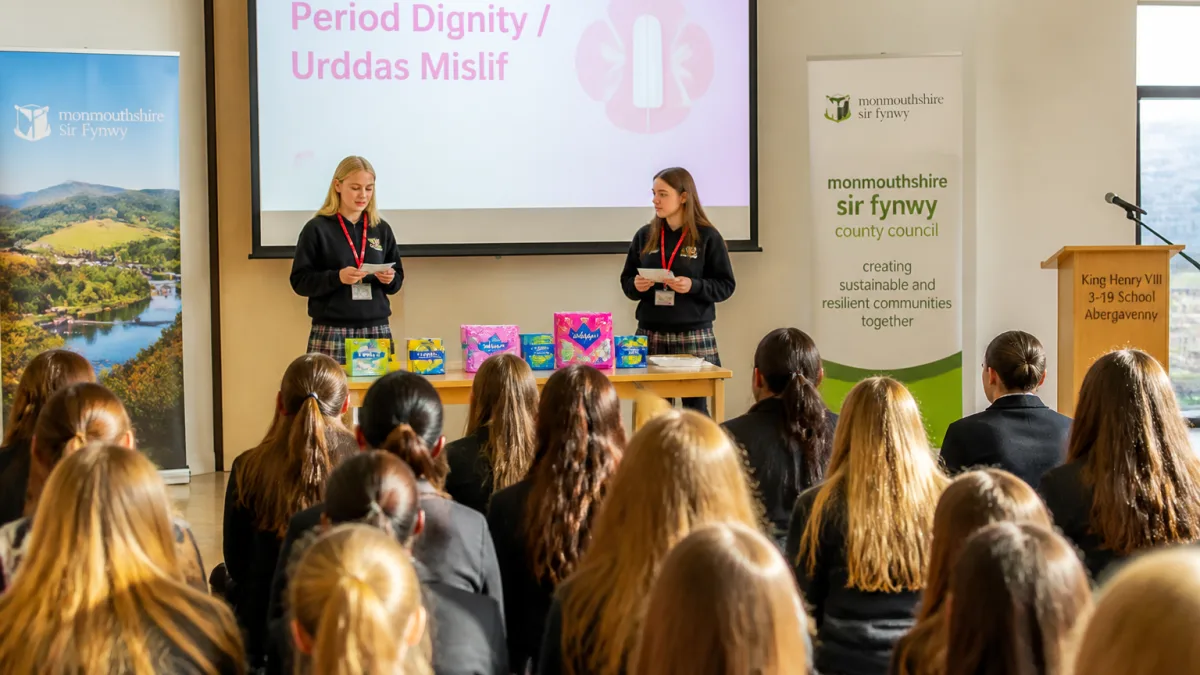
Students from across Monmouthshire came together at King Henry VIII 3-19 School in Abergavenny on Friday, 3 July for the county’s first Menstrual Ambassador Conference. The event highlighted how pupils are leading efforts to normalise conversations about periods, reduce stigma and widen access to accurate information and products in their own school communities.
The conference showcased the Menstrual Ambassador Programme, part of Monmouthshire County Council’s work delivered through the Welsh Government’s Period Dignity Fund. Specialist organisation Womb Wisdom has supported delivery across all four of the county’s secondary schools. The initiative is grounded in the Welsh Relationships and Sexuality Education (RSE) Code, setting a framework for age-appropriate, inclusive teaching.
Peer-led approach across all four secondary schools
At the core of the programme is pupil leadership. Ambassadors receive training and then work alongside school staff to provide information and support to peers. Activities have included:
- Ambassador training sessions to build knowledge and confidence
- Workshops, assemblies and drop-in sessions within schools
- Awareness campaigns aimed at reducing stigma and improving access to products
According to organisers, ambassadors are encouraged to create safe, inclusive spaces where questions can be asked openly and myths can be challenged. The approach positions students not just as beneficiaries of support, but as partners in shaping a more informed school culture.
Reported impact on confidence and school culture
Feedback highlighted at the conference indicates that pupils feel more prepared, less anxious and more at ease discussing menstrual health. Ambassadors themselves are reported to have gained practical skills in leadership, communication and peer mentoring. Schools cite broader benefits: stronger pupil voice, improved wellbeing and a more inclusive ethos, with students from different year groups collaborating on shared goals.
“Helping to create environments where no young person feels isolated or embarrassed.”
The reported outcomes extend beyond single sessions. Participants have described feeling more confident in their bodies, better equipped to support friends and more comfortable seeking help when needed. School staff and partners who attended the conference used the event to reflect on what has worked well and how to sustain momentum in the coming academic year.
How the programme works
| Element | Focus |
|---|---|
| Delivery | Led by Womb Wisdom across Monmouthshire’s four secondary schools |
| Funding | Monmouthshire County Council via Welsh Government’s Period Dignity Fund |
| Curriculum basis | Grounded in the Relationships and Sexuality Education (RSE) Code |
| Activities | Training, workshops, assemblies, drop-ins and awareness campaigns |
| Reported impact | Greater confidence, reduced anxiety, stronger pupil voice and inclusive culture |
Local significance and next steps
By bringing ambassadors together in Abergavenny, the county’s schools were able to share practice and consider how student-led work on menstrual health can be embedded more widely. The programme’s emphasis on peer support and accurate information is intended to help pupils navigate day-to-day schooling without disruption or stigma, and to strengthen the pastoral offer already in place.
While each school will determine how best to continue the work, the conference underlined that progress has been achieved through consistent pupil engagement and staff support, with targeted use of resources provided through the Period Dignity Fund. The reported outcomes suggest that normalising discussion, improving access to products and ensuring clear signposting to help are all contributing to a more supportive environment for young people in Monmouthshire’s secondary schools.
The ambassador model appears to have given students a platform to shape change within their own settings. With the foundation established at this first conference, schools and partners are now positioned to build on what pupils say is making a difference—open conversation, reliable information and practical support—so that the benefits are sustained across the county.