Greater Manchester Mayor Andy Burnham’s public support for a proportional property tax (PPT) would reshape how households in Redbridge and across London meet their housing-related taxes, according to figures published alongside the policy proposal.
How the PPT would work
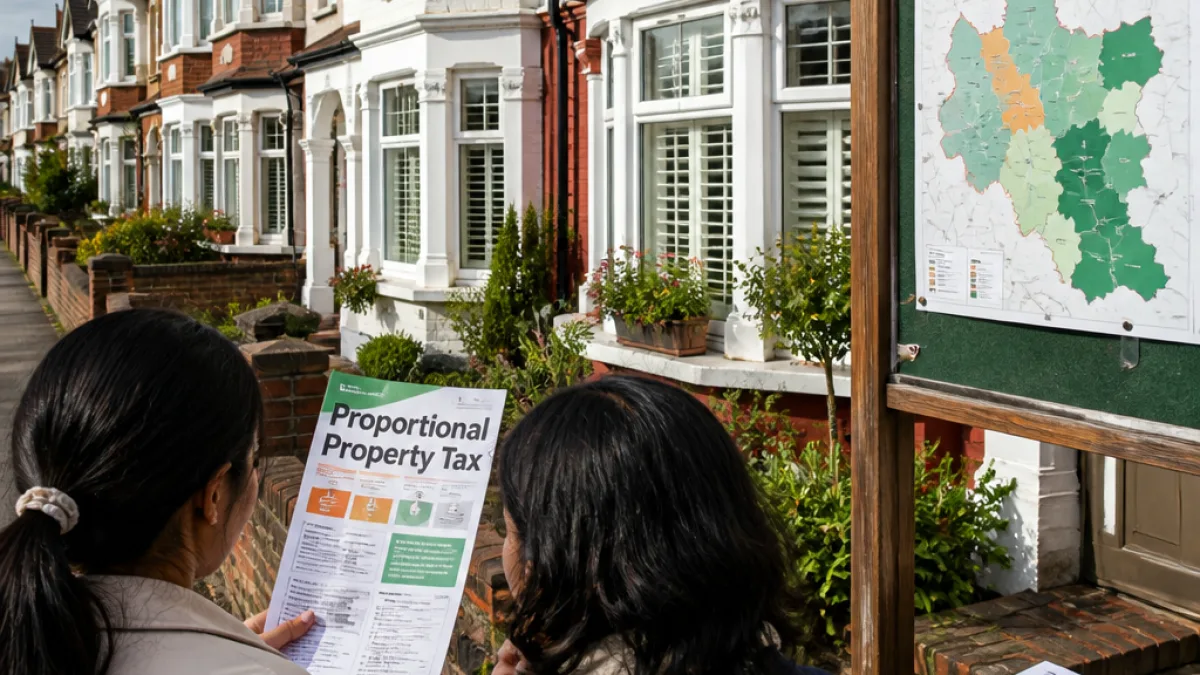
The model proposed by the Fairer Share campaign would replace council tax and stamp duty with a levy proportionate to a property’s value. Under the plan, a standard charge would be set at 0.48% of a property’s value, while a higher rate of 0.96% would apply to second homes, long-term empty dwellings and properties owned by foreign nationals.
Local impact in Redbridge and beyond
Analysis of the proposed levy shows the distribution of winners and losers varies sharply between boroughs. In Redbridge, some households are likely to see their bills fall under the PPT. The data indicate around 39% of Redbridge households would pay less than under the current system, implying the remaining 61% would face higher charges.
Across London the picture is mixed, with just four boroughs tipped to have a majority of households paying less under the PPT:
- Barking and Dagenham: 58% would pay less
- Islington: 52% would pay less
- Southwark: 52% would pay less
- Hackney: 51% would pay less
Croydon sits on the knife-edge with exactly 50% of households estimated to benefit. By contrast, wealthier boroughs with relatively low council tax rates would see most households paying more: Westminster would have just 12% of households better off, Wandsworth 23% and Kensington and Chelsea 28%.
| Selected borough | % of households estimated to pay less under PPT |
|---|---|
| Redbridge | 39% |
| Westminster | 12% |
| Wandsworth | 23% |
| Hackney | 51% |
What this means for renters and landlords
Unlike council tax, the proposed PPT would not be levied directly on tenants. However, the analysis warns landlords could pass some or all of the additional cost onto renters through higher rents, meaning tenants may still feel the effect of a shift in property taxation.
For Redbridge residents, the immediate questions are who benefits, who pays more and how landlords might react. While a sizeable minority in the borough would see reduced bills, the majority facing increases could include both homeowners and tenants via higher rents.
Debate over the PPT is likely to continue as politicians and campaigners weigh the trade-offs between a system that links tax to property value and the existing council tax and stamp duty arrangements. Any move to implement the PPT would require national-level approval and detailed transition planning to avoid sudden shocks to household finances.