
Flexible higher technical routes linked to local skills needs
The Greater Manchester Institute of Technology (GMIoT), which sits within the University of Salford, is opening up alternative pathways into higher education for people who want a shorter, skills‑focused route into work. The institute’s offer centres on level 4 and level 5 qualifications designed with input from industry to reflect roles where the region faces skills shortages, including in construction and digital and software technology.
Unlike the traditional three‑year degree, these programmes provide a practical, employment‑oriented path that can be completed in one or two years. Crucially, they are structured to be flexible: learners can take a qualification, pause for work or caring commitments, and return later to build towards a full degree if they choose. As GMIoT puts it, the approach is built around
“learn by doing”— prioritising hands‑on learning that aligns closely with real workplace tasks.
Clearing dates and who can apply
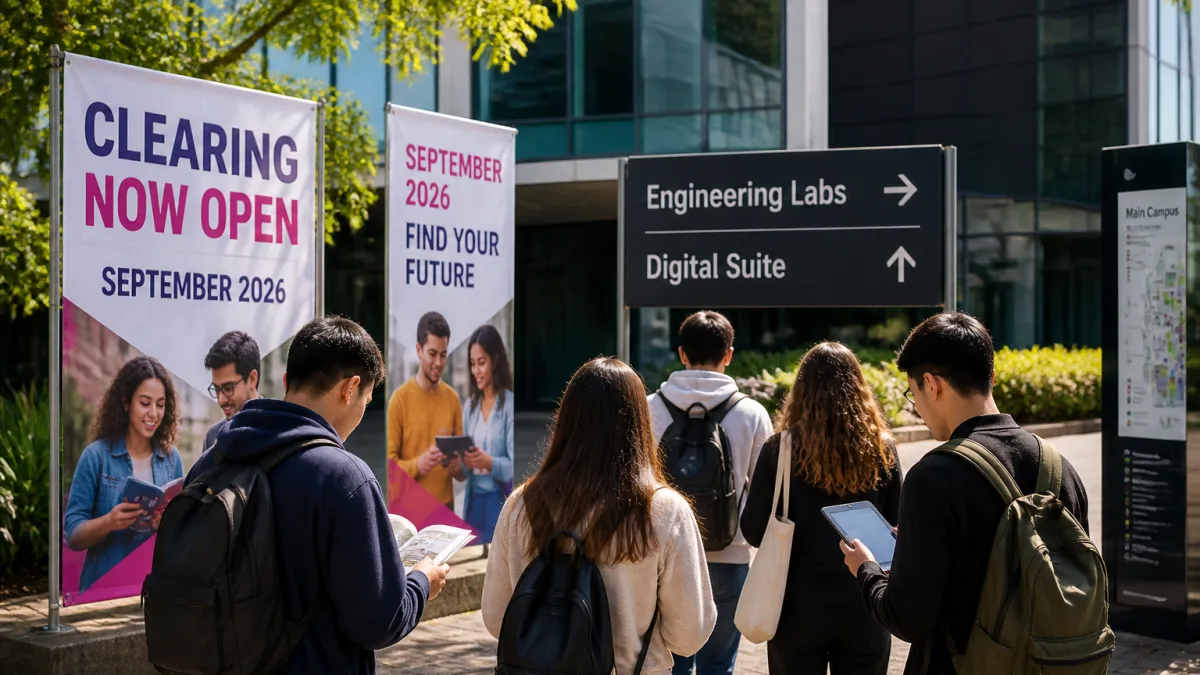
Applications for September 2026 entry are available through Clearing, which opened on 2 July. Most places are typically confirmed on or after A‑level results day on Thursday, 13 August. The offer is pitched both at school and college leavers and at mature learners seeking a career change, as well as parents and guardians helping a prospective student weigh up their options.
| Route | Level | Typical duration | Key dates |
|---|---|---|---|
| Higher technical programmes | 4 & 5 | 1–2 years | Clearing opened 2 July; A‑level results 13 August |
| Top‑up pathway | Progression to degree | Varies | Entry from September 2026 |
Programmes with direct workplace relevance
GMIoT highlights courses that reinforce core technical capabilities needed by employers, with options to continue study later via a top‑up route. The institute says the blend of practical projects and industry‑shaped content aims to make learners confident and job‑ready quickly, while keeping the door open for further academic progression when life and work permit.
- Data Science (two‑year option, one‑year, and top‑up available): Develop competencies in data analysis, visualisation and engineering, using tools such as Python and SQL with real‑world datasets. Pathways can lead towards roles including junior data analyst or insights‑focused positions, or onward to a full degree.
- Digital and Software Technology (two‑year option, one‑year, and top‑up available): Build applied software skills through project‑based learning — from coding and testing to user experience and DevOps fundamentals — preparing learners to contribute in tech teams from an early stage.
Why this matters for Salford and Greater Manchester
Salford’s digital economy has grown rapidly in recent years, and the wider city‑region has repeatedly identified technology and construction as areas where workforce demand outstrips supply. By aligning course content with employer needs and offering routes that fit around work and family life, the GMIoT model is intended to help local residents move into better‑paid, future‑facing roles without committing immediately to a multi‑year degree. The step‑on, step‑off structure may be especially relevant to people balancing employment, caregiving or other responsibilities.
For younger applicants finalising plans this summer, the availability of places through Clearing provides a last‑minute alternative to a traditional undergraduate pathway. For career‑changers and returners to education, the shorter timeframes and modular progression can reduce the barriers to upskilling — particularly in data and software, where practical, portfolio‑based learning is valued by employers.
How the pathway works
Learners complete a level 4 or level 5 qualification over one or two years, gaining applied experience tied to in‑demand skills. Many programmes are structured so that credits can be carried forward into a top‑up year later, allowing progression towards a full degree when circumstances allow. This means students can move into the labour market sooner while keeping longer‑term academic options open.
The institute’s emphasis on practical training is likely to appeal to those who learn best by doing, or who would benefit from smaller, targeted programmes that lead to roles such as data analyst, software tester or user experience practitioner. The focus on real datasets, software development practices and operational know‑how is intended to shorten the transition from classroom to workplace.
What prospective students should know now
With Clearing already under way, those interested in September 2026 entry should review programme details and check availability through the Clearing process, particularly around and after A‑level results day on 13 August. Options are open to both new applicants and those reconsidering earlier choices. While course structures are designed to be flexible, places are limited and likely to be in highest demand in digital disciplines aligned to the region’s growth sectors.
GMIoT’s positioning within the University of Salford provides recognition of quality and an established support environment. For local residents weighing up routes into data, software or construction‑related fields, the institute’s shorter, hands‑on qualifications offer a pragmatic way to build capability quickly and, if desired, progress to a full degree later.