The Liverpool City Region Combined Authority has confirmed that the St. Helens bus network will come back under public control on Sunday 6 September, with a package of immediate timetable and service improvements and a brand‑new fleet of low‑emission vehicles for passengers across the borough.
What is changing from Day One
Transport bosses say the changes are intended to make journeys more reliable and easier to understand. Measures set to take effect from the first day of franchising include:
- Increased evening and weekend services;
- Some routes extended to improve connections to hospitals, colleges and rail stations;
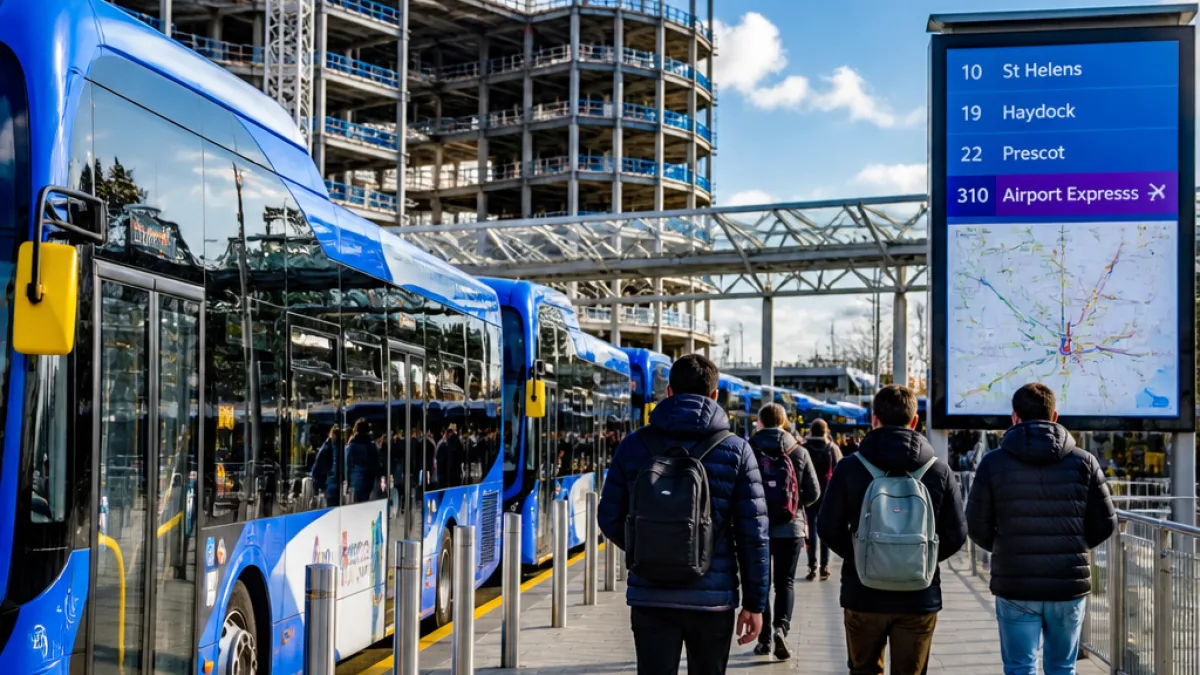
- A new express service linking St. Helens to Liverpool John Lennon Airport;
- Renumbering of duplicate routes to create a single, simplified network across the Liverpool City Region.
Officials estimate that an extra 5,000 residents in St. Helens will be within a 400‑metre walk of a bus stop as a direct result of the redesign.
"More evening and weekend services, extended routes and a brand‑new express link to Liverpool John Lennon Airport will operate from Day One"
The new fleet and accessibility
Buses introduced under the publicly owned network will wear the Liverpool City Region’s yellow, black and grey Metro livery and are being described as state‑of‑the‑art, built in the UK. Features highlighted by the Combined Authority include air conditioning, USB charging, improved seating and greater space for wheelchairs and prams, along with audio‑visual passenger announcements to aid accessibility.
These vehicles will join the 108 electric buses already operating in the region and form part of a wider public investment in transport that includes new trains and a replacement Mersey Ferry. The Combined Authority says this represents the most comprehensive fleet modernisation programme in the country.
Local infrastructure and the wider plan
The bus changes are being introduced alongside ongoing work on the St. Helens Transport Interchange, currently under construction, which the authority expects to help deliver better integrated connections between buses, rail and other modes of travel in the town centre.
For regular bus users in St. Helens the immediate effects will be felt in more frequent and, officials hope, more dependable services, simpler route numbering and more accessible vehicles. For those planning journeys to the airport or to regional rail hubs, the new express link and extended routes aim to reduce the need for multiple changes.
The move to franchising — where the public authority specifies routes, frequencies and standards, and contracts operators to run services — marks a significant change in how local bus services are managed. The Combined Authority presents the change as a way to deliver a joined‑up public transport network across the Liverpool City Region; residents and regular users will be watching early performance closely after the September launch.
| Key date | 6 September (franchising begins) |
|---|---|
| Additional people served | 5,000 within 400m of a stop |
| Existing electric buses in region | 108 |
Further information, including revised timetables and route maps, is expected to be published by the Combined Authority before the September handover. Passengers should look out for details on stop locations and the new route numbers to plan their journeys once the new network is in operation.