University of Stirling moves closer to the heart of policy debate
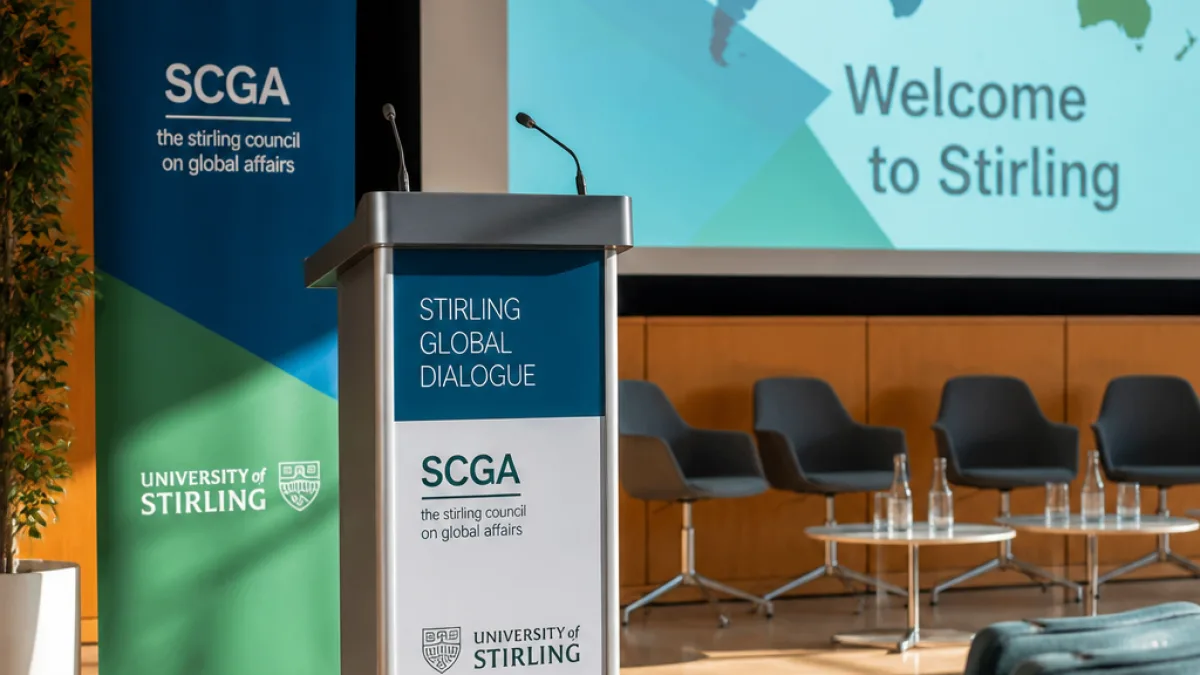
The University of Stirling has been named a Provisional Associate Partner of the Scottish Council on Global Affairs (SCGA), strengthening a relationship that has grown over many years and putting Stirling at the centre of Scotland’s conversation on foreign and security policy.
The SCGA describes itself as the first all-Scotland institute for international relations, acting as a hub for collaborative, policy-focused research and non-partisan discussion. The new designation recognises Stirling’s contribution to research, teaching and public engagement on global issues, with the University committing to progress to Senior Partner or Partner Institution status within two years.
University leaders said the formal tie-up will translate into practical benefits on campus and in the wider community, opening doors to more events, joint research and learning opportunities. It follows recent joint public discussions in Stirling and beyond, including The State of Global Peace and Security and The State of Migration and Refugees in Scotland Amidst a Changing World, which brought together experts to explore how international developments shape policy and everyday life here in Scotland.
“I am delighted that Stirling has become a Provisional Associate Partner of the Scottish Council for Global Affairs. We have worked with SCGA for many years and co-hosted some excellent events with them, but our formal association will allow staff and students to benefit even more from SCGA’s array of activities. SCGA was founded in the days after Brexit to enhance the quality of debate on international affairs in Scotland, and I am confident that Stirling academics will make a major contribution towards realising this ambition.”
For students and staff in Stirling, the change in status signals a clearer route into high-level policy conversations and research networks. The SCGA’s cross-Scotland reach means academics can connect to partners focused on security, diplomacy, migration and humanitarian issues, while students can expect greater exposure to contemporary debates shaping Scotland’s international outlook. Locally, it points to more public events and accessible discussion in Stirling, making complex global themes easier to navigate for residents.
What the new status means
- Recognition: SCGA acknowledges Stirling’s track record in global affairs scholarship and public engagement.
- Commitment: The University has pledged to advance to a higher level of partnership within two years.
- Opportunities: Potential for more joint events, collaborative research projects, and student involvement in policy-facing activity.
| Aspect | Detail |
|---|---|
| Current designation | Provisional Associate Partner |
| Next step | Pledge to become a Senior Partner or Partner Institution within two years |
The partnership underlines Stirling’s role in bringing global debates to a local audience. Previous SCGA-linked events in the city have drawn on expert panels to consider the pressures on global security and the realities facing migrants and refugees, and how those pressures reach our public services, communities and workplaces. The new arrangement is intended to expand that footprint, encouraging further collaboration that links scholarship with real-world policy challenges.
While the University and SCGA have worked together informally for years, the formal association creates a more predictable framework for cooperation. That can help with planning multi-partner research bids, hosting regular public forums, and embedding policy-relevant content across programmes. In time, residents can expect more opportunities to hear from leading voices on international issues without leaving Stirling, as well as chances for local organisations to engage with evidence and analysis that inform decision-making.
In short, the move signals a stronger bridge between global affairs and daily life in the Stirling area—one that seeks to match academic expertise with open, non-partisan discussion on the major issues of our age.