Universities in Australia are sustained in part by a rising share of onshore visa applicants, but recent figures and sector commentary warn that a correction in international student flows may be underway.
Onshore applications propping up numbers
Data show that 35% of primary higher education visas awarded in the most recent financial year went to applicants who lodged from inside Australia — the highest share in two decades outside the pandemic years and the earlier “perfect storm” period. That shift has helped to maintain headline foreign enrolment figures even as applications from overseas are being increasingly refused.
Grant rates falling for offshore applicants
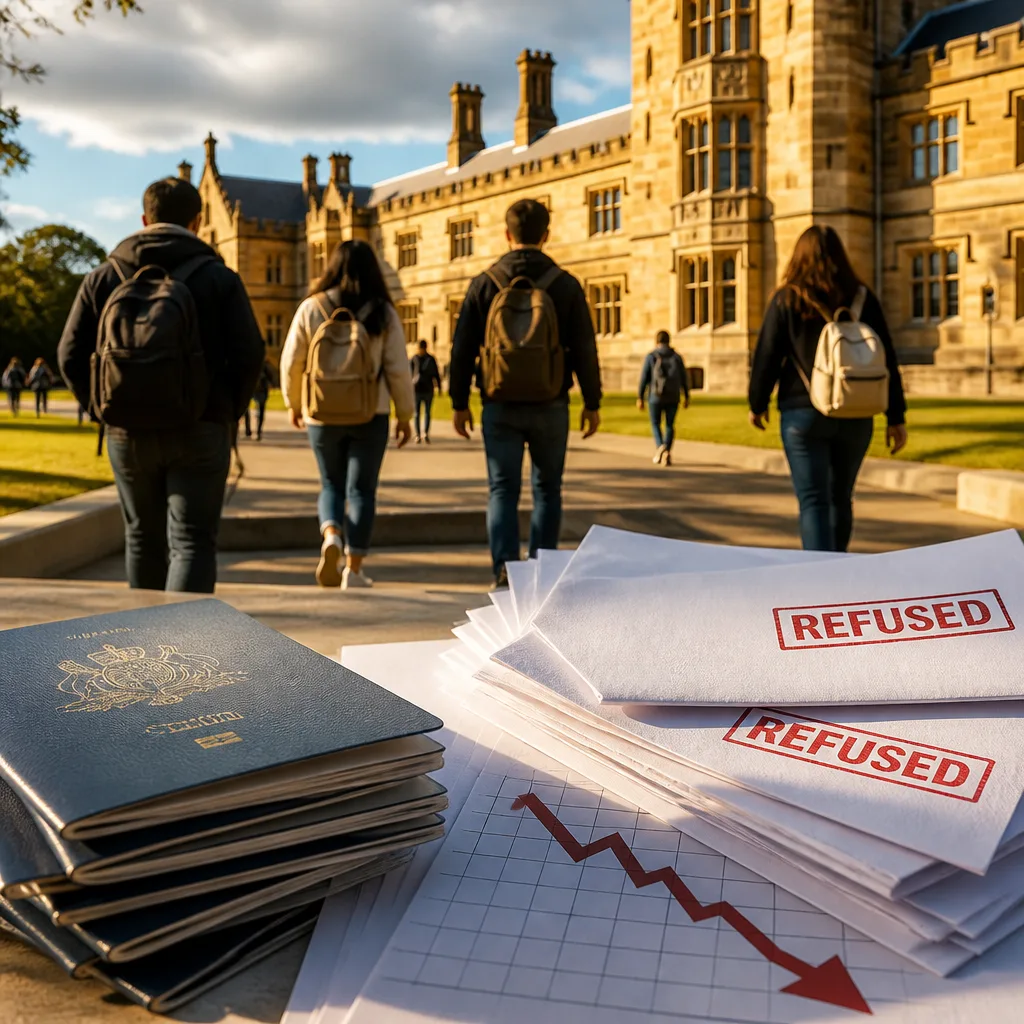
Observers say the apparent stability masks a sharper downturn for students applying from abroad. A former Department of Home Affairs official, now a university pro vice-chancellor, highlighted a decline in the visa grant rate for offshore applicants: it dropped from 92% in 2024–25 to 81% in 2025–26 and was reported at 72% for the period January–June of the current year.
“The overall rate ‘doesn’t tell the full story and is certainly not reflective of what providers, students and agents are currently experiencing,’”
That comment accompanied further figures showing the average grant rate across nationalities other than China fell to 62% over the first six months of the year, down from 92% in the same period in 2025.
Policy and business risks for providers
Industry and government voices point to concentration risk and reputational issues as underlying vulnerabilities. The assistant minister for international education warned against heavy reliance on single national cohorts and framed it as both a poor business model and harmful to national soft-power objectives.
| Period | Offshore grant rate |
|---|---|
| 2024–25 | 92% |
| 2025–26 | 81% |
| Jan–Jun (current year) | 72% |
What this means for students and universities
Universities that have relied heavily on international intake from a small number of source countries could face multiple pressures if offshore approvals remain constrained:
- Reduced overseas enrolments and potential revenue shortfalls if onshore applicants cannot fill gaps.
- Greater recruitment costs and need to diversify markets to avoid concentration risk.
- Operational and admissions uncertainty as grant rates fluctuate month to month.
Government officials have downplayed the impact of rising visa fees on demand, saying fees form a small part of total study costs and that exchange rates and wider economic pressures are more influential for prospective students.
For parents and prospective students, the immediate implications are practical: applicants still overseas may face higher refusal risk and should factor potential delays or refusals into planning. For institutions, the figures underline the urgency of more transparent risk management and broader recruitment strategies.
Further analysis of monthly grant-rate trends and how universities respond to these shifts will be important for understanding the sector's short- and medium-term stability.