South Korea’s KAIST, working with researchers from MIT, has unveiled an electrochemical marine carbon removal process that converts dissolved inorganic carbon in seawater into calcium carbonate (CaCO₃), a stable mineral form that effectively prevents captured CO₂ from returning to the atmosphere. The technique, called electrochemical dissolved ocean carbon removal (e‑DOC), aims to increase the ocean’s capacity to take up atmospheric CO₂ while addressing a key operational barrier in previous systems.
How the system works
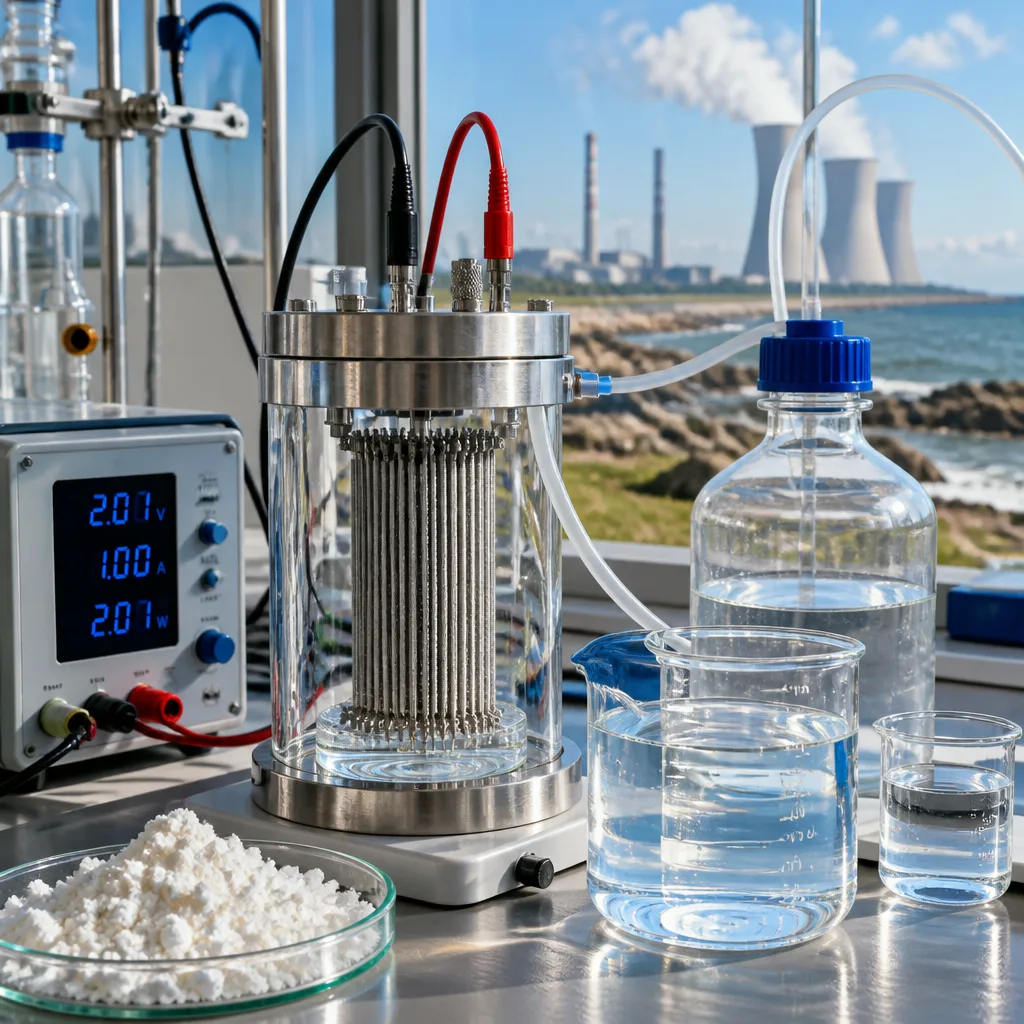
The team’s approach uses an electrochemical cell to alter local seawater chemistry and drive the precipitation of CaCO₃ from dissolved inorganic carbon. A notable hardware innovation is the use of stainless‑steel hollow fibres assembled into a hollow fibre electrode assembly (HFEA), which is designed to limit the problem of mineral scaling that has plagued earlier designs.
- Permanence: Converted CO₂ is stored as a solid mineral (calcium carbonate), making re‑emission to the atmosphere highly unlikely.
- Energy efficiency: The system is reported to reduce electricity consumption by up to 54% compared with conventional approaches.
- Scalability target: By preventing rapid fouling of electrodes, the design seeks to extend continuous operation and lower maintenance demands.
Why this matters
The ocean already absorbs about 30% of anthropogenic CO₂ emissions. By removing dissolved carbon from seawater and converting it into a mineral that does not readily re‑equilibrate with the atmosphere, e‑DOC could enable the ocean to take up additional CO₂ from the air — a leverage effect similar to emptying and refilling a larger container. That has obvious appeal for policymakers and climate engineers searching for durable carbon dioxide removal (CDR) options.
Technical challenge addressed: mineral scaling
Mineral scaling — the accumulation of precipitated minerals on electrode surfaces that degrades performance — has been a persistent obstacle for marine electrochemical CDR. The KAIST–MIT work tackles scaling through materials and cell architecture, notably the hollow fibre electrodes, which are intended to reduce surface fouling and the frequency of maintenance or component replacement. Less downtime and lower upkeep translate directly into smaller lifecycle energy and cost penalties.
| Feature | Reported benefit |
|---|---|
| Electrochemical conversion to CaCO₃ | Permanent, stable CO₂ storage |
| Hollow fibre electrode assembly | Reduced mineral scaling; improved operational stability |
| Energy demand | Up to 54% less electricity vs conventional systems |
The collaboration, led by Professor Dong‑Yeun Koh at KAIST with contributions from Professor T. Alan Hatton’s group at MIT, positions e‑DOC as a potential candidate in the portfolio of CDR technologies. Next steps for technologies of this kind typically include pilot‑scale trials, detailed lifecycle assessments and ecological risk evaluations to understand local seawater chemistry impacts and the fate of precipitated minerals.
For governments and industry weighing long‑duration carbon removal pathways, an approach that locks CO₂ into mineral form while lowering energy intensity could be strategically significant — but deployment will hinge on independent validation, cost trajectories and environmental permitting in coastal jurisdictions.