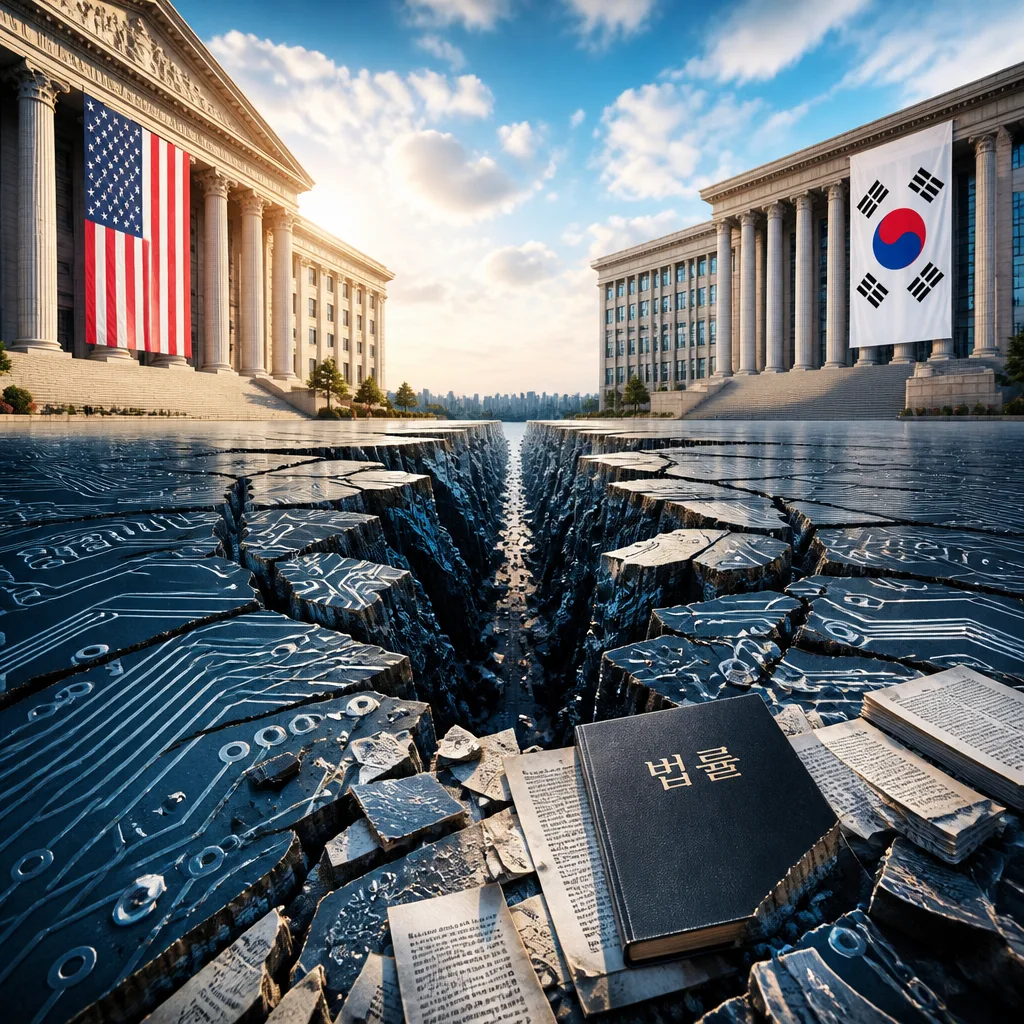
The United States and South Korea are locked in a growing dispute over digital regulation that has become the most persistent point of bilateral friction, even as trade and tariff disputes appear to have been largely settled. Under the second Trump administration, technology policy has emerged as the key unresolved item testing the alliance.
What is at stake
Washington has signalled rising concern that South Korean laws governing technology and digital services could disadvantage US-based firms. The controversy has focused on recent legislative changes, including amendments to the Information and Communications Network Act, which critics in the US argue may enable intrusive content regulation and constrain freedom of expression.
"The amendment could lead to excessive content regulation and undermine freedom of expression."
Seoul has pushed back. The South Korean Ministry of Foreign Affairs issued a clarification stressing the revision contains no discriminatory provisions aimed at foreign companies and upholds freedoms protected by the constitution. Despite that assurance, scepticism in Washington endures, reflecting a broader distrust over how domestic regulation may affect multinational technology platforms.
Why it matters
The dispute is not purely legalistic. It speaks to shifting priorities within the alliance: US policy-makers increasingly view technological rules through the lens of national interest and strategic competition. Where trade and tariffs were once the flashpoints, digital regulation now sits at the intersection of economic policy, national security and values such as free expression.
- Regulatory fairness: US officials perceive Korean rules as potentially uneven in their impact on foreign companies.
- Freedom of expression: The US Department of State warned about risks to free speech; Seoul insists constitutional protections remain intact.
- Alliance implications: Protracted disagreement on digital policy threatens to complicate cooperation on other strategic issues.
Context and consequences
Observers should see this episode as part of a broader trend: technology has become a central theatre for geopolitical competition and commercial protection. For Seoul, asserting regulatory autonomy over its digital market is a legitimate exercise of sovereignty. For Washington, however, protective or prescriptive rules in allied markets can be read as hostile to US firms and values, prompting diplomatic pushback.
Absent a clearer convergence of approaches, the technology dossier is likely to remain a recurring source of tension between the two capitals. That will force both governments — and the multinational companies caught between them — to navigate a more contested and politicised regulatory environment for digital services.
| Issue | Current status |
|---|---|
| Trade | Largely resolved |
| Tariffs | Largely resolved |
| Technology regulation | Principal sticking point |