Researchers from The University of Queensland, together with industry partners, have developed an artificial intelligence framework that can reconstruct detailed plantar pressure maps while using far fewer physical sensors than conventional systems. The work points to a route for cheaper, more portable foot‑health monitoring that could be deployed where specialised equipment is scarce.
What the team built
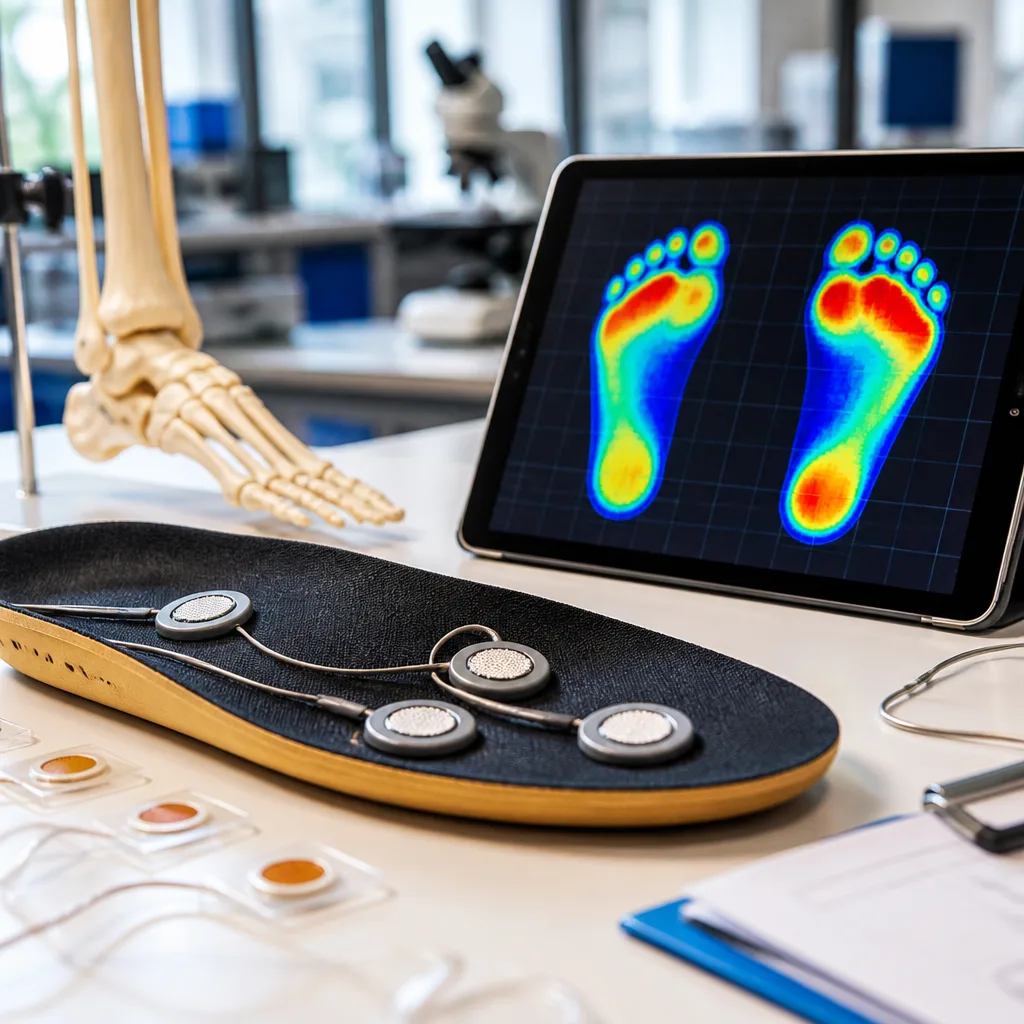
The group created a multimodal deep‑learning model that combines information about foot shape and a small set of anatomical pressure points to produce dense pressure maps. In experiments involving 35 participants, the system achieved its best results when provided with 16 anatomical landmarks, and produced a still‑useful reconstruction when supplied with as few as 2 landmarks.
"This study looked at the potential for AI to overcome some of the challenges associated with traditional plantar pressure monitoring systems,"
Why this matters
Plantar pressure analysis is used to assess gait, balance and foot function and helps clinicians design orthotics to reduce the risk and progression of foot pathologies. Existing approaches fall into two broad categories:
- Clinical pressure platforms that are accurate but stationary and often costly.
- In‑shoe sensor arrays that increase mobility but typically require many sensors, raising cost, complexity and power demands.
By enabling dense pressure maps from sparse data, the AI approach could reduce hardware requirements and energy use, making continuous or remote monitoring more practical—particularly in rural or resource‑limited settings.
How the method works
The system is an artificial neural network trained on combined inputs: anatomical foot features and a limited set of measured pressure points. The network learns the statistical relationship between sparse sensor inputs and the full pressure distribution, then infers the dense map for new inputs. The study reports successful reconstructions using far fewer sensors than conventional in‑shoe systems, suggesting a path to simplified devices.
Implications and next steps
Reduced sensor counts could lower device cost, simplify maintenance and extend battery life—key factors for deployment outside specialist clinics. The research partners include iOrthotics and Healthia Limited, indicating an interest in translating the model into clinical or commercial products. Further work will be required to validate performance across larger, more diverse populations and in real‑world conditions, and to integrate AI models into robust, regulatory‑compliant devices.
| Configuration | Reported outcome |
|---|---|
| 16 anatomical landmarks | Best reconstruction performance |
| 2 anatomical landmarks | Comparable performance in limited sensing conditions |
The study demonstrates a practical application of machine learning to reduce dependence on dense sensor arrays and makes a case for simpler, lower‑cost monitoring tools that could broaden access to foot‑health assessment.