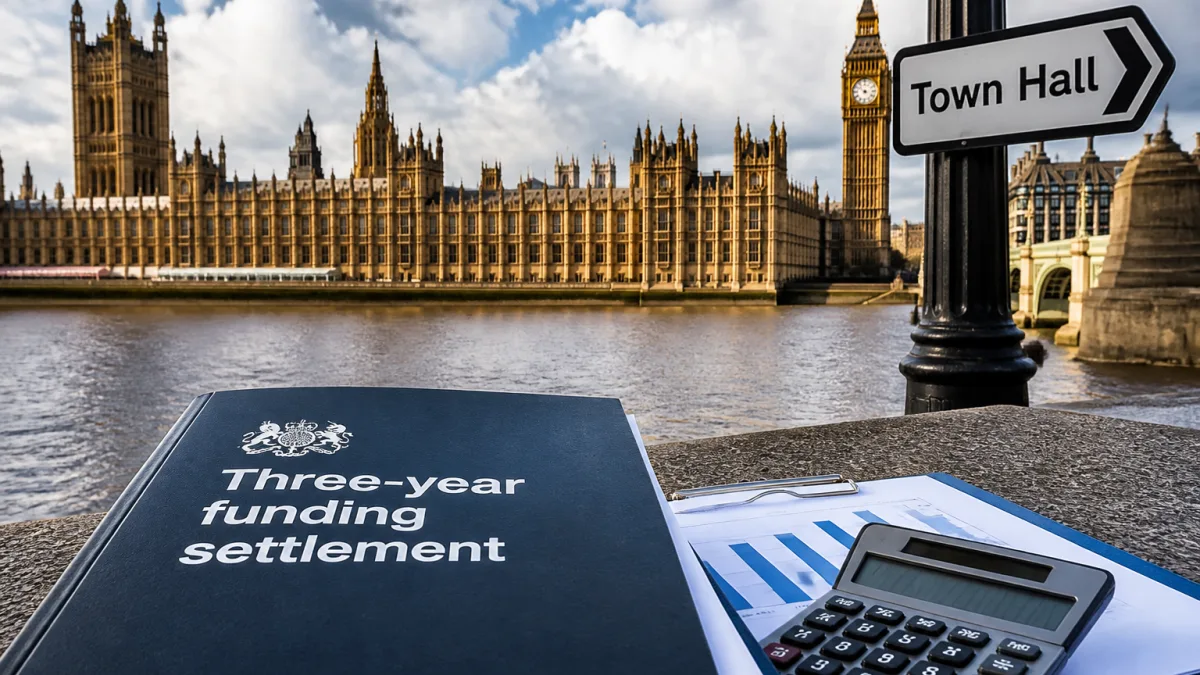
Ministers have published plans for a multi-year funding settlement for councils in England, a shift the Government says will replace the annual, one-off allocations town halls have relied on for much of the past decade. Under the proposals, local authorities would be told how much central funding to expect over a three-year period rather than negotiating budgets 12 months at a time.
Set out in a policy paper laid before Parliament, the reform is intended to let councils plan spending on services such as adult social care, road maintenance and waste collection with more confidence. It also proposes revising the formula used to distribute grant funding, directing a larger share towards areas with higher assessed need.
What is changing
At the centre of the package is a move away from competitive, bid-based pots — where councils apply for money from ringfenced funds — towards a single, more predictable grant. The Government argues the current system is costly to administer and rewards authorities that can write strong bids rather than those with the greatest need. The paper also confirms that the threshold above which a council must hold a local referendum to raise council tax will remain at around 5% for the coming year, including a portion earmarked for social care.
"A predictable settlement lets us plan for the long term instead of lurching from one budget to the next," said one council finance officer, echoing a view widely shared across the sector.
What it means for councils
Local government leaders have broadly welcomed the certainty but warned that the total quantum of funding matters more than its timing. Sector bodies have repeatedly pointed to a widening gap between rising demand — particularly in children's services and adult social care — and the income councils can raise locally.
- Areas with high deprivation and social-care demand could gain a larger share of grant funding under the revised formula.
- Authorities that leaned heavily on one-off bidding pots may face a transition as those funds are consolidated.
- All councils would gain a clearer three-year horizon for capital projects.
The impact on households
For residents, the most immediate effect is likely to be felt through council tax bills. With the referendum threshold held at roughly 5%, many households could see bills rise by a similar amount next year, though the final figure will depend on each authority's decision. The proposals will now be subject to consultation before allocations for individual councils are confirmed later in the year.