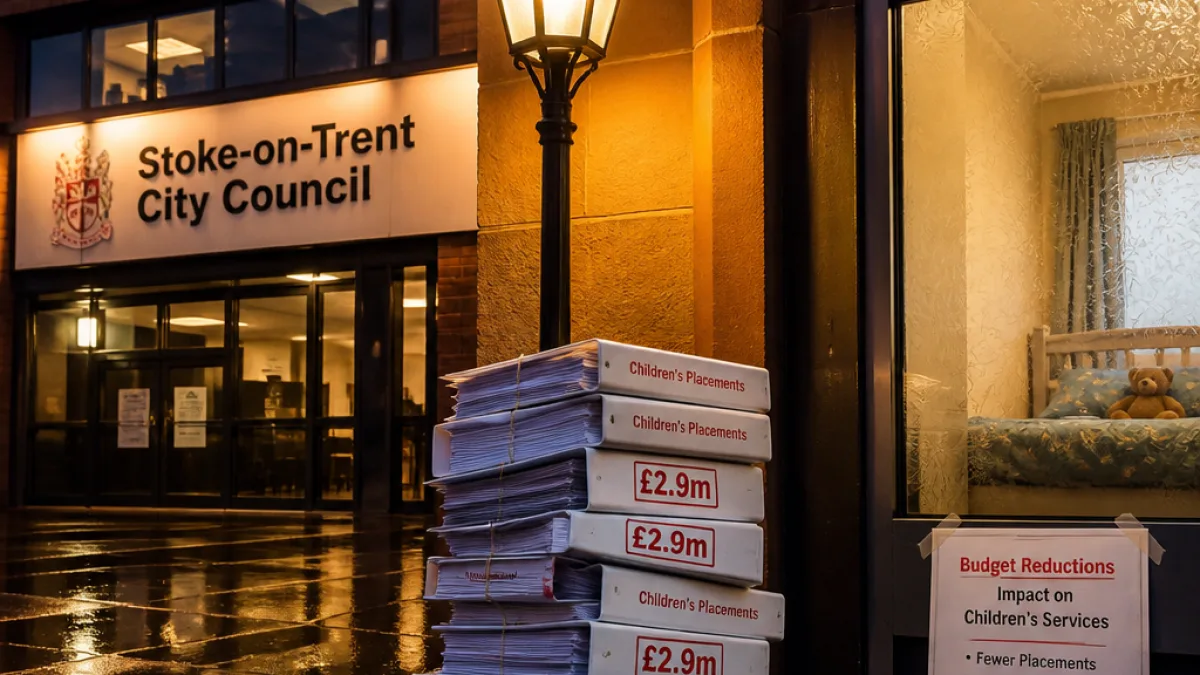
Stoke-on-Trent City Council has warned councillors that a planned saving of £2.9m from reduced reliance on external children's residential placements is now unlikely to be achieved, raising fresh questions about where further cuts will fall.
Capacity and market pressures blamed
Members of the children and family services scrutiny committee were told officers had hoped targeted step-down activity would deliver significant reductions in placement costs. However, officials now say the anticipated efficiencies have not materialised because the council lacks the capacity to place children in-house and is being driven towards costly private-sector providers.
"We're in challenging times. We just don't have sufficient capacity,"
The remark was made by Cabinet member for children's services Sarah Jane Colclough, who added that although the number of children looked after in Stoke-on-Trent has fallen over the past year, that reduction has not yet produced corresponding budget relief.
Numbers and financial pressure
Committee papers show the city's looked-after population has decreased over 12 months from 1,118 to 1,057. Despite this fall, placement expenditure has not eased because of an insufficient supply of foster carers and rising charges from independent providers.
Neil Macdonald, corporate director for children and family services, told councillors that what he described as "profiteering" in the private placement market was a significant problem for councils nationally. He emphasised that the council's priority must remain the safety and protection of children, even as officers seek efficiencies.
Options being pursued
Officials said they continue to explore alternatives to high-cost residential placements. Measures being used or considered include:
- moving older teenagers into supported accommodation when appropriate
- increasing the use of kinship care where extended family can provide placements
- continuing to identify other operational savings across the service
Mr Macdonald indicated some operational levers exist but reiterated that a lack of access to foster care remains the dominant constraint on reducing private-placement spend.
Wider budget context
The announcement comes as the council continues to grapple with a broader financial rescue: it has sought more than £60m in government bailout loans in recent times. Officers warned that failure to deliver the £2.9m saving will necessitate finding reductions elsewhere in the council's budget.
| Item | Figure |
|---|---|
| Planned placement saving | £2.9m |
| Looked-after children (previous 12 months) | 1,118 |
| Looked-after children (current) | 1,057 |
| Government bailout loans sought | £60m+ |
Councillors will now be pressed to identify where savings can be found elsewhere or to consider the longer-term service and commissioning changes necessary to reduce reliance on expensive external placements. The interplay between safeguarding obligations and financial restraint remains at the core of the debate.
Officers said work will continue to identify efficiencies and to expand kinship and supported accommodation options, but they warned that any substantive reduction in private placement costs is dependent on increasing the supply of foster carers locally — a problem they described as the principal barrier.