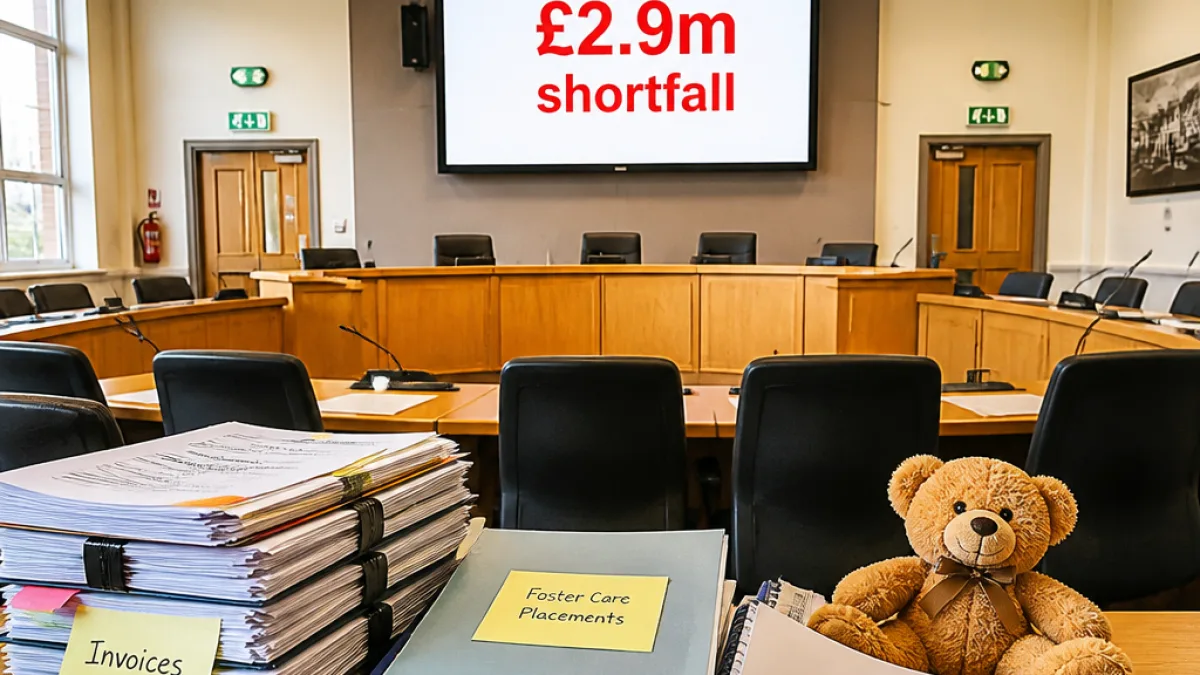
Stoke-on-Trent City Council has told councillors that a planned saving of £2.9 million from reducing costly children’s care placements looks set to be missed. Three months into the 2026/27 financial year, officers are anticipating that none of the proposed saving will materialise, leaving a budget shortfall that may force cuts elsewhere.
Why the saving has stalled
The administration's budget included measures to reduce reliance on external residential placements through what officials described as targeted step-down activity. However, members of the children and family services scrutiny committee were told the immediate obstacle is a local shortage of foster carers, which has pushed more children into private-sector provision.
Private providers, the council said, have raised charges significantly — a trend the corporate director for children and family services described as a national problem. The council also faces a higher-than-average caseload: while the number of looked-after children in Stoke-on-Trent has fallen over the last 12 months, that has not yet produced reduced placement costs.
Numbers and immediate impact
| Metric | Figure |
|---|---|
| Planned savings in 2026/27 | £2.9m |
| Looked-after children (12 months ago) | 1,118 |
| Current looked-after children | 1,057 |
Officers warned councillors that, without the projected reduction in placements, the council's budget pressures will intensify and may necessitate spending reductions in other services.
Council response and options
Neil Macdonald, corporate director for children and family services, said the authority is pursuing a range of measures to reduce reliance on expensive private placements while emphasising the primacy of child safety. He pointed to several 'levers' the council can use to reduce costs where appropriate.
- Moving older teenagers into supported accommodation when it meets their needs.
- Increasing the use of kinship carers so children stay with extended family where suitable.
- Continuing targeted step-down activity to transition children from residential care where it is safe to do so.
"We continue to look at whatever efficiencies we can make, and address the sufficiency challenges. But ultimately, our primary objective is to safeguard and protect children, and we have to be able to do that,"
Mr Macdonald characterised the growth in private placement charges as evidence of excessive "profiteering" in the sector and said the problem extends beyond Stoke-on-Trent. He underlined that while the council can take steps locally, there is a need for central government action to curb what he described as worrying national trends — including isolated cases of extremely high individual costs.
Wider context and what this means locally
Although the city has seen the number of children looked after fall from 1,118 to 1,057 in the last year, that reduction has not yet translated into lower placement expenditure because of the shortage of in‑city foster carers and rising fees charged by private providers. The mismatch between falling caseload and rising spend illustrates how market factors can undermine local budget planning.
For residents this raises two clear issues: first, the potential for council-wide service pressures if the shortfall has to be addressed elsewhere in the budget; second, the ongoing need to recruit and retain foster carers locally to provide lower-cost, family-based care options where they are in the child's best interest.
Council officers said they would continue to report progress to scrutiny members as the year proceeds and to explore all available options to reduce placement costs without compromising child protection.