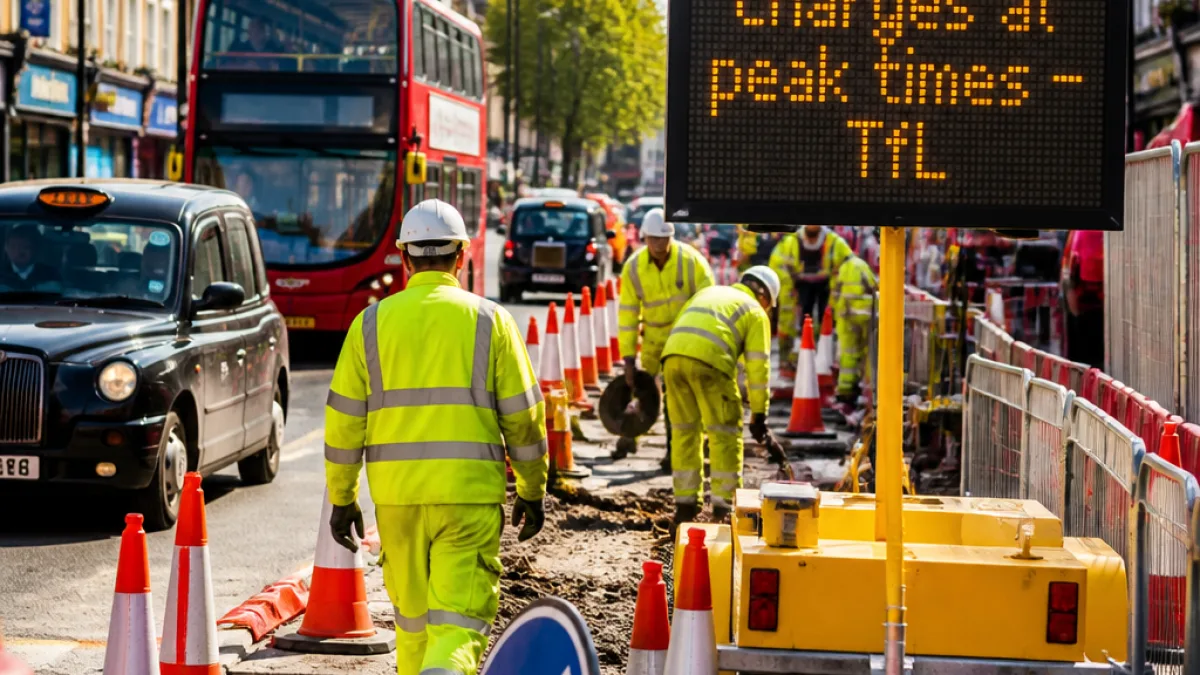
Utility firms carrying out works on Camden’s busiest roads during peak times face new charges under a Transport for London (TfL) lane rental scheme designed to reduce congestion and keep traffic moving. The programme, part of TfL’s London on the Move strategy, was announced alongside similar measures for the London Borough of Merton and a further eight boroughs whose applications have been approved.
What TfL is changing
Lane rental allows the highway authority to charge companies for occupying the carriageway at the most sensitive locations and times, encouraging them to coordinate works, use off‑peak windows, and complete repairs more quickly. TfL says revenue raised will be reinvested to develop innovative ways to reduce delays and improve the road network.
Deputy mayor for transport Seb Dance said the approach aims to re-time and consolidate disruptive works and support a more reliable bus service. In his words:
“By encouraging streetworks to take place collaboratively and outside the busiest hours, we’re minimising disruption while generating funding for further innovation that keeps the capital moving.”
Camden’s stance
Camden Council acknowledged the disruption roadworks can create in a central London borough. James Slater, the council’s cabinet member for planning and a sustainable Camden, said he understood the inconvenience caused by utility excavations and confirmed the authority had undertaken preparatory work for the new scheme. He added:
“We have undertaken considerable work to prepare for the lane rental scheme, which, alongside our existing permit scheme, will apply to the …”
While the council’s statement points to integration with its existing permit regime, full operational details for Camden have not yet been set out in the announcement.
Wider rollout and governance
Eight additional boroughs — Barnet, Hammersmith & Fulham, Havering, Kingston upon Thames, Redbridge, Southwark, Sutton and Tower Hamlets — have had lane rental applications approved, with measures in those areas due to take effect in the autumn. TfL says this expansion will bring coverage to around a third of London.
The policy framework has been clarified by the English Devolution and Community Empowerment Act 2026, which gives the Mayor of London responsibility for determining all new London borough lane rental applications. Commenting on the broader strategy, Seb Dance said:
“This scheme is a key part of our new approach to managing London’s streets more effectively – using technology and smarter infrastructure to cut congestion, improve safety and speed up journey times on the bus network, as we continue building a greener, better London for everyone.”
Merton perspective
Merton Council welcomed the ability to charge where works occupy vital road space. Stuart Neaverson, the borough’s cabinet member for transport and cleaner streets, said:
“It is incredibly frustrating when utility companies take up vital road space for days or weeks on end, causing disruption for Merton residents. These new powers will help us hold these utility companies to account by charging them each day they carry out roadworks.”
Who will be affected in Camden
Once the Camden scheme is live, the charges will apply to utility and works promoters occupying specified busy routes during peak periods. TfL says the intent is to incentivise firms to:
- Shift work to off‑peak hours where practical
- Coordinate activity with other companies to reduce repeat excavations
- Adopt methods that shorten occupation times, limiting disruption
For residents and businesses, the impact should be fewer lane closures at the busiest times and potentially quicker completion of essential maintenance. Bus passengers could also see benefits where reduced road occupation helps improve journey times and reliability.
Timeline and next steps
TfL has not published a start date for Camden and Merton within this announcement. The eight newly approved boroughs are scheduled to introduce lane rental in the autumn. Camden has signalled it has prepared for adoption alongside its permit scheme; further details — such as which roads and hours will be covered, and how charges will be set — are expected to be confirmed by TfL and the council.
Boroughs referenced in the latest update
| Borough | Status in update | Indicative timing (per announcement) |
|---|---|---|
| Camden | Lane rental to apply on busiest roads | To be confirmed |
| Merton | Lane rental to apply on busiest roads | To be confirmed |
| Barnet | Application approved | Autumn |
| Hammersmith & Fulham | Application approved | Autumn |
| Havering | Application approved | Autumn |
| Kingston upon Thames | Application approved | Autumn |
| Redbridge | Application approved | Autumn |
| Southwark | Application approved | Autumn |
| Sutton | Application approved | Autumn |
| Tower Hamlets | Application approved | Autumn |
What to watch in Camden
- Scheme details: the list of streets, peak periods and charge levels will determine day‑to‑day impact.
- Coordination with permits: how Camden’s permit system dovetails with TfL charges for a joined‑up approach.
- Use of proceeds: TfL indicates funds support innovation to cut delays — projects will be watched closely.
Residents can expect further guidance once TfL and Camden confirm the operational plan. For now, the direction of travel is clear: fewer peak‑time lane occupations, stronger accountability for utilities, and a drive to keep Camden’s key corridors moving.