Air-source heat pumps proposed to replace gas at Sowerby Bridge pool
Calderdale Council has submitted a planning application to overhaul how Sowerby Bridge Swimming Pool and Fitness Centre is heated, proposing the installation of air‑source heat pumps to phase out the current gas system. The authority’s supporting papers describe the change as a major step in trimming the facility’s carbon footprint while keeping the visual impact to a minimum.
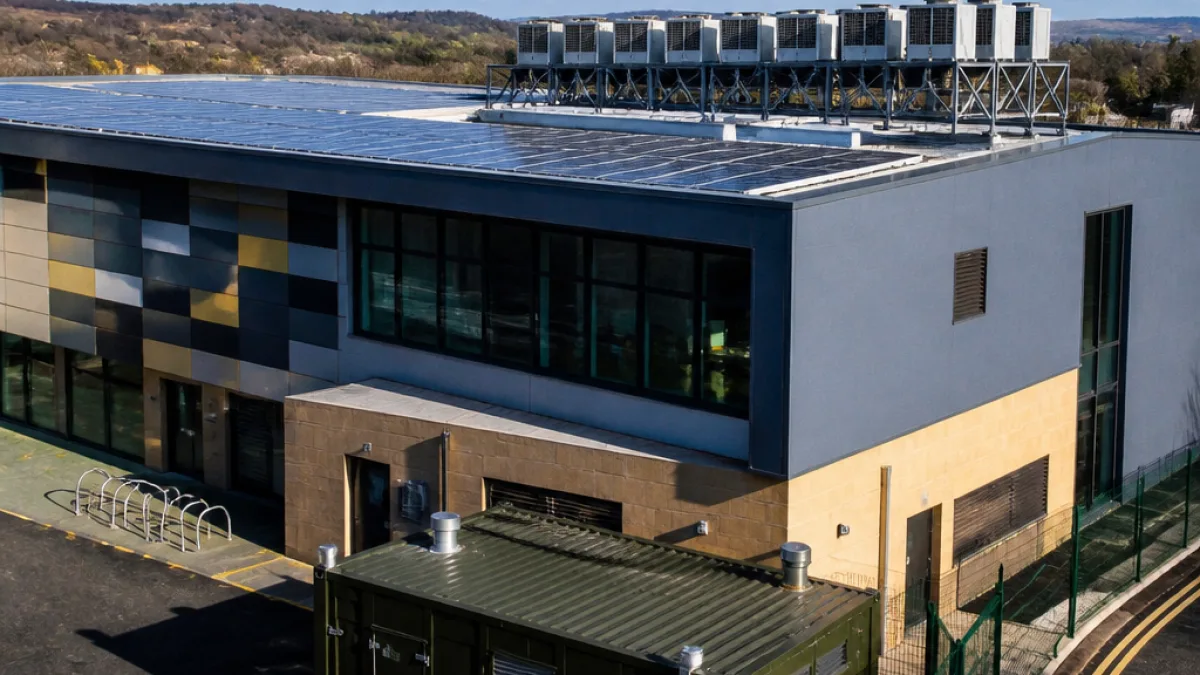
The modern, two‑storey centre on Station Road opened in 2010, replacing the former pool on Hollins Mill Lane. Although relatively new, the building’s energy demand is dominated by the cost of keeping the pool warm, prompting the council to seek an upgrade to more efficient, electrically powered heat pumps. The site already carries a significant array of rooftop solar panels, which helps offset consumption.
What is planned and where the kit would go
Under the plans, the heat pumps would sit on a new metal gantry with associated plant housed in a weather‑resistant container. The council says the enclosure would largely match the pool’s existing cladding to blend in. The scheme requires space for 16 evaporator units, set out evenly across the gantry. While parts of the installation will extend by about 2.8 metres above the current roofline, officers argue this will be scarcely noticeable from surrounding viewpoints due to the building’s setting.
| Facility | Sowerby Bridge Swimming Pool and Fitness Centre |
|---|---|
| Current heating | Gas |
| Proposed system | Air‑source heat pumps |
| Rooftop equipment | Approx. 16 evaporator units on gantry |
| Height above roofline | About 2.8m |
| Existing renewables | Solar panels on flat roof |
| Planning status | Application submitted to Calderdale Council |
Noise, views and the local setting
Visual changes are a recurring concern with rooftop plant. The council’s submission contends the impact here should be very limited, due to the industrial character behind the pool and the intention to colour‑match the cladding. Residential amenity has been flagged as a factor, but the council argues that background sounds from the River Ryburn, the River Calder and the nearby main road will help mask operational noise from the units.
“The proposed air‑source heat pump units will have a huge impact on reducing the carbon emissions of Sowerby Bridge Pool,” the council states. “The proposal is modest in scale and colour meaning that it will have very limited visual impact.”
Why the change matters for pool users
The fitness centre is described in the application as a heavily used public facility with steady footfall throughout the day. Reliable, efficient heating is central to keeping the pool open and comfortable for swimmers, classes and clubs. By switching to heat pumps, the council aims to reduce exposure to gas price volatility and cut operating emissions, while retaining stable water temperatures for users.
Officers also frame the Sowerby Bridge project within a broader push to improve energy performance across council‑run pools, pointing to Todmorden Sports Centre as a recent example of similar work. The council’s approach signals a shift towards low‑carbon systems across high‑demand sites, where upgrades can deliver sizeable savings over time.
What happens next
Because the equipment alters the building’s appearance and introduces new rooftop plant, the proposals require planning consent. If approved, the council would move ahead with installation of the gantry, enclosure and heat pump units, alongside any acoustic or visual mitigation measures set out in conditions. The application materials emphasise efforts to keep the structure as discreet as possible while meeting the thermal load of the pool.
- New heat pumps to replace the existing gas heating system.
- 16 evaporator units proposed on a rooftop gantry, rising about 2.8m above the roofline.
- Council expects significant emissions reductions and limited visual and noise impacts.
Residents and pool users can track the application via the council’s planning portal. If consent is granted, the upgrade would mark a notable change in how one of Calderdale’s busiest leisure sites is powered and heated, aligning day‑to‑day services with the authority’s stated focus on energy efficiency across its estate.