Major shift in government priorities
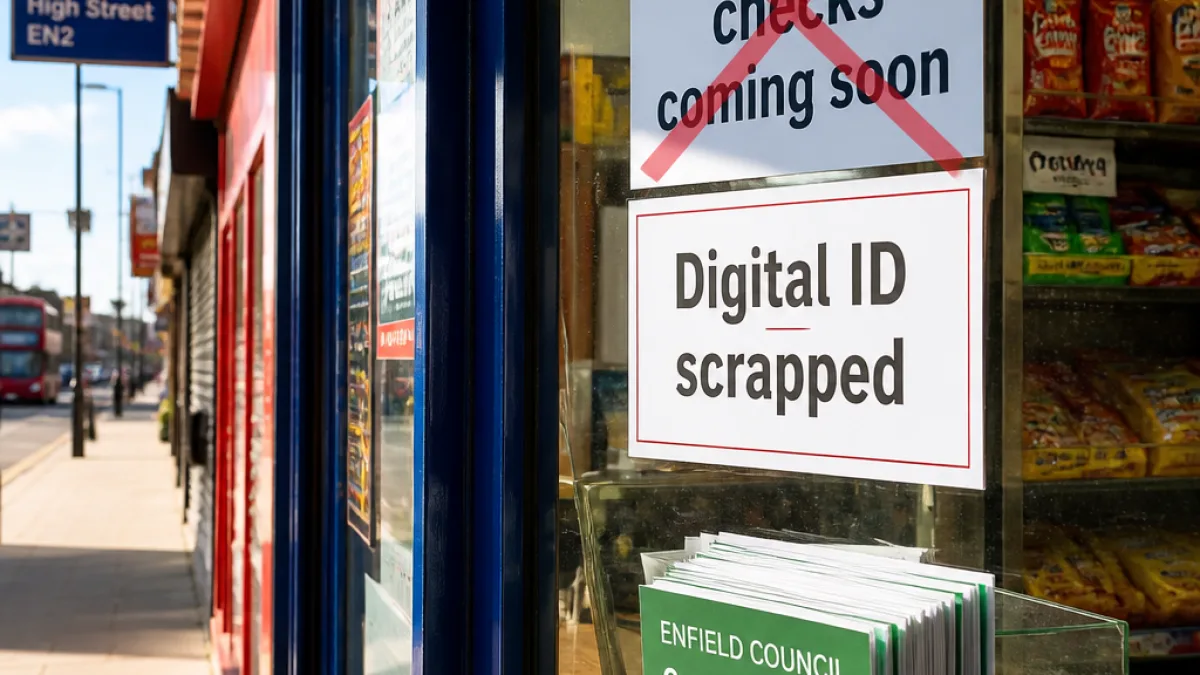
The incoming prime minister, Andy Burnham, will cancel plans for a national digital ID scheme when he takes office on Monday, with resources instead channelled into measures aimed at easing the cost of living. His team framed the decision as a reset to focus on practical help, signalling an early break from an agenda closely associated with Sir Keir Starmer.
A spokesperson for the new administration said the Government would concentrate on what the public needs most at this stage. In their words:
“[We will] put its focus where people need it right now.”
“That means all the time and resource that was going to be spent on a national ID scheme will go instead to where it’s most needed, such as helping with the cost of living.”
The digital ID proposal, first trailed ahead of last year’s Labour conference and later highlighted at the Global Progress Action summit in London, had been presented as a tool to support enforcement against illegal immigration. It was initially linked to mandatory right-to-work checks, but ministers subsequently indicated participation would be voluntary for that purpose.
Cost pressures and contested estimates
The Office for Budget Responsibility previously assessed the programme’s potential cost at £1.8 billion over three years. While Downing Street rejected that figure at the time, it did not publish an alternative estimate. A parliamentary committee noted earlier this year that the absence of an official figure left open the possibility of higher costs.
Ministers had also described digital identity as a foundation for a more integrated, app-based state, characterising it as the potential “bedrock of the modern state” in a model of “government by app”. Support waned after the initial announcements, and the scope was softened before today’s development.
Local implications for Enfield
Scrapping the scheme has practical consequences for residents and businesses in Enfield:
- No national roll-out of a digital ID requirement for everyday interactions with government services at this time.
- Employers locally will not be compelled to adopt a new mandatory digital ID system for right-to-work checks; existing verification practices remain in place.
- Public resources previously earmarked for digital ID infrastructure are to be reallocated towards measures addressing household bills and living costs, though detailed spending lines are yet to be set out.
With household budgets under strain, the refocus promises near-term relief efforts. Specific allocations have not been published, but the policy direction suggests a shift away from major technology platforms towards more immediate support.
Political reaction
Opposition parties have challenged the move and the framing around it. Shadow technology secretary Julia Lopez criticised Labour’s handling of the project and accused the incoming administration of repackaging an earlier retreat. She said:
“Labour have wasted millions of pounds on this project and now Andy Burnham is trying to pretend he’s riding to the rescue. … Andy Burnham should stop the political theatre and be clear about what exactly he is scrapping.”
Liberal Democrat comments were also referenced, though further details were not provided in the material released on Saturday evening.
How the decision compares
| Item | Detail |
|---|---|
| Estimated programme cost (OBR) | £1.8bn over 3 years (disputed by government) |
| Policy scope (right-to-work) | Shifted from planned mandatory to voluntary participation before cancellation |
| New focus for resources | Measures to tackle the cost of living |
What to expect next
Residents should expect further detail in the coming days on how funds will be redirected and what, if any, transitional steps will follow for departments that had begun preparatory work on digital identity. For employers in Enfield, there is no new compliance regime to implement, reducing uncertainty around hiring checks while the Home Office continues with existing verification frameworks.
The incoming government’s choice to prioritise immediate household pressures over a multi-year identity infrastructure marks a clear change in emphasis. As official guidance is published, InfoRadar will track what this means for local services, from council-administered support to national schemes accessed by Enfield residents.