Councillors turn down rural home proposed for Broxburn holding
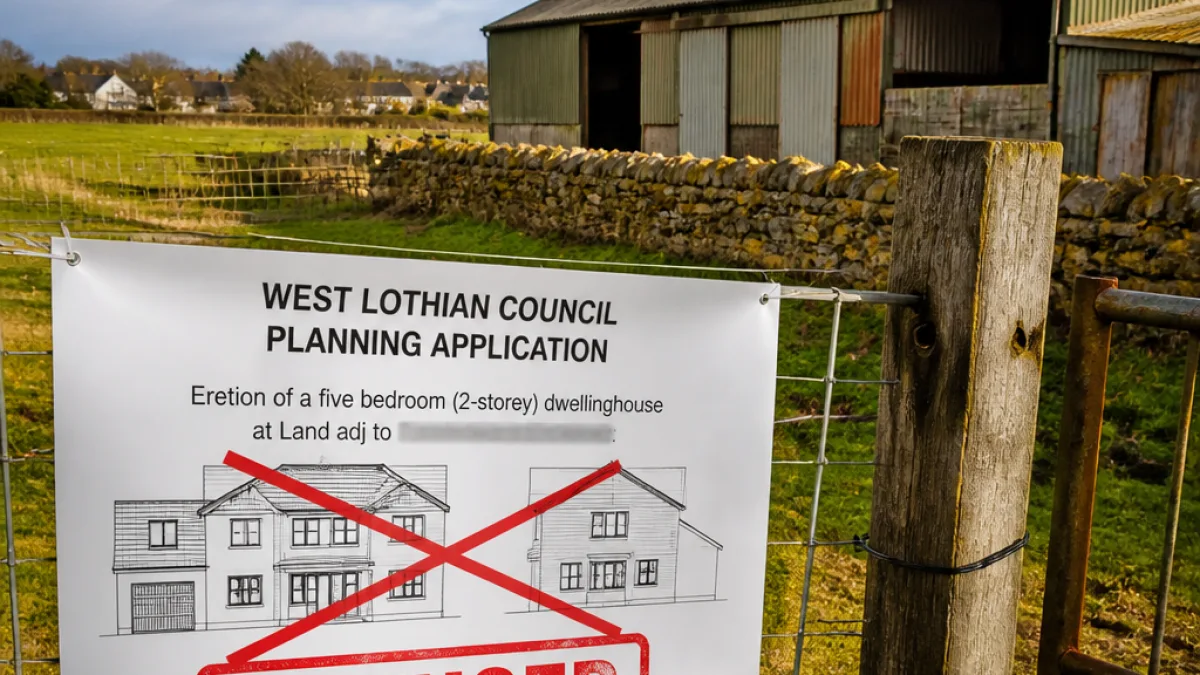
A bid to demolish an agricultural shed on a smallholding near Broxburn and replace it with a two-storey, five-bedroom house has been rejected by West Lothian Council's Development Management Committee. The application, lodged by Gordon Bow for land at Holmes Holdings, sought permission to create a home for his son, but planning officers warned it ran contrary to stringent policies governing new housing in the countryside and recommended refusal.
Applicant cites care needs; officers warn of scale and dominance
An agent for Mr Bow told councillors that the applicant is living with a debilitating illness, and the proposed house would enable his son to live nearby to provide support. The agent indicated a willingness to amend the proposals to address identified policy breaches, noting the design could be altered to meet council requirements. Despite this, officers’ reports highlighted the building’s overall scale and materials as inappropriate for the rural setting, with the height and bulk considered visually dominant compared with the existing shed.
Height and massing underpin refusal
Committee papers set out the dimensions of the proposed dwelling and the basis for officers’ concerns. The eaves and ridge heights were found to exceed those of the current agricultural building, which officers said would intensify its presence in open countryside.
| Feature | Proposed house | Effect vs existing shed |
|---|---|---|
| Eaves height | 5.5 m | Higher than existing |
| Overall height | 8.345 m | ~1.9 m taller |
Officers concluded the additional height and massing, coupled with the proposed external materials, would make the structure a dominant feature in its countryside context, contrary to multiple policies restricting new-build houses away from established settlements.
Debate over countryside rules and consistency
Conservative group leader Damian Doran-Timson urged colleagues to consider whether the policy framework was being applied too stringently, while accepting the principle that new dwellings cannot be permitted indiscriminately across the rural area. He referenced recent or contemplated developments that change the rural landscape, such as large-scale solar panel proposals and the substantial expansion of housing around Winchburgh, arguing that scope existed to work with the applicant on a compliant design.
“Rules are for the guidance of wise men and obedience of fools.”
The committee heard that the applicant’s agent was prepared to engage with planning officers to bring the scheme into line with the 11 identified areas of non-compliance. However, members ultimately sided with the officer recommendation to refuse, given the extent of policy conflict and the visual impact described in the report.
What officers said the scheme fell short on
- Height and massing: The two-storey form and increased ridge height were deemed out of keeping with the setting.
- Materials and appearance: Proposed finishes were considered likely to increase the building’s prominence.
- Policy compliance: Officers cited 11 separate policy tests for countryside development that the submission did not currently satisfy.
The planning report stressed that new homes in the countryside are tightly controlled, with exceptions generally limited and closely defined. In this case, officers considered that the justification advanced did not outweigh the cumulative policy concerns or mitigate the visual impact.
Implications for rural applicants in West Lothian
The decision underscores the council’s established approach to countryside protection, particularly around settlement edges in West Lothian. While members heard arguments about personal circumstances and evolving rural land uses, the committee placed weight on built form and landscape character. The discussion suggests that any future attempt to resubmit would need to substantially alter the building’s scale, design and materials to reduce its presence, and address each area of policy conflict set out by officers.
For residents and landholders considering similar proposals, the debate serves as a reminder that design, siting and compliance with countryside policies remain decisive. In this case, councillors were not persuaded that the balance lay in favour of a new dwelling of the scale proposed at Holmes Holdings, despite an expressed willingness by the applicant’s side to refine the plans. The refusal keeps the rural policy line intact, pending any revised submission that demonstrably reduces impact and meets the detailed criteria highlighted by planning officers.