MP presses ministers as residents voice safety concerns
The Labour MP for Livingston has pressed the Scottish Government to step in with extra support for policing the dangerous use of illegal off‑road bikes, modified e‑bikes and motorised scooters in West Lothian. Gregor Poynton said the matter is raised repeatedly at his constituency street surgeries, where people tell him they are "fed up" with near‑misses on pavements, paths and in parks, and often doubt that reporting incidents will lead to action.
"People tell me they often don't bother reporting incidents because they feel nothing will happen. That has to change... Police Scotland works incredibly hard, but officers need the resources to tackle this issue proactively, not simply respond after the fact... [Government] should properly fund dedicated enforcement operations, invest in technologies like drones to help locate offenders safely, and ensure officers have the capacity to seize dangerous illegal vehicles and take them off our streets for good wherever the law allows. Communities deserve to feel safe in their own neighbourhoods."
Mr Poynton has written to ministers arguing for targeted funding so that local officers can run proactive operations, make use of technology to identify riders without engaging in risky pursuits, and remove unsafe machines where legislation permits. He said the aim is to restore confidence that reporting problems leads to consequences for offenders.
FOI data points to persistent problem
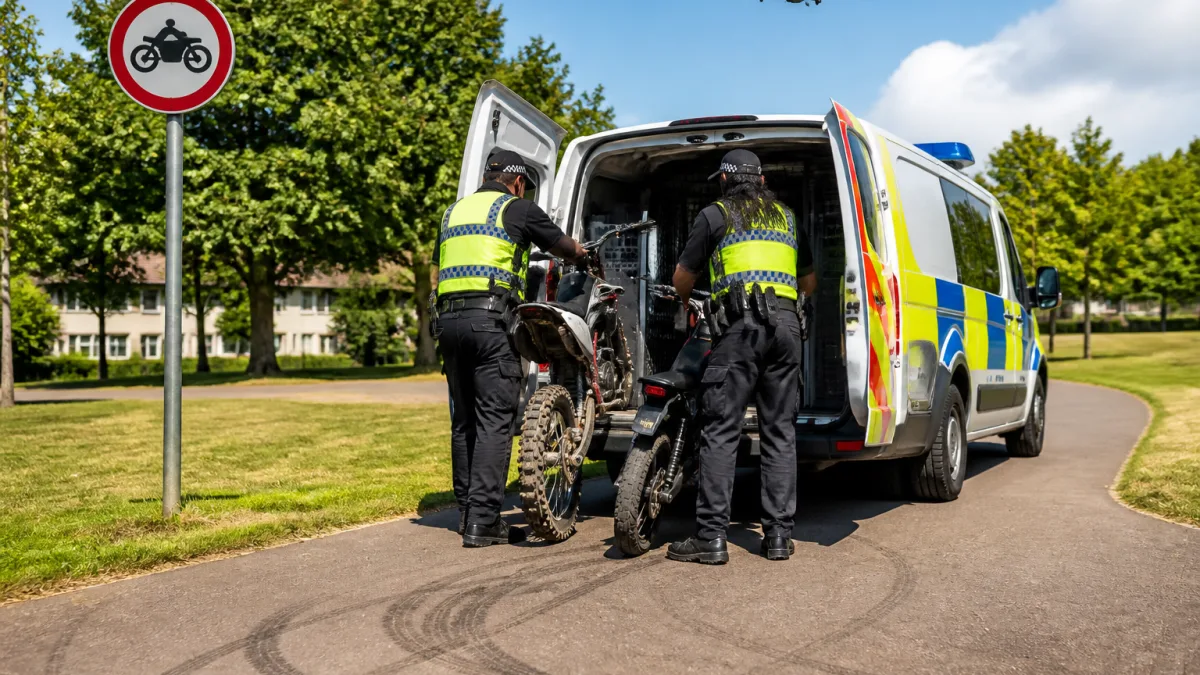
Figures released under freedom of information rules show that across West Lothian there have been 60 seizures of motorcycles, e‑bikes, quad bikes and e‑pedal cycles by Police Scotland in the four years to June 2026. Within that period, 22 were seized during 2025, indicating sustained enforcement activity in the county.
| Period | Number of vehicle seizures |
|---|---|
| Four years to June 2026 (West Lothian) | 60 |
| Calendar year 2025 (West Lothian) | 22 |
Police have previously issued public appeals in West Lothian following a spate of incidents, urging information on riders using bikes in ways that cause alarm or endanger pedestrians. While enforcement powers exist, officers frequently balance public safety against the risks that pursuits can pose, particularly in built‑up areas and shared spaces.
What counts as a legal e‑bike on public roads
Electrically assisted pedal cycles are permitted on roads and cycle paths if they meet strict criteria. The source data reiterates two headline conditions:
- A maximum assisted speed of 15.5 mph.
- A motor with a maximum continuous rated power of 250 watts.
Machines that exceed these limits, are modified to remove speed caps, or are used off‑road without permission are not treated as standard e‑bikes in law and can be classed as motor vehicles, bringing requirements such as insurance, registration and appropriate licensing. Non‑compliance can result in seizure when powers allow.
Calls for targeted action and community confidence
Mr Poynton’s intervention aligns concerns from constituents with a practical ask of government: to equip local policing teams with the capacity to act upstream rather than react after complaints. His letter argues for:
- Dedicated enforcement operations to deter and disrupt illegal use in known hotspots.
- Investment in technology such as drones to safely identify riders and gather evidence without risky chases.
- Resources to seize vehicles being used illegally, within the scope of current legislation.
Residents’ frustration, he said, stems from repeated encounters in parks and on paths, where riders can cut through estates and green corridors at speed. He contends that visible, preventative operations would signal that reports are taken seriously and reduce the perception that offences go unchecked.
Local impact and next steps
For communities across Livingston and the wider county, the concerns are as much about day‑to‑day quality of life as about serious harm: parents with buggies on shared pavements, older residents walking to shops, or children cycling home from school. Even when incidents fall short of injury, near‑misses erode confidence in using public spaces. The FOI figures underline that officers are taking action where they can, but the MP’s view is that more support would enable a steadier tempo of proactive policing.
The Scottish Government has been asked to consider earmarked funding and to look at how best to resource policing responses tailored to the problem. Police Scotland, for its part, has consistently encouraged the public to share information that helps identify riders, storage locations and movement patterns, enabling safer enforcement without escalation.
As this debate moves from individual complaints to budget decisions, the question for ministers will be whether targeted investment can reduce harms and restore confidence more effectively than ad‑hoc responses. For now, residents are being urged to continue reporting concerns and to note locations, times and descriptions that can assist officers in building an evidence‑led approach.