Tourism spend climbs, buoyed by heritage and screen exposure
West Lothian’s visitor economy has surged, generating almost £300 million in the last year, with a blend of heritage attractions, film and television exposure, and major retail footfall driving the rise. Council papers highlighting overall visitor activity have prompted local debate about how the county counts and compares those numbers — particularly the balance between tourism at sites such as Linlithgow Palace and the high-volume footfall registered at Livingston’s main shopping centre.
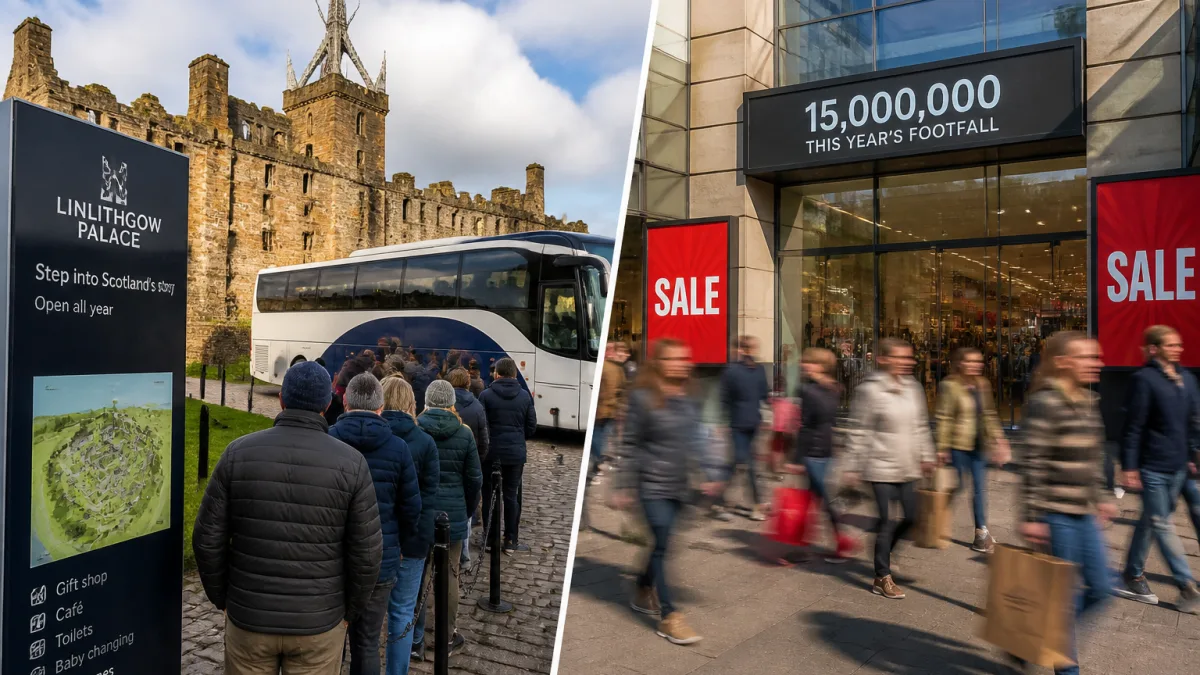
The historic royal residence — birthplace of Mary Queen of Scots — continues to be a focal point for domestic and international visitors. Its profile has been elevated further by the popularity of screen productions filmed in and around Linlithgow, including the globally followed series Outlander. At the same time, West Lothian’s modern retail offer exerts a powerful pull: the Livingston shopping centre recorded around 15 million visits in 2025, far outstripping single-site heritage numbers but representing a different kind of visitor activity.
Local concern over comparisons
In a discussion sparked by the latest council reporting, Linlithgow SNP councillor Pauline Orr urged caution about setting retail footfall alongside heritage admissions. She noted that Linlithgow Palace welcomed 85,342 visitors in 2025 — a 4% year-on-year increase. Applying that trend as a simple guide, she said a figure in the region of 88,700 for the year to March 2026 would be a reasonable assumption, though she stressed the two types of destination operate on entirely different patterns.
“You cannot compare the two... The shopping centre will attract multiple visits from the same person throughout a single year whereas a historical site won’t... There is a cost to enter whereas you can walk into the centre for nothing... The two are just not comparable.”
Her remarks reflect concerns from local residents who felt the juxtaposition risked diminishing Linlithgow’s reputation. The papers in question referenced the overall number of people coming to the county without drawing a line between shoppers and leisure tourists — a distinction that matters when allocating public resources, marketing budgets and transport planning.
What the numbers show — and what they don’t
While the aggregate income figure underscores a strong recovery and diversification in West Lothian’s visitor economy, like-for-like comparisons between different attractions can be misleading. Retail centres are free to enter and encourage repeat trips by the same individuals, whereas paid heritage sites tend to attract less frequent, often once-per-year visits from a broader catchment. That difference has implications for how the council, businesses and national agencies design services, measure success and target support.
| Location | Visitor metric | Period |
|---|---|---|
| Livingston shopping centre | 15,000,000 visits | 2025 |
| Linlithgow Palace | 85,342 visitors | 2025 |
| Linlithgow Palace (assumption noted by Cllr Orr) | ~88,700 visitors | Year to March 2026 |
Consequences for planning and public services
For West Lothian Council and its partners, the headline figure of nearly £300m in visitor-generated income is welcome, but the composition of that activity matters. Understanding whether spending is concentrated in retail, heritage or family attractions influences decisions around transport links, signage, streetscape maintenance and the timing of events. It also shapes workforce needs in hospitality and retail, and the balance of investment between town centres and historic sites. Clearer reporting can help avoid drawing unhelpful comparisons and ensure that limited budgets are targeted where they will have the greatest impact.
- Retail footfall often reflects repeat local and regional trips, affecting parking, public transport frequency and litter management.
- Heritage visits tend to be planned, higher-value single trips that rely on good information, guided access and conservation funding.
- Screen tourism linked to productions filmed locally can lift international interest but is sensitive to marketing and site capacity.
Harnessing growth while protecting place
Linlithgow’s profile as a heritage town means it benefits from national and international attention, but it also depends on careful stewardship of historic assets and the public realm. Livingston’s shopping centre remains a major economic engine, drawing large numbers with a distinct set of service demands. Both contribute to the county’s prosperity in different ways. As the council refines how it captures and reports visitor activity, a more granular approach — distinguishing shoppers from leisure tourists — would support better decision-making, from bus scheduling to visitor infrastructure and promotion of key sites. That, in turn, will help ensure the county sustains growth without undermining what makes each place distinctive.