Tourism windfall prompts scrutiny of what counts as a visitor
West Lothian’s visitor economy is estimated to have generated almost £300 million in the last year, buoyed by a mix of screen-driven interest and enduring heritage appeal. While on-screen exposure has helped draw attention to sites in and around Linlithgow, local leaders are urging a more careful distinction between tourist trips to attractions and the everyday footfall recorded at major retail destinations.
The county’s profile has been lifted in part by internationally popular television and film productions, not least Outlander, which features locations around Linlithgow and has brought fans to the historic royal burgh. Alongside this heritage-inspired interest sits the significant pull of Livingston’s shopping centre, whose scale of activity dwarfs that of individual attractions and has become a focal point in how visitor numbers are reported and interpreted.
Comparisons questioned as retail footfall towers over heritage admissions
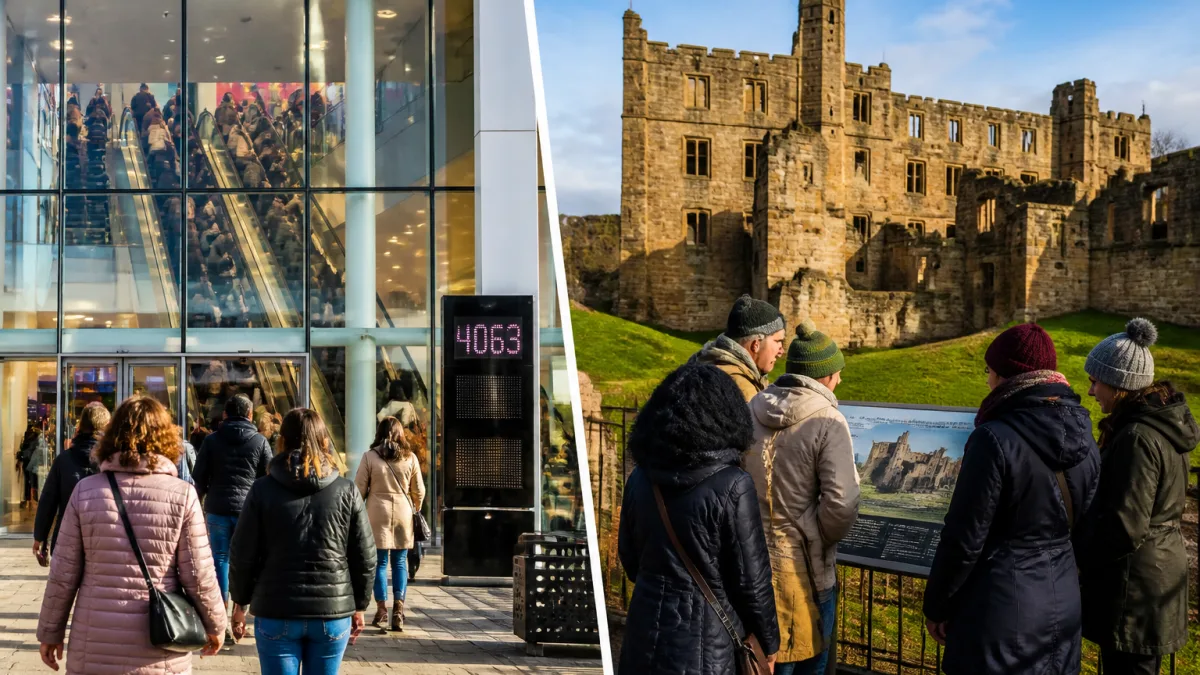
Data presented to councillors set out starkly different scales: 15 million visits were recorded at Livingston’s shopping centre in 2025, while Linlithgow Palace welcomed 85,342 visitors that year. Linlithgow’s SNP councillor Pauline Orr has called for clearer categorisation, arguing that comparing retail footfall with admissions to a paid heritage site is misleading and risks undermining the town’s reputation.
“You cannot compare the two. Visitors to Linlithgow Palace in 2025 were 85,342. That was a 4% increase on the previous year so with that assumption in mind, in the year to March 26 a figure of 88,700 would be reasonable.”
She added that people may visit the shopping centre repeatedly across a year without charge, whereas a historic site typically involves a one-off paid visit, making the metrics fundamentally different. According to councillor Orr, local residents were unhappy with comparisons that cast Linlithgow in an unfavourable light when the underlying measures track very different behaviours.
What the figures show
The available numbers illustrate the scale gap between retail footfall and attraction admissions, and why clarity matters for policy, investment and marketing decisions.
| Location/Metric | Year/Period | Reported figure |
|---|---|---|
| Livingston shopping centre (footfall) | 2025 | 15,000,000 |
| Linlithgow Palace (visitors) | 2025 | 85,342 |
| Linlithgow Palace (indicative, based on 4% rise) | Year to Mar '26 | 88,700 (councillor’s estimate) |
Policy implications for transport, heritage and town centres
With tourism-linked income nearing £300m, getting the definitions right goes beyond semantics. The way visitor activity is captured can influence funding bids, transport prioritisation, and how the council and partners target support for town centres, events and conservation. For example, an over-reliance on large retail footfall as a proxy for tourism could skew marketing spend away from heritage and cultural assets that deliver longer dwell times and higher-value trips across the county.
The screen tourism effect remains a bright spot for Linlithgow and surrounding areas, but long-term growth depends on access, maintenance and interpretation at historic sites. Meanwhile, the sheer scale of retail trips in Livingston brings its own operational considerations: traffic management, public transport capacity, and ensuring that local businesses benefit from visits that might otherwise begin and end within a single complex.
Next steps: clearer counting to support smarter investment
Council papers referenced county-wide visitor totals without fully separating shoppers from tourists. Bringing greater precision to those categories would provide a sounder basis for destination planning. That could include discrete reporting streams for paid attractions, free cultural sites, events audiences and retail footfall, enabling more tailored interventions.
- Develop distinct metrics for retail footfall versus attraction and heritage visits.
- Align marketing and infrastructure plans with the types of visits that drive higher-value stays.
- Use screen tourism interest to disperse visitors across West Lothian, reducing pressure points.
West Lothian’s diverse offer—heritage, culture and modern retail—underpins a robust visitor economy. As the county looks to sustain that £300m-scale contribution, a clearer statistical picture will help direct investment to the places and experiences that deliver the greatest benefit for residents and businesses alike.