Visitor economy approaches £300m as debate grows over what counts
West Lothian’s visitor economy generated almost £300m in the last year, with screen tourism, heritage attractions and strong retail footfall all credited for the uplift, according to council papers. But the way these numbers are presented has prompted debate locally over how to compare a major shopping destination with a historic site such as Linlithgow Palace.
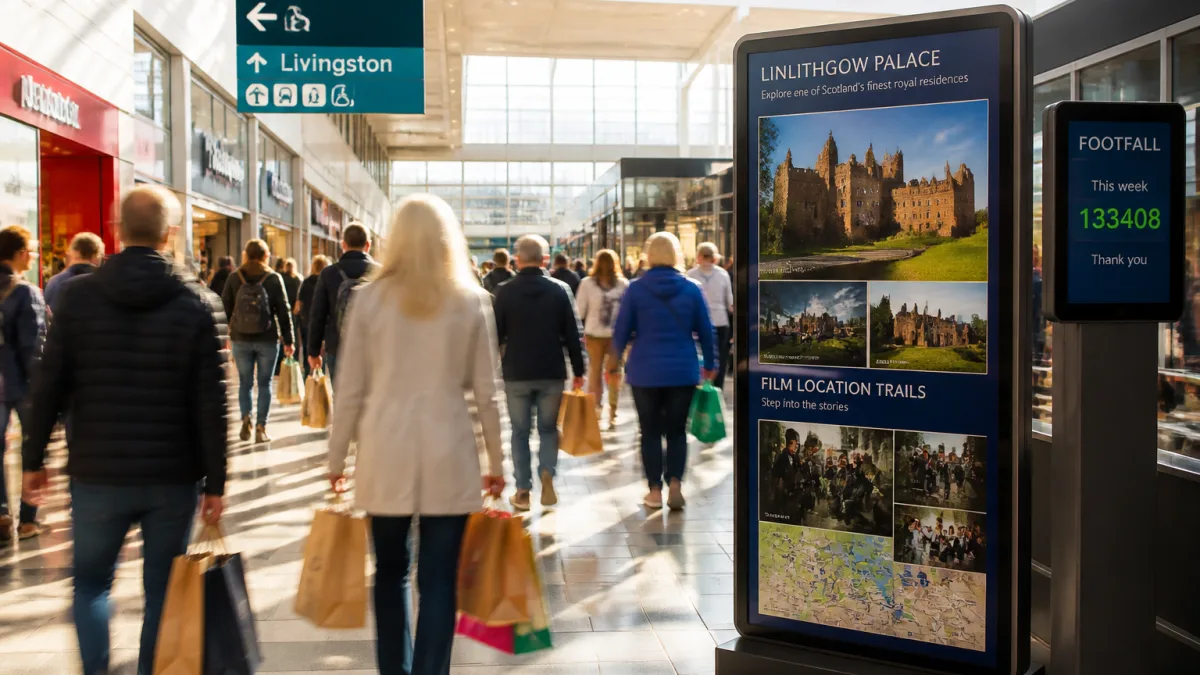
The county’s profile has been lifted by repeated appearances on screen. The hit series Outlander, partly filmed around Linlithgow, continues to draw international interest to locations associated with the show and to the town’s royal palace — the birthplace of Mary, Queen of Scots. Alongside that heritage pull, retail remains a dominant magnet: Livingston’s main shopping complex recorded 15 million visits in 2025, far eclipsing the numbers at any single paid-for attraction.
Councillor urges fair comparisons between retail and heritage visits
Linlithgow councillor Pauline Orr welcomed the overall rise in visitors while challenging social media commentary that had set the palace directly against the shopping centre. She noted that 85,342 people visited Linlithgow Palace in 2025, a 4% increase on the previous year, and suggested that, on that trajectory, a figure in the region of 88,700 for the year to March would be reasonable.
“You cannot compare the two… The shopping centre will attract multiple visits from the same person throughout a single year whereas a historical site won’t… There is a cost to enter whereas you can walk into the centre for nothing… The two are just not comparable.”
Council documents referenced the scale of total visits to the county, without separating out retail footfall from tourist visits. That framing drew some local pushback from residents concerned that Linlithgow’s heritage offering risked being diminished when set against mass retail traffic.
What the numbers show — and what they don’t
On the face of it, the gap between a paid-for historic site and a free-to-enter shopping destination is vast. Yet those figures describe very different behaviours: one largely reflects local and repeat shopping trips; the other captures mostly single-occasion leisure visits that carry an admission price and a different pattern of spend in surrounding businesses.
| Location | 2025 visits/footfall | Notes |
|---|---|---|
| Linlithgow Palace | 85,342 | 4% rise on previous year; paid entry |
| Livingston shopping centre | 15,000,000 | Open-access footfall; repeat local use likely |
Both contribute to the almost £300m in local activity highlighted by the council. But the mix of spend, and the pressures it places on infrastructure, differ. Heritage sites rely on ticket income and targeted visitor facilities, while shopping centres anchor employment and regular footfall that supports a wider network of retail and hospitality units.
Policy questions for the council and partners
The latest figures arrive as the council works with partners to sustain growth while protecting town centres and heritage assets. With transport links through Linlithgow and Livingston carrying increasing numbers of visitors, questions naturally follow about how best to invest in signage, active travel routes and public realm improvements so that visitor flows benefit high streets and historic quarters as well as large retail hubs.
- Data clarity: distinguishing retail footfall from tourist visits would help target support where it has the most impact.
- Heritage stewardship: steady growth at paid attractions strengthens the case for conservation and improved visitor facilities.
- Economic spread: directing visitors beyond single destinations could improve spend in smaller towns and villages.
Local businesses across accommodation, food and drink, and visitor services stand to gain if the current momentum is maintained. Meanwhile, the conversation sparked by the comparison between a palace and a shopping mall highlights a practical truth: West Lothian’s visitor economy is not one thing, but several overlapping activities that need different measures and support.
Residents have made clear they value both the international draw of sites like Linlithgow Palace and the everyday convenience and employment that Livingston’s retail centre provides. Framing and tracking each on its own terms — while celebrating the combined headline figure approaching £300m — will be central to shaping the next phase of growth.