Observers asked to leave after interruption in chamber
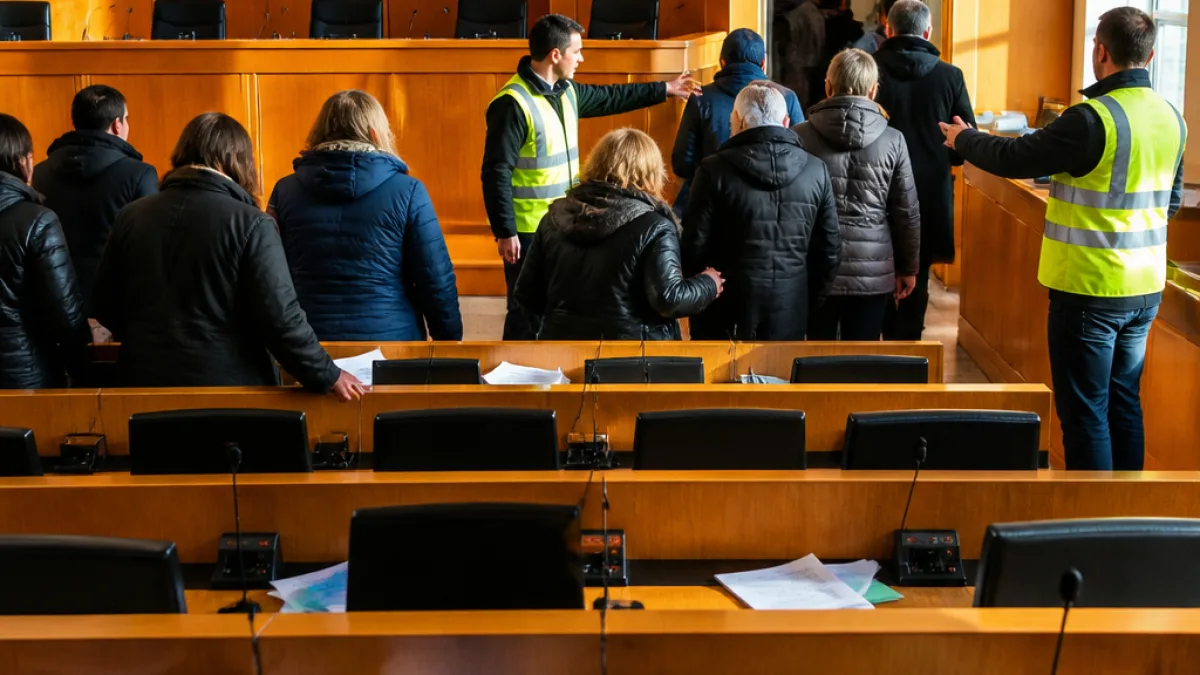
A full meeting of Gateshead Council at the Civic Centre was briefly disrupted when the public gallery was cleared following an interruption from the audience. Councillors appealed to the chair after a term shouted from the gallery during a female councillor’s contribution was judged to have crossed acceptable standards of conduct.
Members raised the incident with the Mayor of Gateshead, Coun Andrea Graham, who was presiding. She instructed that all members of the public be removed, including those seated outside the main gallery, to restore order.
Concerns over behaviour and access
During the exchange, councillors criticised the language used from the gallery. One councillor called for action to prevent a repeat and for those responsible to be identified. In response, the council’s chief executive, Dale Owens, confirmed that names had been recorded and would be reviewed.
“It was just to say, some of the language and the insults have been completely unacceptable, and I hope everyone can agree on that. I would also request that efforts be made by the relevant officers to find out who they were and make sure they cannot get back in for the next meeting.”
The Leader of the Council, Coun Nick Allan (Reform), cautioned against shutting out observers in future, describing the mass exclusion as a measure he hoped would not be repeated.
“Excluding members of the public en masse, I think it is probably a retrograde step because that is essentially an aberration of democracy. We are here to be seen by members of the public, so I would hope that such radical action is not necessary and we take all due precautions to make sure it doesn’t happen again.”
Meeting resumes and moves to scheduling debate
After the gallery was cleared and order restored, proceedings returned to business. The chamber resumed a discussion on the Reform administration’s proposal to schedule future full council sessions for 4:30pm with a two-hour limit.
The exchange underlines two parallel issues: the need for firm standards in the public gallery to keep meetings orderly, and the importance members attach to keeping council decision-making openly observable. The episode also places a spotlight on the practicalities of chairing contentious items while maintaining public access.
Who said what and what happens next
- Language from the gallery during a female councillor’s speech prompted multiple complaints from elected members.
- The Mayor ordered a full clearance of the public areas to allow business to continue.
- Officers recorded names of attendees, with a review promised by the chief executive.
- The Leader urged that mass exclusions be avoided in future, stressing transparency.
- Debate resumed on proposals to adjust meeting start times and duration.
Key figures and roles
| Person | Position | Action/Statement |
|---|---|---|
| Andrea Graham | Mayor of Gateshead | Directed the removal of the public from the chamber and gallery |
| Dale Owens | Chief Executive | Confirmed names of attendees were taken and would be reviewed |
| Jamie Park | Labour councillor | Condemned the language and called for steps to prevent re-entry |
| Nick Allan | Leader of Gateshead Council (Reform) | Warned against repeating mass exclusions to protect democratic visibility |
Context for Gateshead residents
Public galleries allow residents to watch decisions that shape local services and budgets. Thursday’s removal of observers, while brief, will likely prompt reflection on how to balance meeting conduct with public scrutiny. Councillors’ comments point both to stronger enforcement against disruptions and to caution about curbing public access. Any subsequent action referenced by officers relates to the taking and review of names; no further measures were determined in the meeting as reported.
The scheduling item that followed — a 4:30pm start and two-hour cap for full council — goes to the heart of participation, affecting when residents, staff and councillors can attend. As the administration’s proposal moves through debate, residents who follow proceedings will want to monitor how the authority ensures that meetings remain accessible and orderly.