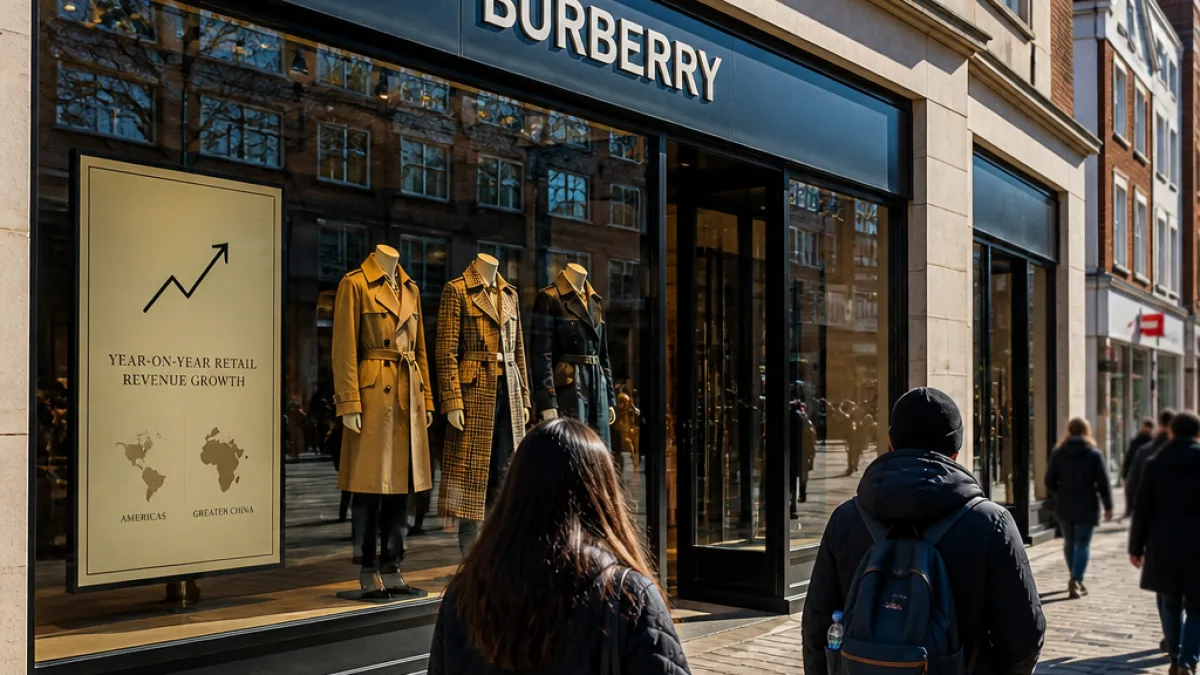
Burberry has told investors its turnaround strategy is beginning to deliver, with gains in North America and China helping to offset weaker trading in Europe. The London-listed luxury group reported a rise in retail revenues for the first quarter, while warning that spending across Europe had been affected by the conflict in the Middle East.
Regional performance highlights
For the 13 weeks to 27 June, Burberry said retail revenues increased by 5% to £455 million year-on-year, partly supported by a 1% benefit from currency movements. Management pointed to double-digit strength in outerwear and positive momentum across several product categories.
- Americas: sales up 12%
- Greater China: sales up 9%
- South Korea: sales up 11%
- Japan: sales down 2%
- Europe, Middle East & Africa: sales down 3%
| Region | Reported change |
|---|---|
| Americas | +12% |
| Greater China | +9% |
| South Korea | +11% |
| Japan | -2% |
| Europe, Middle East & Africa | -3% |
Strategy and product mix
Chief executive Joshua Schulman said the group’s ‘Burberry Forward’ plan, launched in late 2024, had refocused the business on its British heritage and adjusted pricing and product positioning away from some ultra-luxury lines. The company highlighted renewed consumer interest in core pieces such as raincoats, jackets and scarves, with outerwear singled out for particularly strong demand.
“Our strategy is working. We are attracting a broad range of luxury customers across product categories, channels and geographies, reinforcing my confidence in the opportunities ahead.”
The update notes growth from both local shoppers and younger customers in China, and an uplift in South Korea driven by a mix of local and tourist spending. However, trading in Europe and the Middle East was described as a drag on overall performance, with weaker tourist flows linked to the Iran war cited as a contributing factor to the decline.
What this means locally
For readers in Enfield and the wider London area, the results underline the resilience of some British heritage fashion brands amid shifting global patterns of demand. While European footfall has softened, Burberry’s recovery in overseas markets reduces near-term revenue risk for the group and supports its move to refresh product lines and pricing. Local retail and jobs exposure would be most affected if the company were to alter UK store strategies in response to persistent softening of tourist spending or further geopolitical volatility.
Investors and local observers will be watching forthcoming quarterly updates for signs the company can sustain the current momentum across continents while addressing the challenges in Europe.