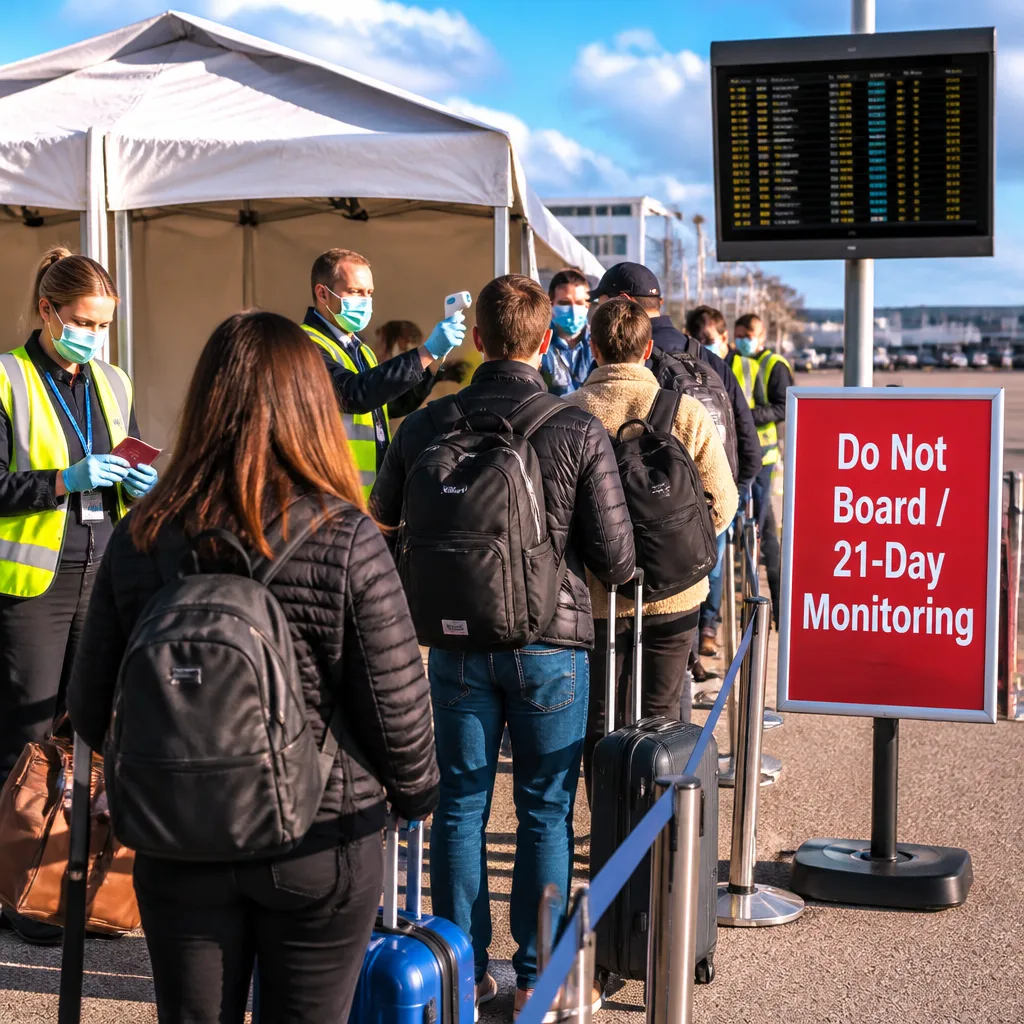
Federal authorities in the United States have introduced temporary screening and entry restrictions for travellers who have recently been in parts of the Democratic Republic of the Congo (DRC), Uganda and neighbouring South Sudan as they respond to an ongoing outbreak of Ebola disease. The measures are intended to limit the risk of importation while the situation develops.
What the measures require
The US Centres for Disease Control and Prevention (CDC), working with the Department of Homeland Security (DHS) and other federal partners, has announced a package of public‑health actions. Key points include:
- 21‑day monitoring: Travellers who have left affected countries should watch for symptoms of Ebola for 21 days after departure and must contact public health authorities immediately if symptoms develop.
- Entry restrictions: US entry is temporarily restricted for all travellers recently in the DRC, and for certain travellers recently in Uganda or South Sudan, with case‑by‑case exceptions for humanitarian or law‑enforcement reasons.
- Do Not Board (DNB): Under authorities cited by CDC and DHS, a Do Not Board process is in place with respect to the DRC; American citizens departing the DRC may be subject to a DNB order but are permitted to return to the US after the 21‑day period.
Recent orders and timeline
On 18 May 2026, CDC and DHS announced screening, entry restrictions and other public‑health steps tied to the outbreak response. A recent administrative order, issued on 13 July 2026, continues the suspension of the right to introduce certain foreign nationals into the United States; that order is effective for 30 days.
Advice for travellers and citizens
US citizens with specific questions about returning from the DRC are directed to the Department of State's Help Abroad resources or emergency helplines. The contact numbers provided are:
| Location | Number |
|---|---|
| From US and Canada | 888‑407‑4747 |
| All other locations | 202‑501‑4444 |
The CDC emphasises that anyone who develops symptoms consistent with Ebola should avoid travel and immediately notify public‑health authorities. The restrictions include humanitarian and law‑enforcement exceptions on a case‑by‑case basis.
Context and implications
The measures reflect federal efforts to reduce the risk of Ebola entering the United States while public‑health teams assess cases and contacts abroad. The agencies have framed the actions as temporary and linked to the evolving outbreak in the DRC and Uganda. Affected travellers and those planning travel to or from the region should monitor official CDC and State Department guidance for updates.
The situation is active and subject to change; public‑health authorities will update requirements and advice as new information becomes available.