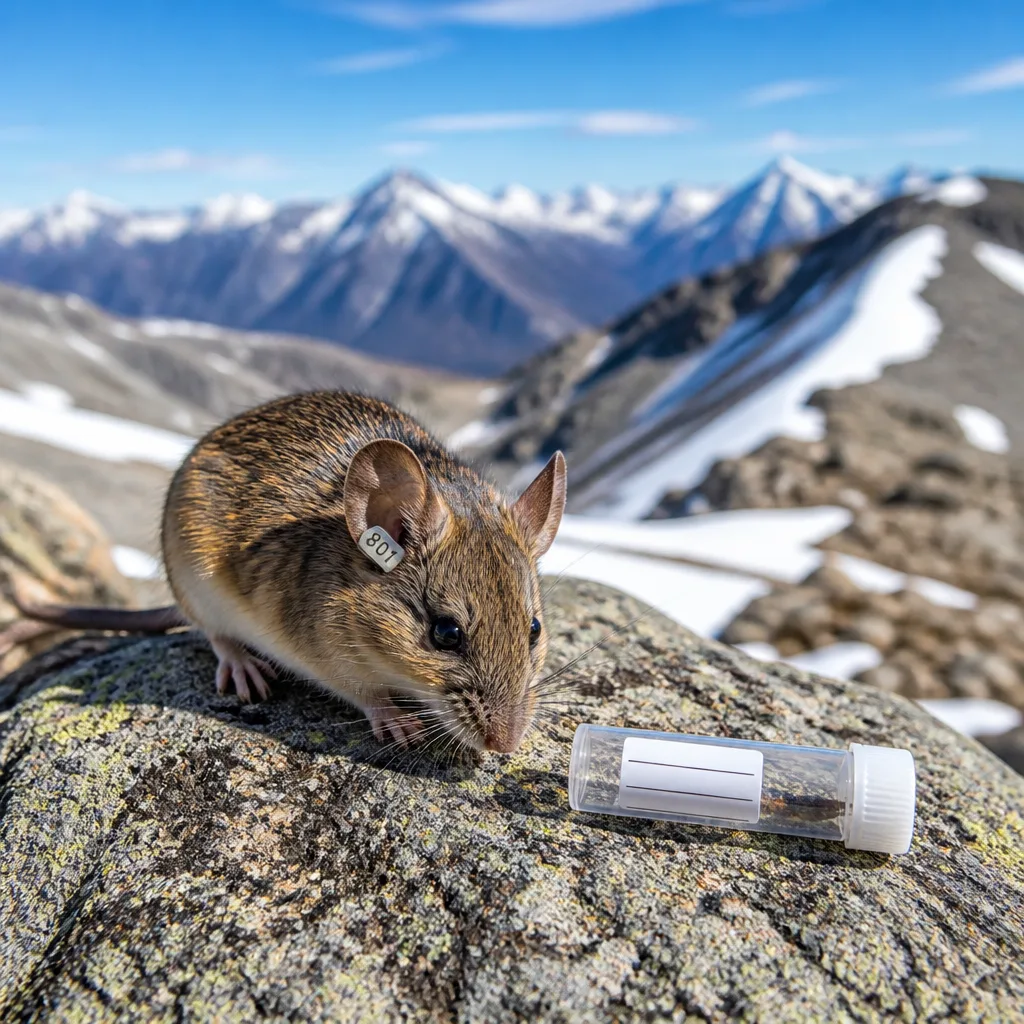
Scientists have uncovered how the Andean leaf-eared mouse (Phyllotis vaccarum) is able to live permanently at elevations approaching 7,000 metres, a zone long considered beyond the sustainable limits for mammals. The new research, based on samples gathered across the species’ extraordinary range, reveals a combination of adaptations that together allow these small rodents to cope with severe hypoxia, low temperatures and scarce food.
An animal that defies expectations
The species occupies habitats from the Pacific shore to high volcanic summits in the Central Andes, permitting direct comparisons of individuals that experience radically different environmental stresses. Field teams collected more than 160 mice across elevations, including specimens from the summit of Volcán Llullaillaco at roughly 6,739 m, where atmospheric oxygen is about 44% of sea-level values and temperatures remain below freezing for much of the year.
“It was completely unexpected. People did not think mammals could survive at these altitudes, but they’re there,”
— Graham Scott, animal physiologist, commenting on the discovery and its implications.
Multiple adaptations, one species
The study indicates the mice did not rely on a single change but evolved a suite of complementary traits that together permit life at extreme altitude. Among the adaptations identified were:
- Physiological adjustments that improve oxygen use under hypoxic conditions.
- Behavioural and ecological flexibility allowing exploitation of limited food resources.
- Biochemical capabilities enabling the detoxification of plant compounds previously not associated with high-altitude specialists.
The detoxification finding is particularly notable: researchers had not anticipated that coping with toxic plant compounds would be a necessary element of surviving at such elevations. It suggests diet-related pressures are important even where primary challenges are often framed solely in terms of oxygen and temperature.
Why this matters
These results revise our understanding of how mammalian physiology can be pushed to its limits. The Andean leaf-eared mouse demonstrates that a single species can span an exceptionally wide environmental gradient by combining multiple survival strategies. This has consequences for:
- how scientists model species’ elevational limits;
- predictions of biodiversity responses to climate change in mountain systems;
- comparative studies of high-altitude adaptation across mammals.
By documenting real animals living where even experienced human climbers struggle to survive, the work underscores both the plasticity of physiological systems and the complexity of ecological pressures at high altitude.
| Datum | Value |
|---|---|
| Maximum recorded elevation (study) | 6,739 m |
| Atmospheric oxygen at summit | ~44% of sea level |
| Specimens analysed | >160 mice |
The work draws on extensive mountaineering fieldwork and integrates ecological, physiological and biochemical perspectives. It establishes the Andean leaf-eared mouse as a striking example of how a combination of traits — rather than a single silver-bullet adaptation — can enable persistence at the edges of habitability.