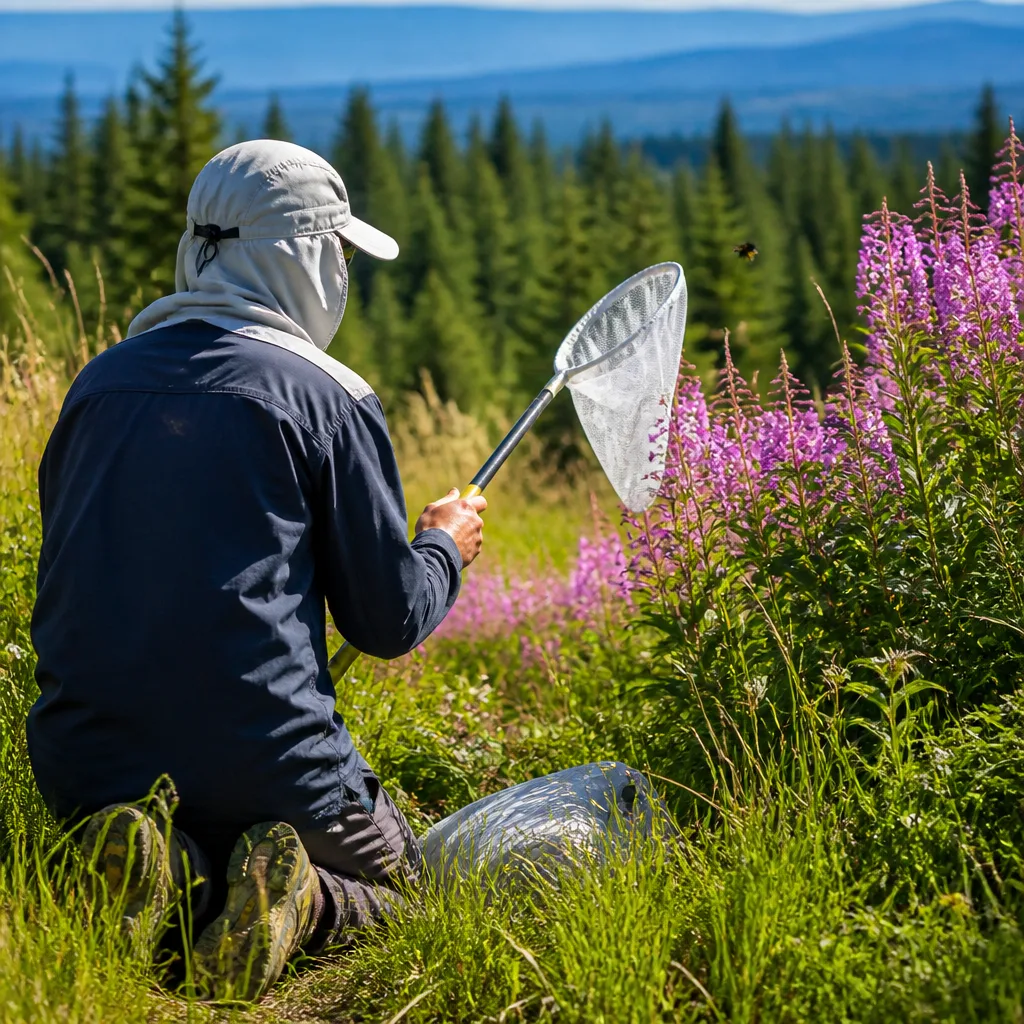
On a July afternoon near Fairbanks, a volunteer for the Alaska Bee Atlas kneels beside blooming fireweed and uses a net to capture a bumblebee — a small action that contributes to a larger scientific endeavour to catalogue the state’s pollinators. For decades, researchers had only fragmentary records of Alaska’s bees; now a coordinated, statewide effort aims to provide reliable, verifiable data about which species are present, where they occur and how their populations are responding to rapid warming.
Why the atlas matters
Alaska presents unusual challenges for entomologists: vast distances, remote habitat and a short field season meant many bee species were known from very few specimens, and some had never been documented at all. The Bee Atlas combines professional researchers, land managers and community scientists to broaden geographic coverage and build a long‑term specimen archive that can be re‑examined as methods improve.
Research goals and methods
The project emphasises specimen‑based records — physical bees that can be verified and studied for decades. Volunteers and scientists collect samples from tundra, forests, meadows and backyards across the state to answer several core questions:
- Which bee species occur in Alaska?
- Where are those species distributed within the state?
- How are species’ ranges and seasonal activity shifting with changing climate?
“Which bee species live in Alaska? Where are they found? How are their ranges changing as the climate warms?”
Because Alaska cannot be systematically surveyed by research teams alone, community participation extends the project’s reach, turning individual specimens into data points for statewide analysis.
Early observations and concerns
Many Alaskan bees are adapted to cold, short summers and erratic weather; some fly in conditions that would immobilise bees elsewhere. Those specialisations make them vulnerable to rapid environmental change. Researchers are already noting shifts such as earlier flowering and changes in bloom timing, which can decouple pollinators from their floral resources. The atlas will provide the baseline needed to detect such mismatches and to identify habitats that support high bee diversity.
Implications for conservation and policy
A robust, verified dataset can inform conservation priorities, land‑management decisions and climate adaptation strategies. Knowing which habitats sustain diverse pollinator communities helps guide protection efforts and restoration work. The long‑term value of specimen collections also means future scientists can reassess identifications and study questions not yet imagined, using the same archived material.
What comes next
The project depends on continued community engagement and sustained support for specimen curation and analysis. As Alaska warms faster than most regions on Earth, establishing a reliable record of bee diversity and distribution becomes a pressing scientific and practical task. The Alaska Bee Atlas aims to turn dozens of individual collecting moments into the comprehensive map that researchers and managers need.
| Atlas objective | Purpose |
|---|---|
| Document species presence | Establish which bees live in Alaska |
| Map distributions | Identify where species occur and potential range shifts |
| Create specimen archive | Provide verifiable records for future study |