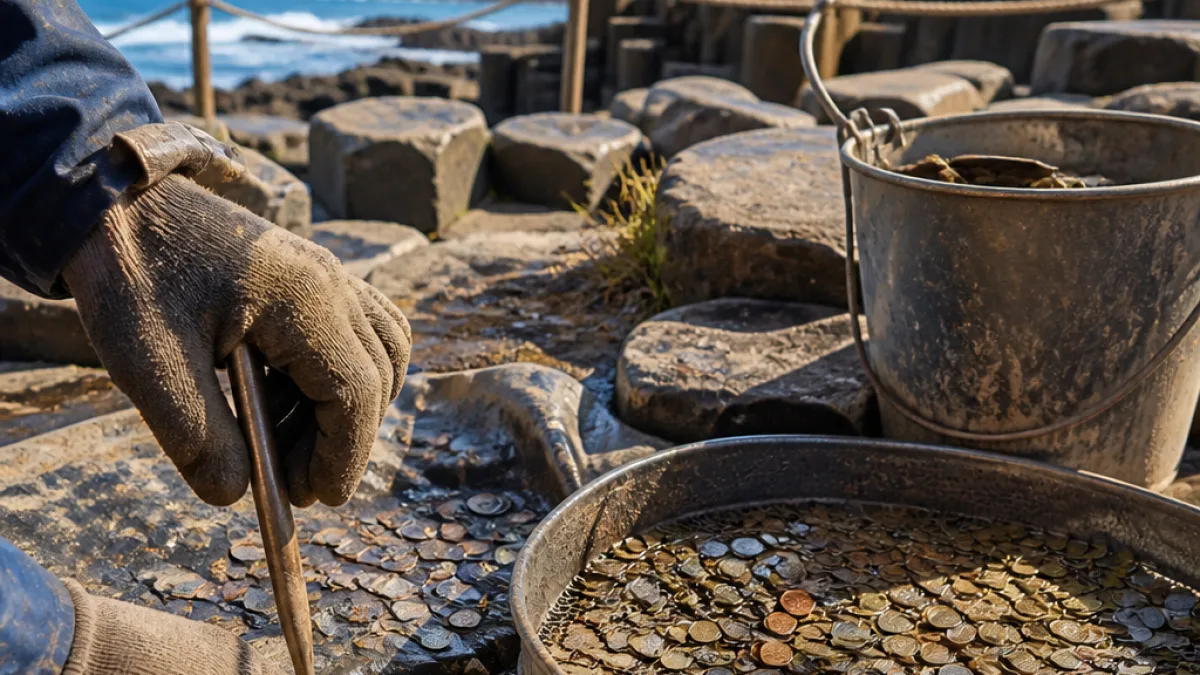
Specialist teams have cleared more than 10,000 coins from the basalt columns at the Giant’s Causeway after research showed the long‑standing habit of wedging money into rock fissures was harming the UNESCO World Heritage Site.
Why the coins had to be removed
The National Trust confirmed a conservation project at the North Antrim landmark has been completed. Conservationists and stonemasons worked together to extract a total of 20.5kg of coins — roughly 10,000 items — from the iconic columns.
The intervention followed the partial collapse of rock on the eastern face of the Grand Causeway in August 2025. A study by geologists from the British Geological Survey found that inserting coins into natural cracks accelerates physical and visual deterioration. As coins corrode they expand and place pressure on surrounding basalt, widening existing fractures.
How the work was carried out
The National Trust led the project in partnership with Causeway Coast & Glens Heritage Trust and specialist stonemasons from The Rock Stone Masonry. Teams aimed to remove deposits carefully to avoid further damage to the ancient formations. Cleared areas are being monitored and any new deposits will be removed as part of ongoing conservation.
"leave no trace"
The Trust launched an international appeal earlier this year asking visitors to "leave no trace" and refrain from inserting coins into the rocks. The campaign attracted worldwide coverage and reached an estimated audience of 3.3 billion people, the organisation said.
- Coins removed: approximately 10,000 (20.5kg)
- Cause of action: partial rock collapse, August 2025
- Partners: National Trust, Causeway Coast & Glens Heritage Trust, The Rock Stone Masonry
- Campaign reach: estimated 3.3 billion people
Local impact and next steps
The practice of leaving coins has become more common in the past decade as visitors copy what they see. The Trust said areas cleared during the recent project have seen very few new coins inserted, suggesting the appeal may be changing visitor behaviour.
Conservation work at the Giant’s Causeway will continue while staff monitor the site for newly deposited coins and other threats. The work highlights the tension between popular tourist rituals and the long‑term preservation of natural heritage, and reinforces the need for careful visitor management at sites of national and international importance.
| Item | Detail |
|---|---|
| Weight of coins removed | 20.5kg |
| Approximate number of coins | 10,000 |
| Notable date | Partial collapse: August 2025 |
Visitors are being asked to respect the appeal to leave the rock formations undisturbed to help protect one of Northern Ireland’s most famous natural landmarks for future generations.