What is changing
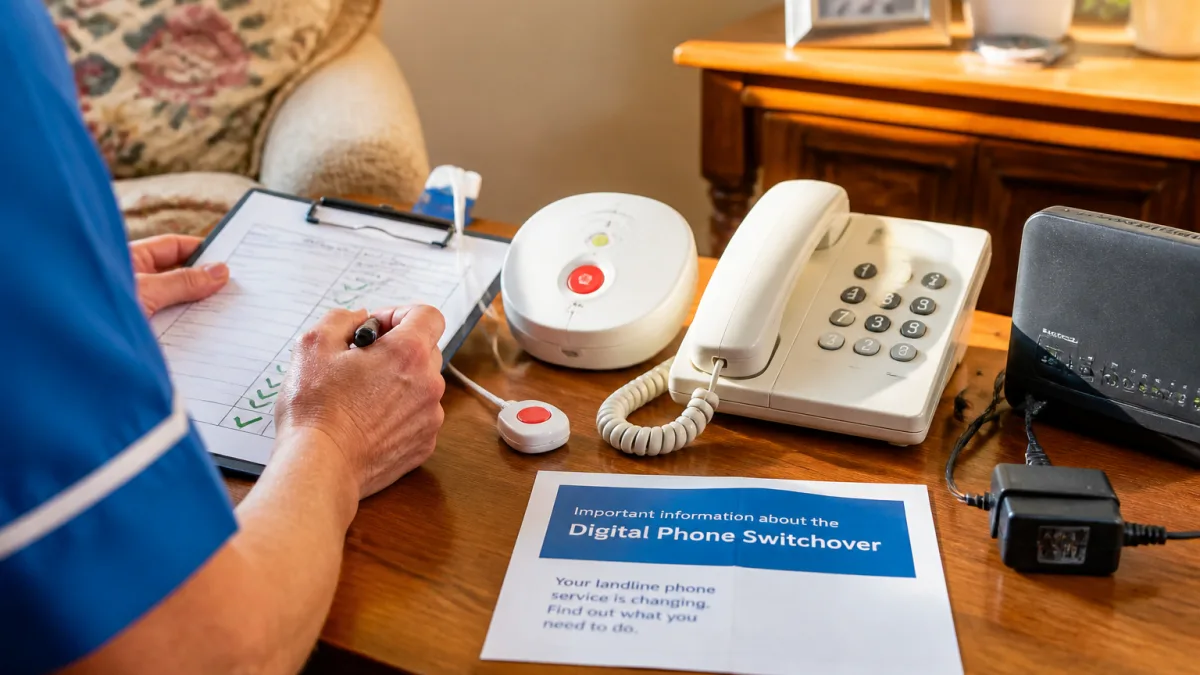
The traditional copper telephone network that has carried British landline calls for decades is being retired, with providers moving customers onto internet-based "digital voice" services. The industry-wide switch, overseen by the communications regulator, is expected to be largely complete by the end of the decade.
For most households the change is straightforward: the handset plugs into a broadband router rather than a wall socket, and calls travel over the internet. But for a minority of users the shift carries risks, particularly where equipment was designed for the older analogue system.
Why telecare is the sticking point
The greatest concern surrounds telecare alarms — the pendant buttons and pull cords that let older or vulnerable residents summon help. Many rely on the analogue signal and may not connect reliably over a digital line, especially during a power cut, when broadband routers lose power but the old copper line did not.
Councils' adult social care teams, which fund a large share of these alarms, have warned that some users may not realise their device needs upgrading. Providers have agreed to pause non-voluntary migrations for customers known to depend on telecare until compatibility is confirmed.
"No one who relies on a personal alarm should be moved to a digital line until we are certain it will work when they need it," a regional care manager said.
What households are being told
Telecoms firms say most customers will be contacted before any change and offered support, including battery back-up units that keep a line working for a limited period during an outage. Regulators have also asked providers to identify vulnerable users and treat them as a priority.
Residents are encouraged to check a few points before their line is switched:
- whether anyone in the household uses a care alarm, pendant or pull cord;
- whether a monitored fire or medical alarm is connected to the phone line;
- whether the provider has been told about anyone who would struggle in a power cut.
Roughly a small but significant share of affected devices is thought to need replacement, though numbers vary by area. Consumer groups have urged people not to ignore letters about the switch, warning that leaving action until the last minute could leave some without a working alarm. The changeover is not optional, they note, but the timetable can be adjusted for those who need more time.