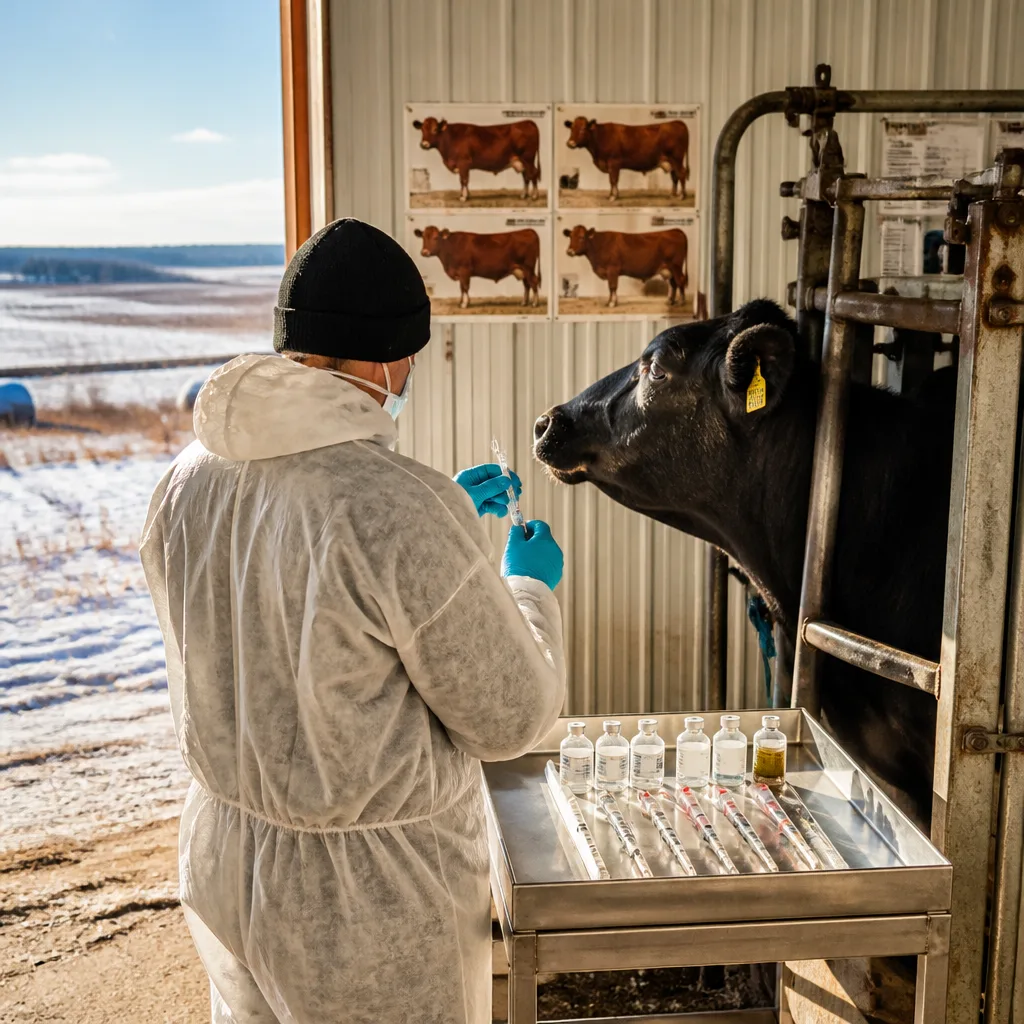
A family cattle operation in southwest Minnesota has adopted reproductive technologies to expand its best bloodlines and raise the overall calibre of its herd.
Using embryo transfer and AI to scale top genetics
Delaney Herefords, run by Nick Delaney in Lincoln County, manages about 180 mother cows and 80 replacement heifers. The farm has introduced both embryo transfer (ET) and artificial insemination (AI) to increase the number of offspring from its highest‑performing cows, according to reporting from Brownfield Ag News.
“With the embryo transfer and the AI, it’s really allowed us to mass multiply our best individuals. Which really helps bring up the average of the entire herd. So we have more chances for our best cow to produce calves.”
Delaney explained that the combined use of ET and AI means a single donor cow can produce many more calves per year than by natural reproduction alone. He described a practical outcome of the technique: where a donor might otherwise raise one natural calf, ET can yield as many as ten calves annually from the same superior female.
Why it matters for genetics and marketing
Reproductive technologies are used to concentrate desirable traits — such as growth, conformation and fertility — more quickly than is possible through conventional breeding alone. By producing multiple offspring from top donors, farms can:
- raise the baseline quality across the herd,
- generate more saleable animals with proven parentage, and
- accelerate genetic progress without increasing herd numbers proportionally.
Delaney Herefords markets animals through annual sales and runs a yearly bull sale each February, indicating a commercial motive to increase the supply of high‑quality breeding stock.
| Herd statistic | Number |
|---|---|
| Mother cows | 180 |
| Replacement heifers | 80 |
While the report focuses on one farm, the practices it describes reflect wider trends in commercial beef operations that use reproductive technology to be more selective and productive. For producers, the balance is between the costs and logistics of ET and AI programmes and the value of producing more animals from proven top‑performing genetics.
For consumers and the wider industry, the immediate effect is a more consistent and traceable supply of animals offered at sale, while long‑term implications include faster dissemination of desirable traits across breeding populations.
The Delaneys’ approach illustrates how targeted technological adoption can change the economics and genetics of a family farm without expanding its physical herd size dramatically.