West Northamptonshire is set to receive a substantial expansion in on‑street electric vehicle (EV) charging after the council confirmed on 14 July that it has appointed kerbside charging specialist Char.gy to deliver more than 3,000 lamp‑column sockets across the district. The project aims to reach households that lack off‑street parking — a group widely recognised as one of the main barriers to wider EV adoption.
Why the scheme targets on‑street parking
The rollout is intended to tackle the practical obstacle faced by roughly 40% of UK households that cannot install a home charger because they have no driveway. Data presented to support the scheme shows stark differences in experience between drivers with and without driveways. An EVA England survey of 1,668 drivers in 2025 found that:
- 90% of current EV drivers have access to a driveway;
- 81% of those drivers own a home charger;
- Among drivers without a driveway, only 50% reported that their EV was cheaper to run than their previous petrol or diesel car, compared with 87% of drivers who have driveways;
- 60% of non‑driveway drivers said they would never consider switching to an EV, citing lack of charging access as decisive.
Funding, timetable and scale
The work will begin this summer and is financed by a £2.85 million grant from the UK government's Local Electric Vehicle Infrastructure (LEVI) Fund, with additional private investment from Char.gy. Councillors described the scheme as one of the most ambitious on‑street charging programmes announced by any English local authority, placing West Northamptonshire alongside early movers such as Brighton and Hove.
| Item | Figure |
|---|---|
| Kerbside sockets to be installed | 3,000+ |
| LEVI funding | £2.85m |
| Total public charging network (June 2026) | ~121,000 chargers |
"This investment will make a real difference to people across West Northamptonshire who don't have driveways or home chargers," said John Lewis, CEO of Char.gy.
Local impact and limitations
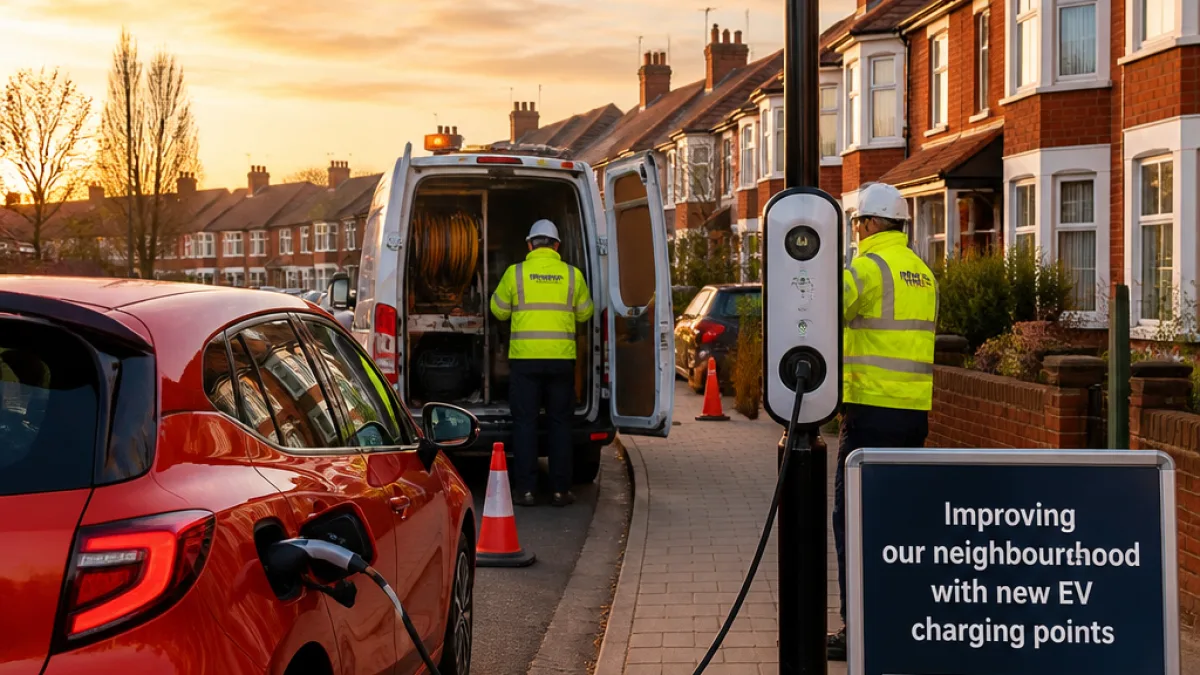
Placing sockets on lamp‑columns and other street furniture is intended to serve residents who park on public roads overnight — the very locations where most existing public chargers are not situated. The national network, at about 121,000 public chargers as of June 2026, has largely been deployed in car parks, forecourts and town centres rather than on residential streets.
Council leaders and the contractor say the project will help close that gap, making EV ownership viable for people who previously ruled it out. Installation will proceed in phases over the coming months; the council says it followed a competitive procurement process before appointing Char.gy.
What residents should know
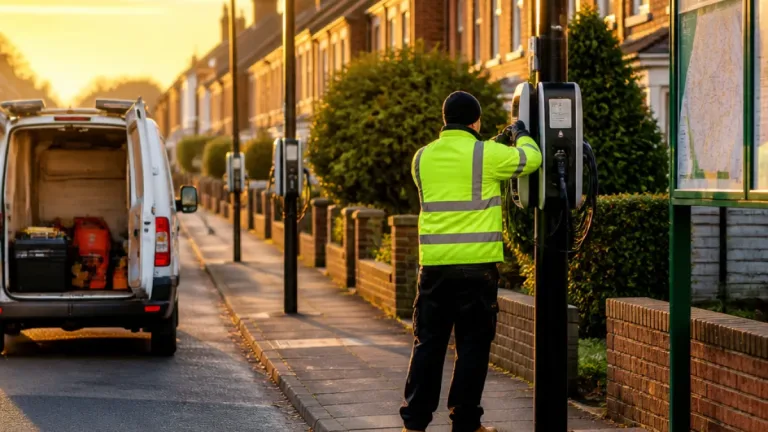
Residents living in street‑parked properties should expect visible works as chargers are retrofitted into existing lamp‑columns. The council and Char.gy are expected to publish maps and consultation details for each phase, and households will be able to sign up for access when local sockets become operational.
As with any pioneering local infrastructure programme, the rollout will be watched for delivery speed, usability and long‑term maintenance arrangements. The success of the scheme will be measured not only by the number of sockets installed, but by whether it materially changes EV uptake among households without driveways.