Why an Australian pedigree sale matters to readers here
Developments in Angus breeding do not stop at our county line. When a prominent stud half a world away sets out its stall, pedigree buyers and commercial finishers in north-east Scotland often take notice. This week, a leading New South Wales operation, Boambee Angus, outlined the shape of its 2026 sale draft after a year that swung from severe flooding to a prolonged dry spell. The stud says the team coming forward is one of its most even to date, with emphasis on structural soundness, fertility and quiet temperaments.
Breeding approach built on recognised bloodlines
Boambee’s management sets out a straightforward aim: cattle that hold up in commercial conditions, while offering the figures and type required by pedigree buyers. The programme, the stud says, was anchored by females acquired from the Witherswood Angus dispersal and has been reinforced by genetics drawn from several respected herds in Australia. As stud manager Jamie Grosser put it, the herd has been shaped around consistency and real-world performance.
“Every breeding decision is made with the long term in mind,” said Jamie Grosser. “We believe productive, fertile, structurally sound cattle that thrive under commercial conditions provide lasting value for our clients.”
That philosophy, Boambee argues, runs through the catalogue from Lot 1 to Lot 32, with headline animals including Lot 3 (Boambee Vincent V144) and Lot 17 (Boambee Viceroy V80). The operation also highlights embryo transfer sons from a key donor female noted in its programme.
Scale, system and a difficult season
The stud runs breeding across four properties totalling 1,620 hectares, carrying about 230 registered stud females alongside 450 commercial breeding females. Pasture improvement and forage crops support the herd and allow steers and heifers to be finished on farm. That system was tested last year by weather at both ends of the spectrum.
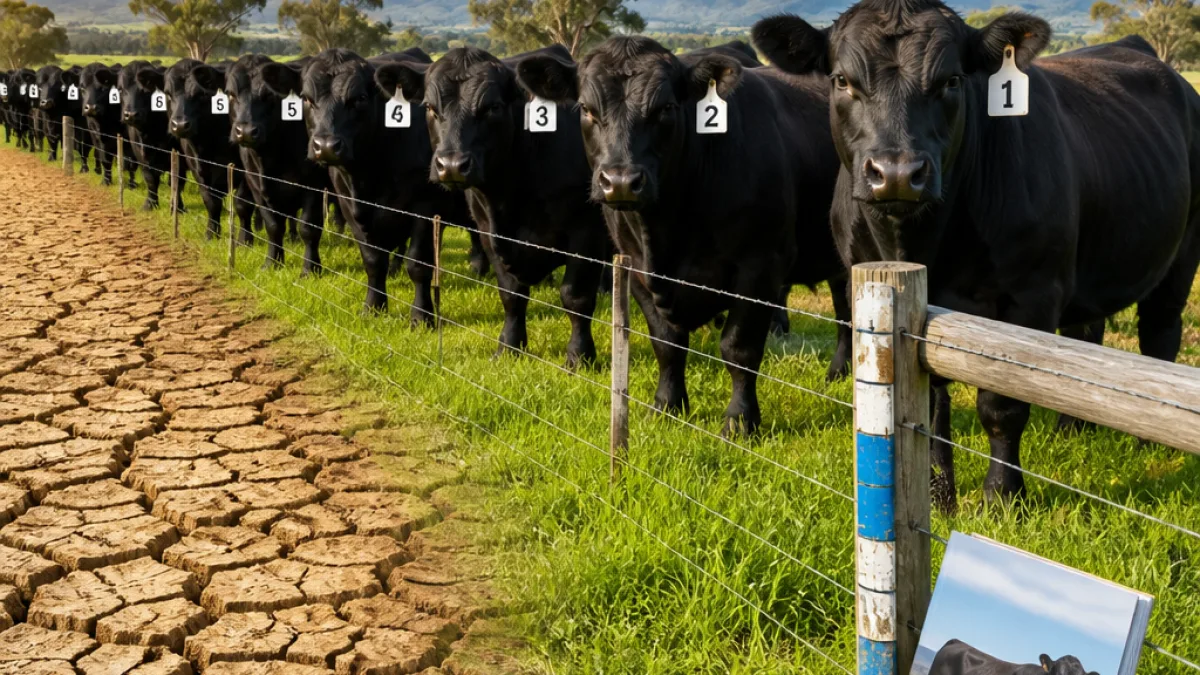
Flooding described as among the worst the region has seen was followed by an extended dry period. According to the stud, the cattle held their own through both. With widespread rain now delivered across much of New South Wales, confidence and cattle prices have improved, and the outlook, they say, has brightened.
| Boambee at a glance | Figure |
|---|---|
| Total land base | 1,620 ha |
| Registered stud females | ~230 |
| Commercial breeding females | ~450 |
| 2026 sale draft | Lots 1–32 |
What local buyers may read into this
For farmers in Angus who keep an eye on genetics and sentiment abroad, a few points stand out:
- Emphasis on functionality: The stud’s stress on cattle that cope in commercial systems mirrors priorities seen in Scottish herds, particularly around structure, fertility and temperament.
- Resilience under pressure: Performance through flood and drought will interest anyone selecting for robustness as weather patterns become more variable.
- Market tone: Reports of stronger cattle markets and renewed confidence in New South Wales contribute to the wider picture of global demand and may influence expectations here.
Why it resonates beyond New South Wales
Angus cattle form a worldwide network of genetics, and sale catalogues in Australia, North America and Europe inevitably feed into each other through semen, embryos and shared bloodlines. While this particular event is on the other side of the globe, the breeding choices and the traits being rewarded at the ring can shape what buyers ask for on Scottish farms too. When a stud highlights long-term selection for structure and fertility, it reflects a shared aim across many herds: cattle that last, breed regularly and finish efficiently.
Weather volatility is also a common thread. Australian accounts of cattle that kept condition through flood and drought will be watched by producers here who have had to handle their own swings between wet back-ends and dry springs in recent years. Selecting for animals that stay on their feet and back in calf under stress is a principle that travels well.
Looking ahead
Boambee’s catalogue, from Lot 1 through Lot 32, will be read by pedigree buyers assessing maternal lines and by commercial finishers weighing up bulls that breed calm, easy-fleshing progeny. For readers in Angus, the interest lies less in the sale date itself and more in the direction of travel: a continued push towards cattle that marry data, docility and durability. Those signals tend to surface in catalogues before they filter through to farm gates. We’ll keep watching for how these themes appear in UK sale rings as the autumn runs approach.