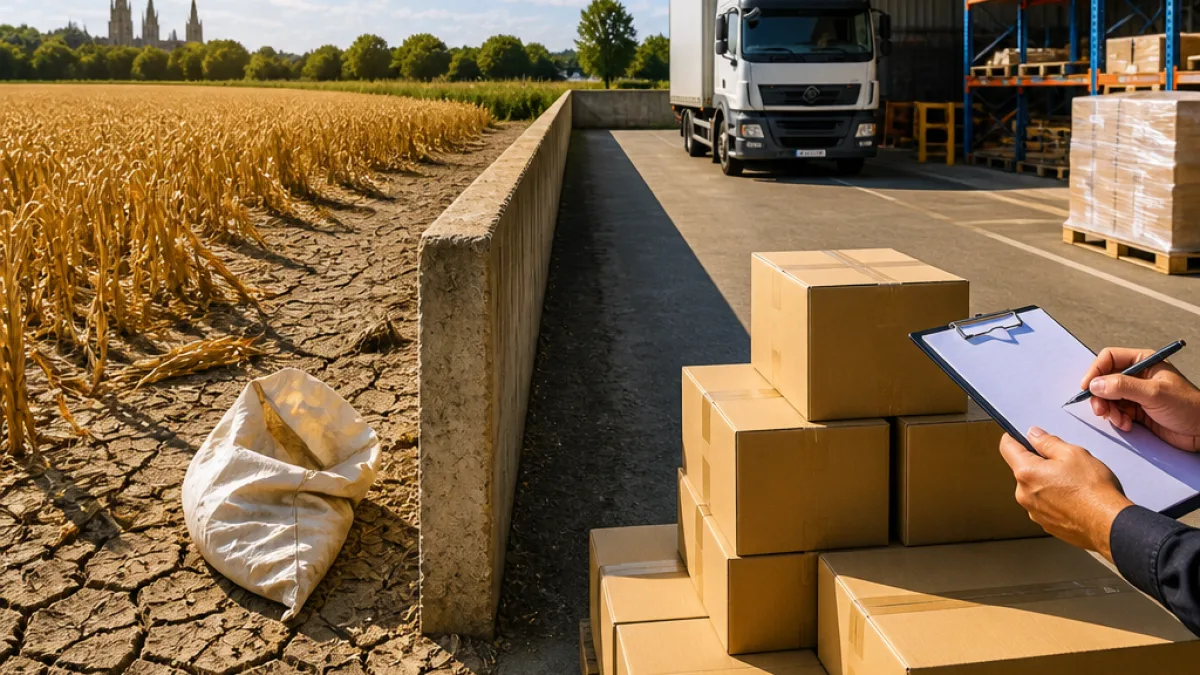
Cambridgeshire households may not see the effects of the current heatwave on their weekly grocery bill straight away, but local supply-chain experts warn that if drought conditions persist the price of some foodstuffs could rise.
How higher temperatures affect the route from field to shelf
A typical supermarket product passes through a number of distinct stages before it reaches shoppers. Using bread as an example, grain must be grown, harvested, milled and stored; ingredients are then sent to a bakery, the finished loaves move to distribution centres and finally to stores. Costs are incurred at each stage — transport, processing and storage — and pressure at any point can ripple through the chain.
| Stage | Possible impact from heat/drought |
|---|---|
| Primary production (crops, livestock) | Lower yields, earlier harvests, reduced availability of animal feed |
| Processing and packaging | Higher input costs, potential delays if raw material supply falters |
| Storage and transport | Increased cooling or logistical costs; stock shortages at distribution centres |
| Retail | Price adjustments passed to consumers if upstream costs remain |
Professor Manoj Dora, director of the Centre for Intelligent Supply Chains at Anglia Ruskin University, said the system in the UK was robust but warned of future risks.
"One week of hot weather will not make a loaf of bread more expensive,"
He told reporters that sustained problems at the start of the supply chain — for example a shortfall in cereals used for animal feed — could affect products including meat, milk, eggs and chicken and that prices could rise if such pressures were not addressed.
Local farming and consumer implications
- Farmers are already adapting to an earlier-than-usual harvest; some producers have warned of shortages if drought continues.
- Processors and retailers may not immediately change prices thanks to existing stock and resilience measures, but prolonged disruption could force adjustments.
- Shoppers might first see higher costs in goods closely linked to animal feed and seasonal crops if yields fall.
Authorities and industry bodies have previously urged measures to build longer-term resilience in food supply chains, such as reconsidering sourcing locations and transport routes and offering more direct support to farmers. For consumers, the immediate outlook remains muted: short spells of hot weather alone are unlikely to cause instant price rises. However, the prospect of extended dry conditions means both households and local planners should be alert to the possibility of future price pressure and product shortages.