Byron’s Pool pairs quiet wildlife habitats with a famous poetic past
One of Cambridge’s quieter corners, Byron’s Pool Nature Reserve is drawing attention this summer for its crystal clear waters, level paths and compact woodland that make it an easy, restorative walk close to the city. Set over 4.5 hectares on former parkland once attached to the Trumpington Hall estate, the site was acquired by Cambridge City Council in 1949 and formally declared a nature reserve in 2005.
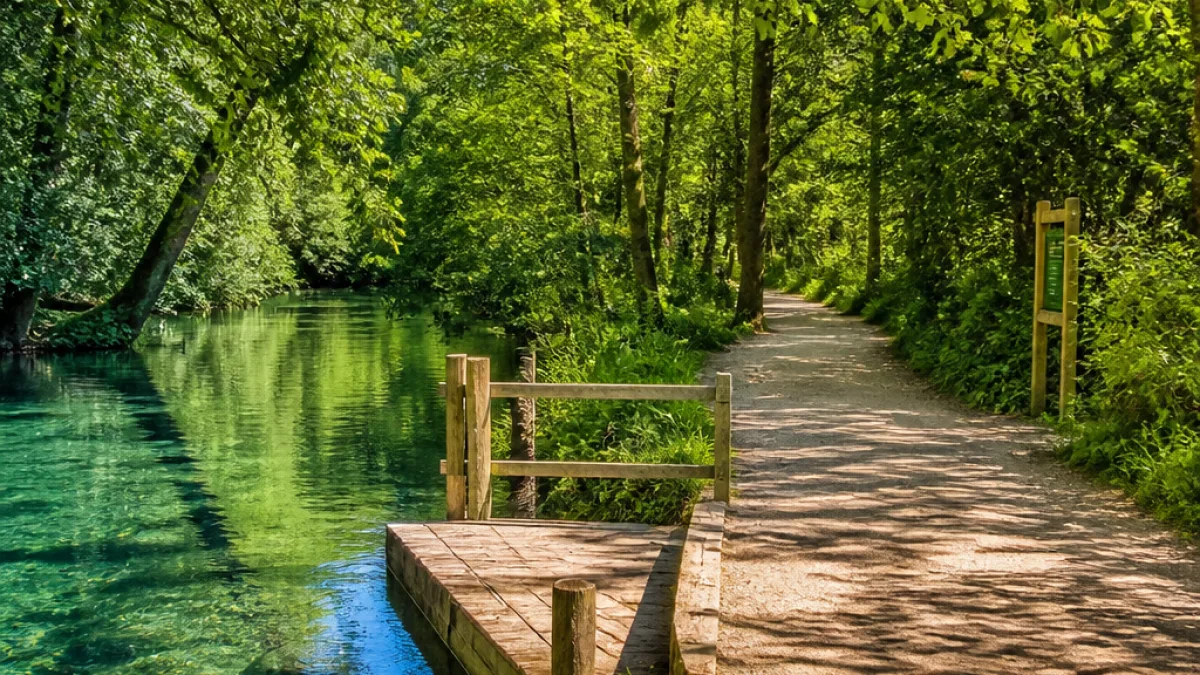
The reserve combines shaded woodland with a string of small ponds and a stretch of riverbank, offering a quiet counterpoint to busier green spaces in and around Cambridge. At this time of year, visitors can look for purple hairstreak and white-letter hairstreak butterflies among the canopy and hedgerows, while the clear channels and pools attract those content to linger by the water. Platforms are provided for people who wish to canoe or fish.
Literary links to Cambridge’s student past
Local lore places the Romantic poet Lord Byron at the heart of the reserve’s story, connecting present-day walkers to Cambridge’s long academic and literary traditions. During his time at Trinity College in the early 1800s, Byron is said to have bathed at a weir pool here — an anecdote that ultimately gave the site its name. Another Cambridge poet, Rupert Brooke, is also believed to have taken to the waters.
There is a local legend that the famous English poet Lord Byron, where the reserve gets its namesake from, bathed in a weir pool in the reserve.
These associations lend Byron’s Pool a cultural thread that complements its nature conservation value and add a distinctive twist to a straightforward walk by the water.
Getting there and accessibility
Reaching the reserve does not require a car. From the city centre it is roughly an hour’s walk, following pavements and paths towards Trumpington. Those seeking a quicker route can take the A bus towards Trumpington for seven stops and then continue on foot for around a 13-minute walk.
On arrival, the path network is described as flat and accessible for wheelchair users, making the site a practical option for families and those who need level terrain. The mix of short loops and riverside stretches also means visitors can tailor their outing to the time they have available.
What you’ll find on the ground
- Woodland and water: A mainly wooded reserve linked by ponds and a riverbank stretch, with shaded resting spots.
- Wildlife interest: Seasonal sightings of purple and white-letter hairstreak butterflies add summer colour.
- Waterside activity: Designated platforms provide access for canoeing and fishing.
- Easy walking: Flat, straightforward paths support relaxed, accessible visits.
For Cambridge residents, the attraction lies as much in the reserve’s scale as its setting: it is small enough to cover without planning a full day out yet varied enough to feel away from city bustle. Combining practical access with a dose of historical colour, Byron’s Pool remains a steady option for a close-to-home green escape in warm weather.
At-a-glance facts
| Feature | Detail |
|---|---|
| Size | 4.5 hectares |
| Ownership | Acquired by Cambridge City Council in 1949 |
| Designation | Declared a nature reserve in 2005 |
| Access | Flat, wheelchair-accessible paths |
| Public transport | A bus towards Trumpington, 7 stops then a 13-minute walk |
| From city centre | Approx. 1 hour on foot |
| Notable wildlife | Purple and white-letter hairstreak butterflies (seasonal) |
| Waterside facilities | Platforms for canoeing and fishing |
As with any small reserve, space is limited; appreciating the site means keeping to paths and giving wildlife the room it needs. With that in mind, Byron’s Pool offers a gentle, close-to-home walk that gives Cambridge residents an accessible way to enjoy greenery, water and a dash of literary heritage in a single visit.