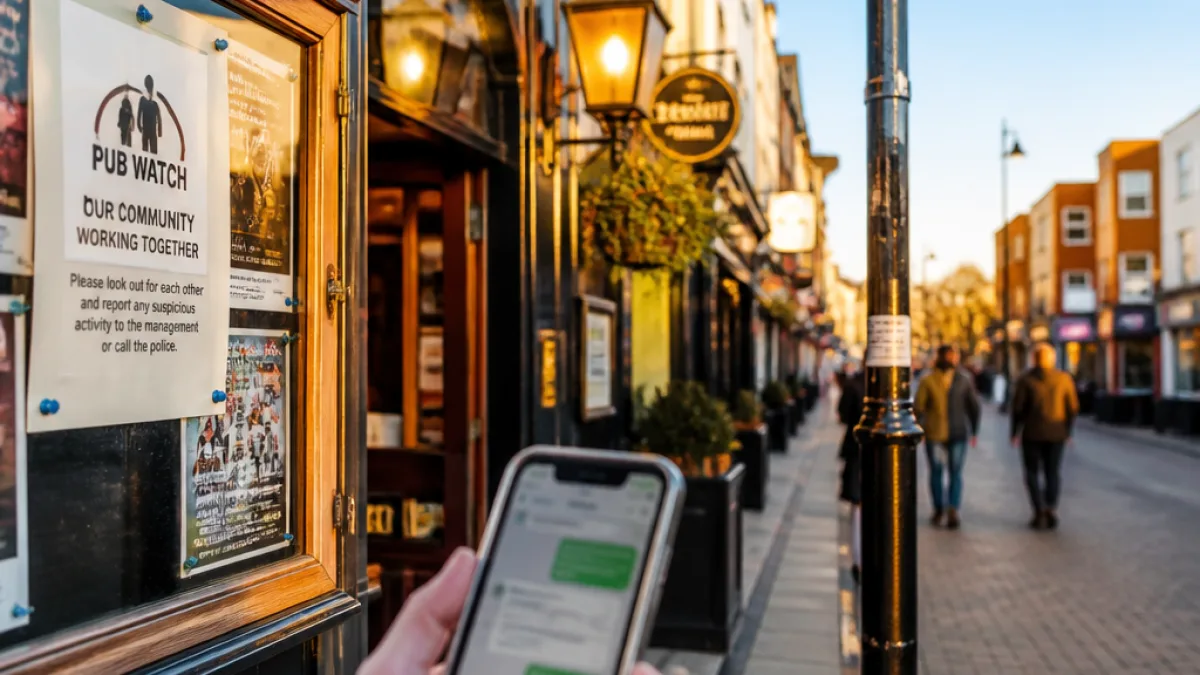
Harwood and Bradshaw businesses have introduced a new local Pub Watch scheme aimed at making the area’s evenings out safer as more people visit its bars, restaurants and shops. The initiative has been driven by local councillors and venue owners seeking a practical way to share information about trouble spots and incidents in real time.
Why the scheme has been created
Councillors James Moller and Les Webb helped lead the project with local landlords. They say the move is not a response to a single worrying event, but rather a sensible step following increased footfall and a growing programme of community events and investment in the area.
"It's just an extra security step again," Cllr Moller said. "You know, people go on about we don't need bouncers, we don't need this, we don't need that. But unfortunately, we've got to move with the times."
The scheme is intentionally kept informal compared with the national Pubwatch organisation. Instead of committees and scheduled meetings, organisers have opted for a straightforward communications channel to alert venues as incidents occur.
How the local Pub Watch will work
Rather than creating a formal structure, the Harwood and Bradshaw Pub Watch centres on a group chat linking landlords and business owners. The intention is for anyone to notify others quickly if they see troublesome behaviour, creating an operational record that can be shared with the police if necessary.
- Quick alerts: businesses will receive immediate notifications of issues.
- Simple setup: run locally without the need to join a national body.
- Police liaison: records can be passed to law enforcement where appropriate.
Cllr Moller emphasised the practical nature of the arrangement: "I've just put them all into a group chat. And let the owners and landlords speak to each other. If something happens, every pub can get a notification straight away." The emphasis is on speed and ease of communication rather than formal governance.
What this means for residents and visitors
For local people and those travelling to Harwood for food and drink, the scheme offers an added layer of reassurance. It could deter repeat nuisance behaviour by creating a shared record among venues, and it provides a mechanism to coordinate responses in real time.
For landlords and staff, the group chat is a practical tool to share intelligence across the locality without the bureaucracy of larger schemes. It also preserves local control: only venues in Harwood and Bradshaw will participate unless they choose otherwise.
| Aspect | What it does |
|---|---|
| Communication | Instant alerts via group chat |
| Formality | Deliberately informal — no committees |
| Police involvement | Records can be supplied to police if needed |
As Harwood continues to attract new outlets and evening visitors, initiatives like this reflect a local approach to balancing a vibrant night-time economy with community safety. The scheme shows how small-scale, locally designed solutions can complement wider policing and licensing frameworks without adding administrative burden to independent businesses.
Local residents and business owners who want more information about the scheme are advised to contact their ward councillors or the participating venues directly.