Renowned artist Betye Saar, a defining voice in art that interrogated Black identity, culture and spirituality, has died in Los Angeles at the age of 99. Her family confirmed the death on Monday; she would have celebrated her 100th birthday later this week.
Artistic reinvention and lasting influence
Saar emerged as a central figure in the 1960s Black Art Movement and became known for pioneering the assemblage box: sculptural works formed from found objects reconfigured to carry political and spiritual charge. She began her creative life in design, turning to art at the age of 35, and continued producing work into her 90s.
Reclaiming images, retooling history
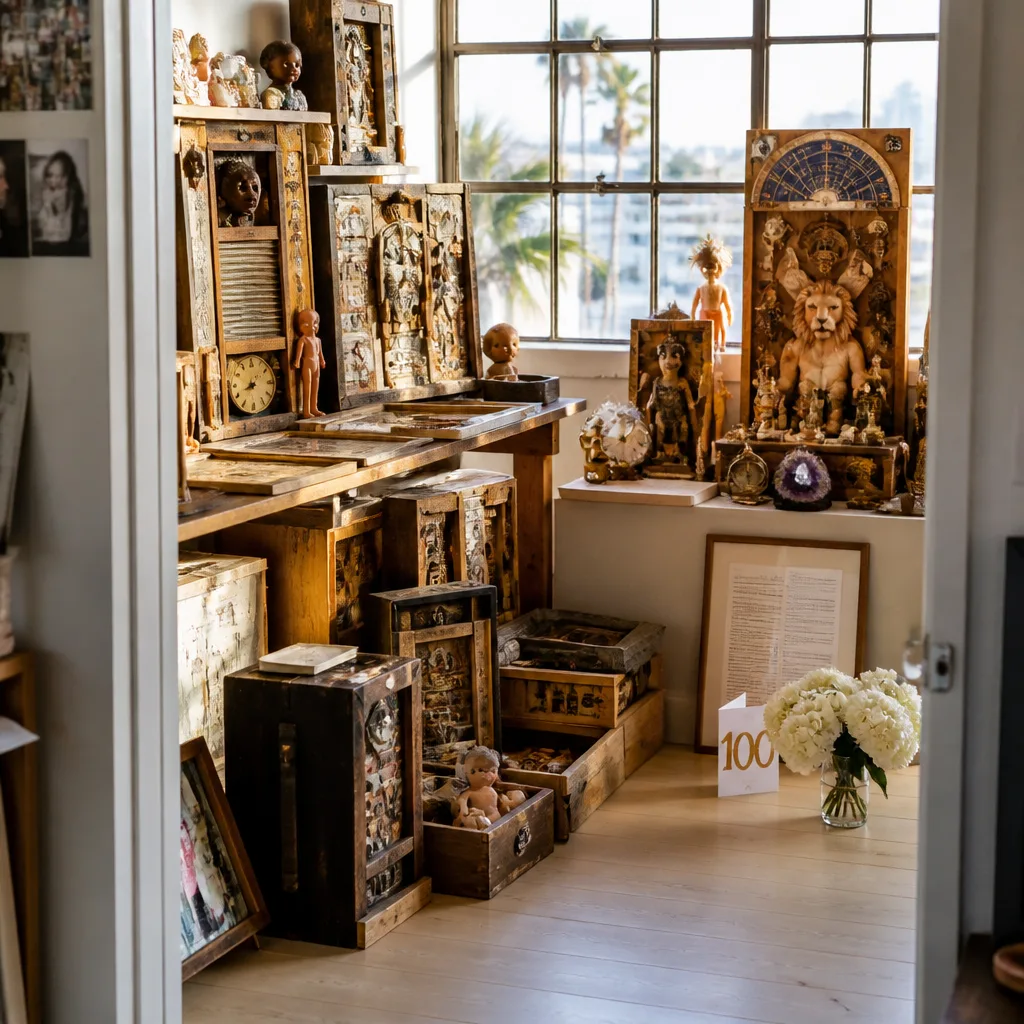
Her practice blended painting, printmaking and sculpture with vernacular objects — dolls, washboards, clocks, boats and altars recur throughout her output — and drew on symbols of cosmology and the occult. Saar often referenced her astrological sign with feline imagery, notably lions, across many pieces. Roberts Projects, the Los Angeles gallery that represented her, described her oeuvre as one that demonstrates the contexts — environmental, cultural, political and historical — that shape it.
“Her symbolically rich body of work has evolved over time to demonstrate the environmental, cultural, political, racial, technological, economic, and historical context in which it exists.”
Key works and reception
Saar created landmark works that reworked derogatory and minstrel imagery into statements of agency. Her 1972 piece The Liberation of Aunt Jemima repurposed a racist caricature into a figure who, though smiling, holds a rifle and a hand grenade — an emblem of defiant reclamation. One earlier breakthrough, Black Girl’s Window (1969), enjoyed slower institutional recognition but was acquired by the Museum of Modern Art in New York in 2019.
- Grew up in Pasadena and was part of a Black artist community in Altadena.
- Found early inspiration in Simon Rodia’s Watts Towers.
- Represented by Roberts Projects in Los Angeles.
Legacy
Across decades, Saar transformed quotidian and contested objects into totems of resistance and memory. Her work challenged spectators to confront histories of racism while offering new symbolic strategies for Black liberation. Among peers and subsequent generations of Black American artists, the gallery said, Saar remained “without reproach.” Her influence endures in museums, collections and the practices of artists who continue to mine found materials and vernacular imagery to tell complex stories.
| Year | Work / Event |
|---|---|
| 1969 | Black Girl’s Window (created) |
| 1972 | The Liberation of Aunt Jemima (created) |
| 2019 | Acquisition of Black Girl’s Window by MoMA, New York |
Saar’s life and work remain a study in transformation: materials once intended to demean were refashioned into objects of power and memory. As museums and galleries reassess the stories they tell, her practice stands as a crucial chapter in American art — one that reframes the past to make space for survival, defiance and meaning.