Have your say on the next 15 years of Brighton and Hove
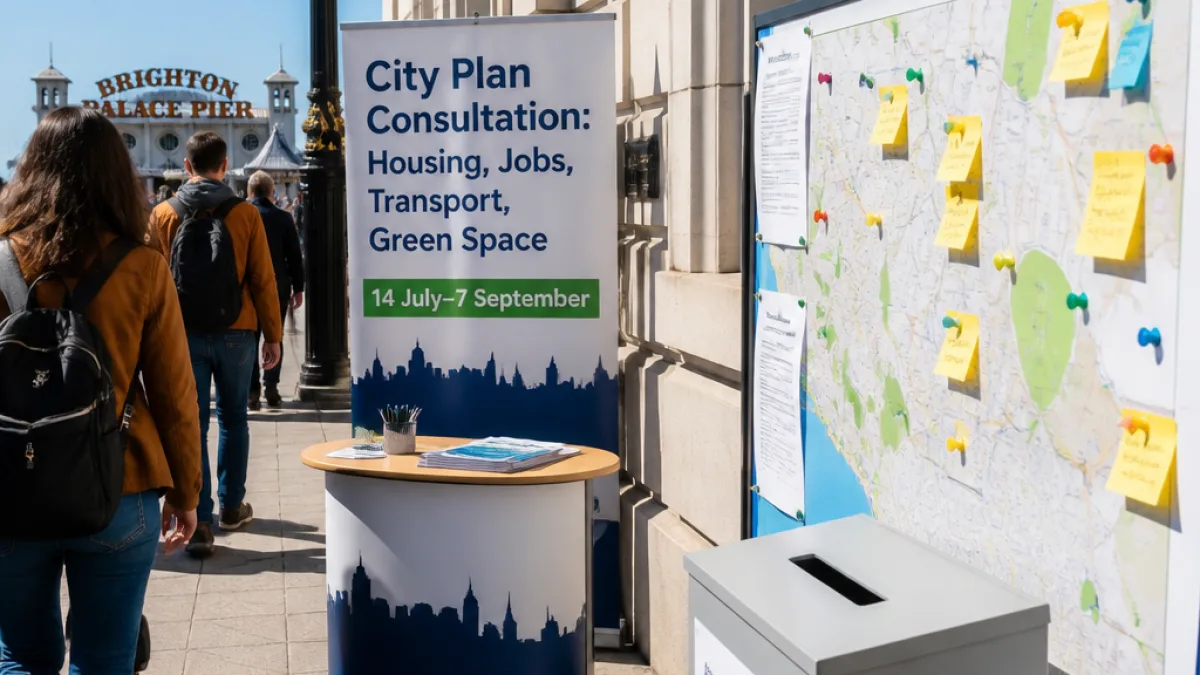
Brighton and Hove City Council has opened a wide-ranging consultation to inform a new City Plan that will steer development for the next 15 years. The scoping stage runs from 14 July to 7 September, inviting views on where new homes might go, how to support local jobs, and how best to protect nature and public spaces across the city.
The consultation asks residents, community groups and businesses to comment on priorities including potential housing sites, economic growth, transport and infrastructure, and measures to enhance green space and biodiversity. It covers all areas within Brighton and Hove’s current administrative boundary, excluding the South Downs National Park.
What the council says
Setting out the stakes, the council’s deputy leader, Jacob Taylor, described the City Plan as central to decisions that will shape everyday life, from where new homes are built to how streets and services are designed. He said:
“The City Plan is one of the most important documents the council produces. It guides decisions about new homes, development, transport and infrastructure and helps decide what can be built and where it can go. It also shapes how we protect our green spaces and natural environment, as well as our heritage and the things that make our city so special.”
He urged people across the city to take part:
“I would urge residents, businesses and community groups to take this opportunity to share their views with us and help us plan for a thriving, sustainable, safe and inclusive city we can all be proud of.”
How to get involved
- Read the scoping documents and submit feedback via the council’s Your Voice portal: yourvoice.brighton-hove.gov.uk.
- View printed materials at Hove Town Hall and in all city libraries during normal opening hours.
- Respond before Saturday 7 September to have your comments considered at this stage.
What’s changed since earlier feedback
An initial round of engagement took place in November 2024, drawing more than 700 responses, including around 200 from young people through a dedicated youth survey. Those views helped shape the first cut of priorities. Since then, a revised national planning policy framework has altered the background rules, and the council says the fresh scoping aims to reflect that updated context.
The authority notes that the plan area excludes the national park and follows government guidance that potential local government reorganisation should not delay the process. In practical terms, that means the city is pressing on so that planning decisions continue to be made with an up-to-date, locally-informed evidence base.
Why this matters for Brighton and Hove
A comprehensive City Plan sets the ground rules for where homes, workspaces and community facilities may be located, and how they are expected to meet design and environmental standards. For residents, it influences everything from access to parks to the transport choices available on the school run. For businesses, it affects the pipeline of employment space and the infrastructure that underpins growth. For the environment, it is where policies on biodiversity gain, climate resilience and the protection of treasured landscapes are set out.
The council is asking people to weigh in on the big trade-offs the city faces: meeting housing need while safeguarding character and green space; supporting the local economy while improving air quality; and investing in transport and community infrastructure where it will have the greatest impact.
Key dates and where to find documents
| Item | Detail |
|---|---|
| Consultation window | 14 July – 7 September |
| Online access | Your Voice portal |
| Paper copies | Hove Town Hall and all city libraries |
| Plan area | City administrative boundary, excluding the South Downs National Park |
With the scoping now open, the council says it wants to hear from as broad a cross-section as possible, building on the early responses already received. The more specific the feedback—whether on potential housing locations, protecting local biodiversity, or the facilities needed to support growth—the more usefully it can feed into the draft that follows.