
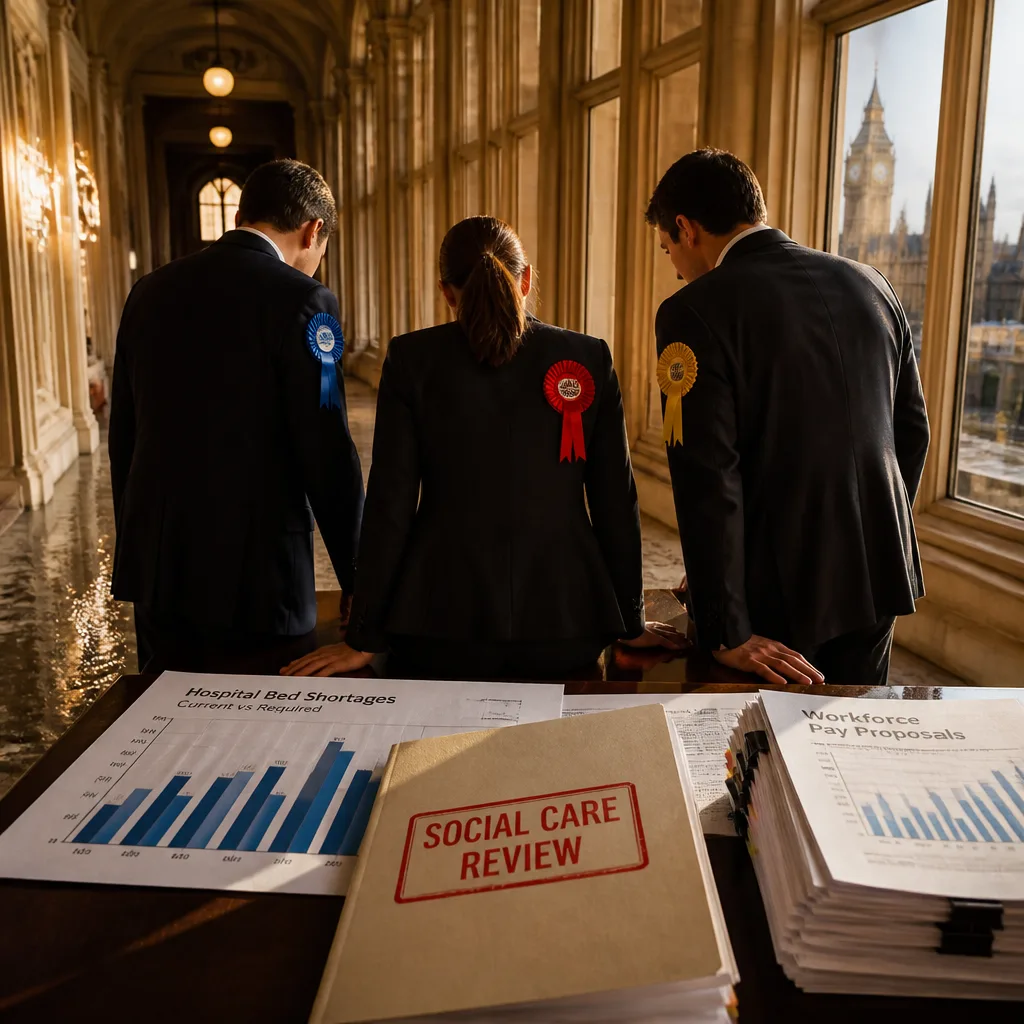
The Prime Minister has described Britain’s social care system as a “major dereliction of public duty”, announcing a stepped‑up review, commitments to bolster the workforce and the start of formal talks with other parties to seek consensus on long‑overdue reform.
Review accelerated and cross‑party engagement
Andy Burnham said he had brought forward Baroness Louise Casey’s independent review of social care so that it will report next year. He also confirmed he would begin cross‑party discussions with the Conservatives and Liberal Democrats, calling it the “right thing to do” to try to build agreement on a solution to a problem successive governments have failed to fix.
"It’s a major dereliction of public duty that Parliament has not faced up to this of all challenges,"
The Prime Minister framed the policy shift as a moral imperative, reflecting on personal experience of care for his father, who has Alzheimer’s. He said the sector’s workers ought to be “the best‑paid people in society, not the worst”, signalling an intention to improve pay and conditions.
Fiscal realism and policy trade‑offs
Mr Burnham acknowledged that delivering lasting reform would involve difficult choices on taxation, but said he would first seek to do more within current resources and be candid with the public about the options. He reiterated that Labour’s manifesto pledges to avoid raising workers’ income tax, national insurance or VAT rates would stand.
The Prime Minister pointed to potential savings for the health service from better provision of care in the community, noting that it currently costs the NHS about £2.5 billion a year to keep people who are medically fit to leave hospital because community care is unavailable.
- Accelerated review — Baroness Casey’s inquiry to report next year.
- Workforce reform — pledges to raise pay and strengthen capability.
- Cross‑party talks — formal engagement with Conservatives and Liberal Democrats.
- Fiscal honesty — openness to tax choices while protecting key manifesto commitments.
Policy context and immediate consequences
The Prime Minister’s speech comes amid long‑standing criticisms that successive administrations have deferred a solution to social care funding and provision. By accelerating an independent review and committing to cross‑party negotiation, Downing Street is signalling a move from rhetoric to process. The immediate effect will be to set a timetable for scrutiny and to place the workforce at the heart of reform discussions.
However, the explicit warning that tax rises may be necessary underlines the political difficulty ahead. Any plan that improves pay and increases community provision is likely to raise public spending demands; how these are reconciled with manifesto tax commitments will be central to negotiations both within Parliament and with local authorities that commission care.
| Issue | Detail |
|---|---|
| Reported NHS cost due to lack of community care | £2.5 billion a year |
| Review timescale | Baroness Casey to report next year |
| Tax commitments | No rises to income tax, national insurance or VAT for workers (manifesto stance) |
How quickly the Casey review can translate into implementable policy and whether cross‑party talks yield a durable settlement will determine whether this announcement marks the start of meaningful change or another interim pledge. Local councils, the NHS and carers’ groups will watch the process closely, particularly for clarity on funding, workforce pay and protections against people having to sell their homes to pay for care.
For now, the government has set a clear administrative path: an independent review on an accelerated timetable, enhanced engagement across party lines and an explicit readiness to confront fiscal trade‑offs. The political challenge will be converting those steps into a sustainable settlement that distributes costs and benefits across national and local government, the NHS, the care workforce and the families who rely on support.