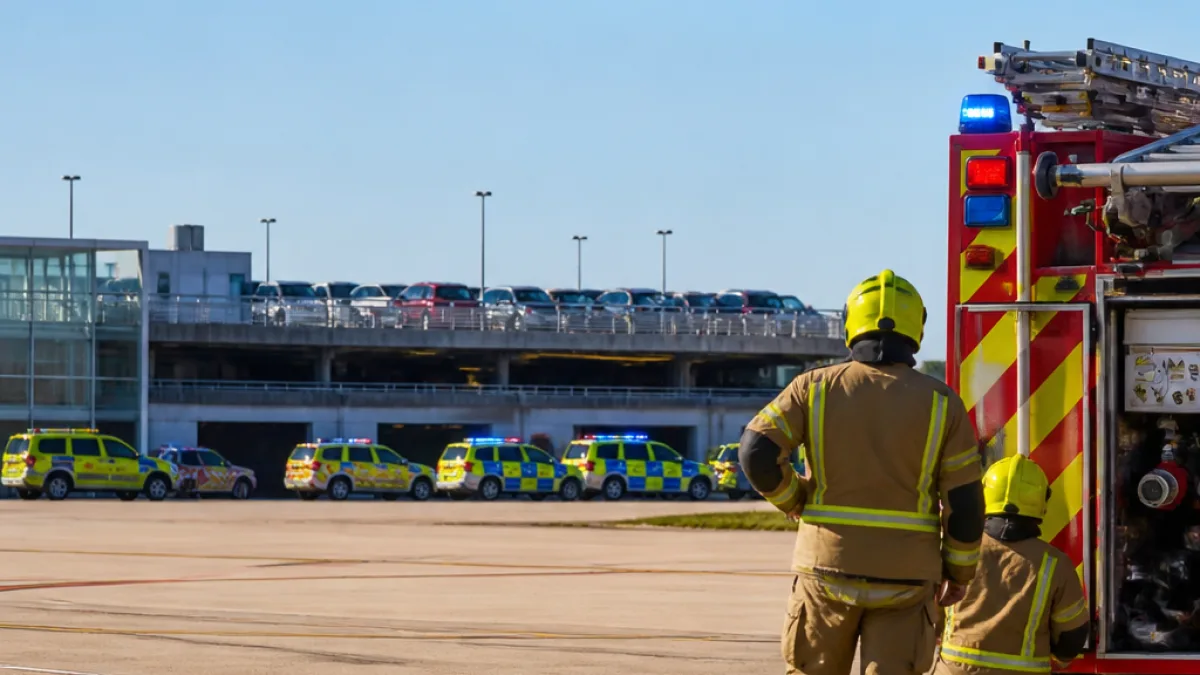
A flight into Southampton Airport was held in a holding pattern after airport fire crews responded to a fire alarm in the multi-storey car park, briefly leaving the airfield without immediate fire cover.
What happened
An EasyJet service from Glasgow, operating as flight U2415, was kept airborne while airport firefighters attended a minor incident in the car park. According to airport sources, the alarm activation led to a temporary suspension of fire cover for the runway and apron area.
The aircraft landed at 11.16am, after the airport's fire cover was restored. The airport confirmed the response was prompt and the situation was resolved quickly.
Response and impact
Airport officials said normal operations continued and that flights were not otherwise affected. The period without fire cover lasted for 14 minutes, after which full emergency capability on the airfield was reinstated.
- Incident location: multi-storey car park at Southampton Airport
- Flight affected: EasyJet U2415 from Glasgow
- Duration without fire cover: approximately 14 minutes
- Landing time: 11.16am
Why this matters to travellers
Airports are required to maintain a minimum level of fire and rescue cover while aircraft are landing or taking off. If that cover is temporarily unavailable, incoming aircraft may be held in the air until protections are restored. While this incident did not lead to widespread disruption, even short suspensions of fire cover are treated seriously because they are a key safety safeguard.
| Item | Detail |
|---|---|
| Flight | EasyJet U2415 (Glasgow → Southampton) |
| Cause | Fire alarm activation in multi-storey car park (minor incident) |
| Fire cover suspended | Approximately 14 minutes |
| Airport status | Operations continued as normal after restoration |
Official comment and next steps
The airport said the alarm was investigated and the incident resolved promptly. No further operational impacts were reported and the terminal remained open.
For travellers, the practical takeaway is to allow extra time for journeys to the airport where possible and to check airline and airport updates before travelling. Short, local incidents such as car-park alarms can necessitate precautionary measures even when they do not lead to cancelled or delayed services.
Local emergency and airport services routinely work together during such events to minimise risk and disruption; this episode appears to be a routine activation handled within established procedures.