Families seek renewed scrutiny over aircraft safety
A High Court judge has been urged to allow a legal challenge against the Ministry of Defence to continue over the 1994 RAF Chinook HC‑2 crash on the Mull of Kintyre, amid longstanding concerns about whether the helicopter was airworthy. The disaster on 2 June 1994 claimed 29 lives, and while multiple reviews have taken place, bereaved families argue that a full, independent inquiry into the aircraft’s safety has never been held.
The Chinook Justice Campaign (CJC)—comprising more than 55 family members of 25 victims—is seeking permission to proceed with a human rights challenge. Their case contends the MOD has an “ongoing failure” to establish an independent and effective investigation into the circumstances of the crash, including the helicopter’s airworthiness.
Arguments before the court
Lawyers for the CJC told the court in London that material regarding the Chinook’s condition raises “a more than arguable claim” that those on board were placed on an aircraft known to be unsafe. They said that although the crash has been examined on several occasions, no process has squarely addressed whether the helicopter’s state of readiness and safety standards met what would be expected for the mission.
“It is historic, but it is also extraordinary, that the bereaved families of 29 individuals… still face unanswered questions into the circumstances of what is often described as the RAF’s worst peacetime disaster.”
Presenting the case for the families, counsel Sam Jacobs highlighted what he described as “profound and stark” airworthiness concerns that have not been fully interrogated. He told the court that the families want transparency from the MOD about what it knew at the time and what opportunities, if any, might have existed to prevent the tragedy.
“What the bereaved families want is candour from the MOD about what the MOD does know about what opportunities it appears may have existed to avoid such a major loss of life.”
MOD response and procedural challenge
The MOD is defending the claim. Its legal team argued the application has been brought too late and that there has been no breach of human rights, contending that prior examinations have addressed key issues raised by the campaigners. The department maintains that the threshold for reopening matters decades after the event has not been met.
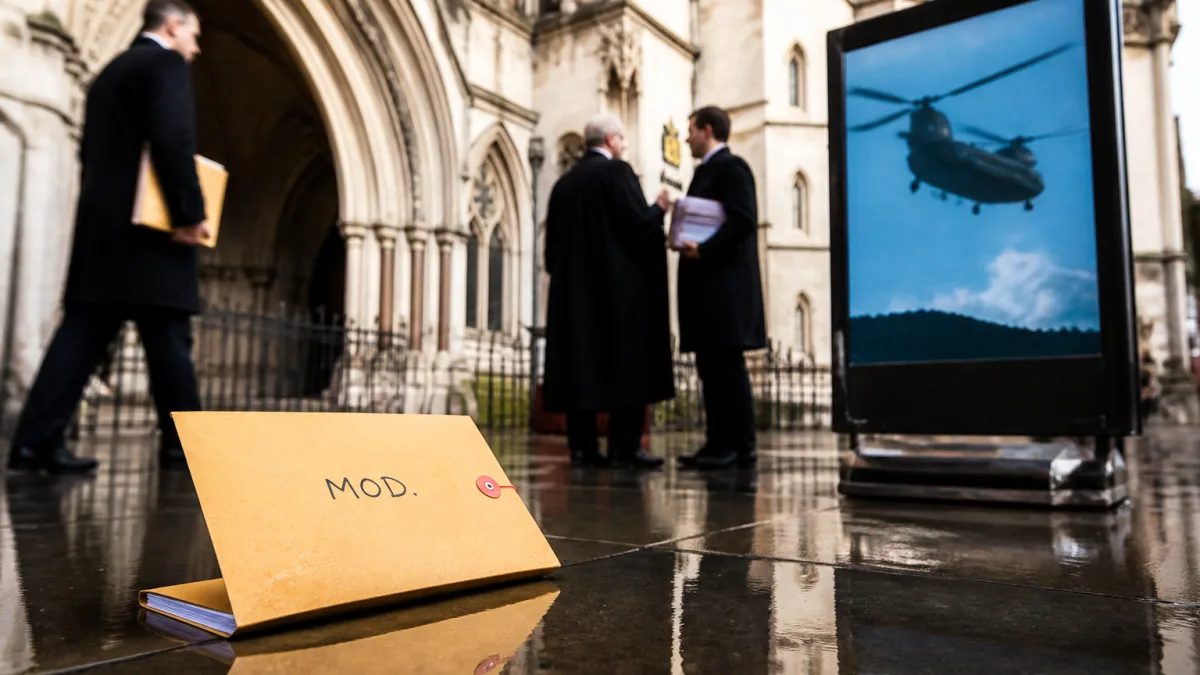
Relatives of those who died attended the hearing at the Royal Courts of Justice, some visibly emotional during the proceedings. Outside court, Andy Tobias, whose father Lieutenant Colonel John Tobias MBE died in the crash, described the day as “hugely momentous”.
Background: blame lifted from pilots, unresolved questions remain
The crash occurred in poor weather on the Mull of Kintyre in south‑west Scotland in 1994. A 2011 inquiry concluded that an earlier decision to attribute fault to the pilots was wrong, a finding that eased but did not remove families’ concerns. Campaigners say that none of the investigations to date has conducted an independent and comprehensive assessment of the aircraft’s airworthiness at the time of the flight.
Those representing the families emphasised that theirs is not an attempt to revisit every aspect of the incident, but specifically to compel an effective, independent process focused on safety and airworthiness questions they believe were left unanswered.
What the court is being asked to decide
The immediate issue for the High Court is whether the claim can proceed. If permission is granted, it would open the door to a full hearing on whether the MOD must institute an independent investigation compliant with human rights obligations. If refused, families may need to pursue appeal routes.
| Date | Event |
|---|---|
| 2 June 1994 | Chinook HC‑2 crash on Mull of Kintyre; 29 fatalities |
| 2011 | Inquiry finds initial decision to blame pilots was incorrect |
| July 2026 | High Court hears application to allow legal challenge against MOD to proceed |
Why it matters
The outcome carries implications well beyond a single case. For families, it is about accountability and confidence that the state will subject itself to independent scrutiny where warranted. For the MOD and armed forces, it raises questions about the adequacy of historic investigations and how institutions address safety concerns that may surface years after an incident.
- Public accountability: The case tests whether there is a legal duty to revisit unresolved safety questions decades on.
- Human rights considerations: The campaign relies on arguments about an effective, independent investigation into loss of life.
- Precedent risk: A decision to proceed could influence how other historic cases are treated.
The court reserved its decision after hearing submissions. Families and the MOD now await a ruling on whether the challenge will move to a substantive stage.