Organisers of Huddersfield Pride have called on the newly formed Reform-led Kirklees Council to continue backing the town’s annual celebration after what campaigners described as a very strong turnout this year.
Successful 2026 event and uncertainty ahead
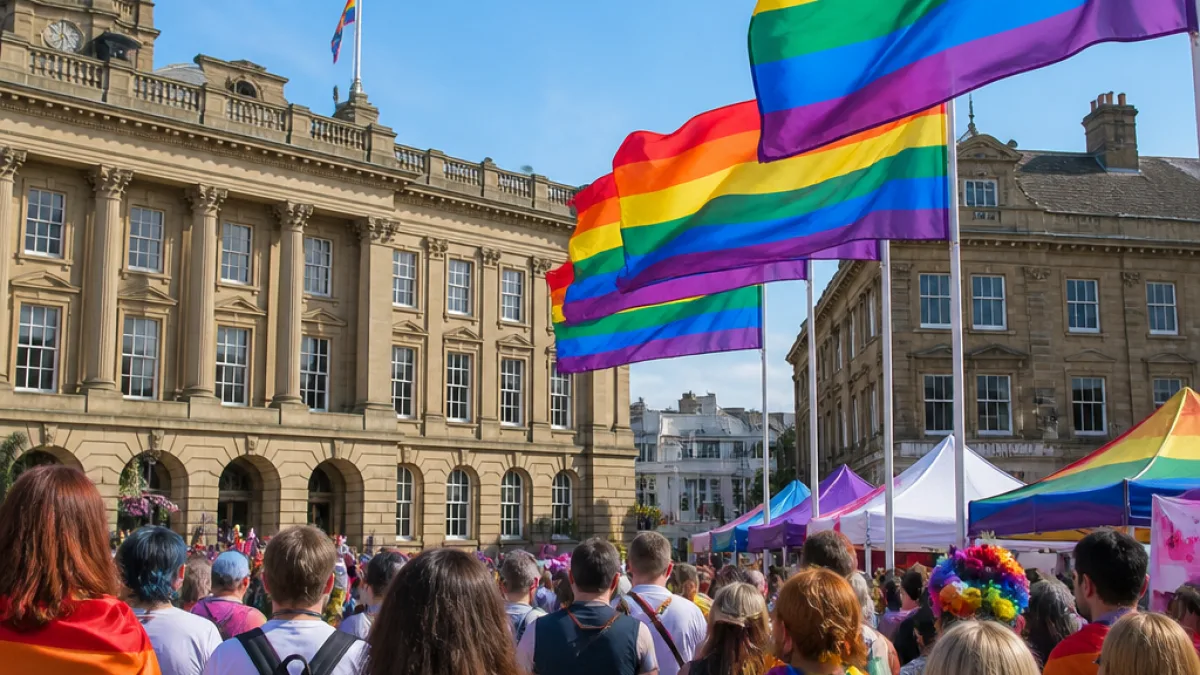
The 2026 Huddersfield Pride took place on 4 July, marking the town’s 45th anniversary since the first Pride outside London. Campaigners said the celebration drew hundreds of people, included a range of musical acts and stalls, and featured a commemorative demonstration.
Despite the positive reception, some organisers are concerned about what the change in local political leadership could mean for future Pride events. They point to recent decisions by other councils led by Reform UK that have reduced the visible support for LGBTQ+ communities.
Examples of neighbouring council actions
Organisers cited two recent moves in the region as reasons for caution:
- Durham — a council reportedly removed an LGBTQ+ Pride flag from its headquarters.
- Calderdale — the local Reform-led authority has put forward a flag-flying policy that would exclude the Pride flag from council buildings.
| Council | Reported action |
|---|---|
| Durham | Removal of Pride flag at council headquarters |
| Calderdale | Proposed flag policy excluding Pride flag |
| Huddersfield (Kirklees) | Successful Pride on 4 July; future support uncertain |
Local voices call for continued collaboration
Mike Forster, a long-standing campaigner, said he hopes for a constructive relationship with the new council leadership and for continued municipal backing of Pride.
“We hope the council will continue with their support for Pride because the celebration of Pride is the celebration of the whole community, and to show we come together in support of equality and justice.”
He added organisers will ask the council to allocate additional resources so that next year’s event can grow.
The leader of Kirklees Council was approached for comment.
What this means for local residents
Huddersfield Pride has historic significance locally, and any reduction in visible council support would be felt by event organisers, charities, stallholders and residents who attend. Campaigners emphasise that municipal cooperation can be practical as well as symbolic — for example, with permissions, safety planning and funding.
Community groups and residents concerned about the future of Pride in Kirklees may wish to follow announcements from the council and to engage with local representatives to express support for inclusive civic events.