
Escalation across the Gulf as Tehran hardens stance
Iran’s supreme leader has issued a stark warning to Washington, promising “unforgettable lessons” if the United States continues military action against the Islamic Republic. In a statement broadcast on Iranian state television, the leader also dismissed US president Donald Trump’s signature as “worthless and invalid”. The remarks came hours after an Iranian negotiator said Tehran was suspending its commitments to an interim deal concluded about a month ago, a move that further undermines already fragile hopes of halting the conflict.
“Unforgettable lessons” would follow if attacks persist, the leader warned, branding President Trump’s signature “worthless and invalid”.
The statement was attributed to Mojtaba Khamenei, who has not been seen publicly since the war began. It followed another night of cross-border fire in which both sides struck infrastructure and military assets. The situation underscores how fast efforts to broker a lasting halt to hostilities have unravelled, with tensions widening beyond the immediate battlefield.
US confirms first direct deaths from Iranian fire in months
In a significant development, the US military reported the first American troop deaths due to direct Iranian fire since the opening days of the war. According to US Central Command, two service members were killed and one remains missing after attacks on a base in Jordan on Friday, as US and partner forces responded to Iranian ballistic missile and drone strikes. Four other personnel who were medically evacuated to Jordanian hospitals were later discharged.
| Incident | Location | Reported outcome |
|---|---|---|
| Attack on US base | Jordan | 2 killed, 1 missing |
| Medical evacuations | Jordanian hospitals | 4 discharged |
US Central Command said early on Saturday that it had conducted a seventh consecutive night of air operations targeting Iranian-linked capabilities, listing hits on surveillance sites, military logistics infrastructure, underground weapons storage and maritime assets.
Interim deal falters as proxy threats grow
The suspension of Tehran’s obligations to the month-old interim agreement removes another key diplomatic bridge. The broadcast message warned of reprisals not only from Iran but also from regional allies referred to as the “Axis of Resistance”. This heightens concerns about a broader regional spillover, as the war shows no immediate sign of resolution and the limited accord that had aimed to permanently end the fighting appears to be unravelling.
As strikes and counter-strikes intensify, the risk to civilian infrastructure has increased. The article referenced concerns about essential services, including desalination plants that provide drinking water, being placed at risk by the widening campaign. Such vulnerabilities add to wider anxieties over humanitarian conditions and the stability of key utilities across the region.
Why the Strait of Hormuz matters
The confrontation has increasingly centred on control of the Strait of Hormuz, a narrow maritime passage critical to the global energy trade. Before the current escalation, the strait carried roughly a fifth of the world’s crude oil. Any sustained disruption in this corridor can feed through to shipping timetables, insurance costs and commodity markets, placing the global economy on alert once again.
- Focus of conflict shifting towards the strategic waterway handling a significant share of oil shipments.
- Threats to maritime and coastal infrastructure raise the spectre of broader service interruptions.
- Market sensitivity remains high as military action continues on a nightly basis.
Context for readers in North Somerset
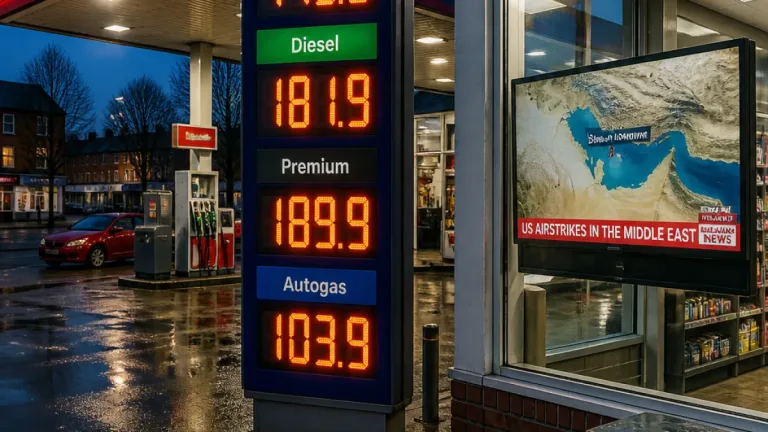
While this is a rapidly developing international story, its consequences are not abstract for households and businesses in the South West. The source material notes renewed global market sensitivity and the jeopardy to vital maritime routes and utilities. In practical terms, such tensions can influence energy prices, freight costs and supply chain timings. Although no immediate local changes are stated, residents should be aware that further volatility in oil markets or shipping could translate into shifts in pump prices or delivery schedules if the stand-off persists.
US Central Command’s updates point to a sustained air campaign aimed at limiting Iranian-linked capabilities along with a steady tempo of operations. On the Iranian side, the hardening tone from the top echelon, coupled with the declared retreat from interim commitments, indicates that diplomatic groundwork has been substantially weakened. For now, the signals from both sides suggest a prolonged period of uncertainty, with significant implications for maritime security and global trade flows.
What happens next
With fatalities confirmed and negotiations fraying, efforts to restore any ceasefire mechanism will face major obstacles. Both the direct threats from Tehran and the ongoing US strikes paint a picture of escalation rather than de-escalation. The situation remains highly fluid; official communiqués from both militaries will be closely watched for any change in posture. Meanwhile, markets and governments are likely to continue assessing contingency measures should shipping through the Strait of Hormuz face renewed disruption.
InfoRadar will continue to monitor verified statements and operational updates. Readers are advised to follow reliable official channels for safety information and any confirmed changes affecting travel or essential services.