
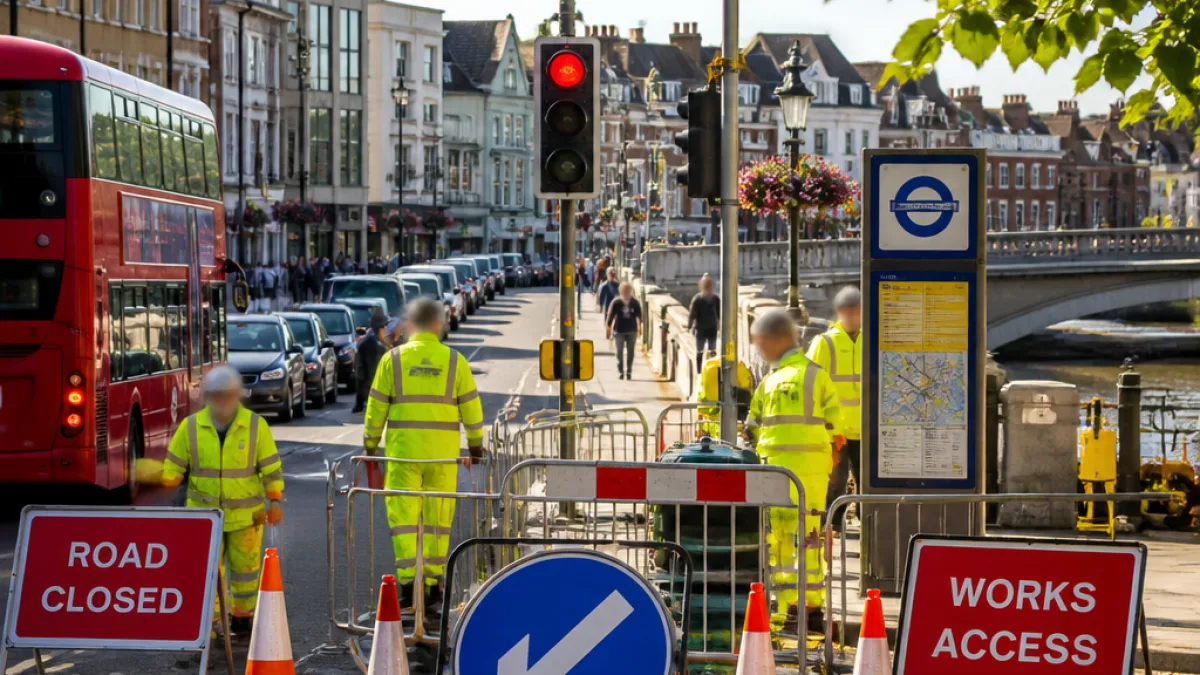
Kingston upon Thames will be included in Transport for London’s expanding lane‑rental scheme from this autumn, TfL has said, meaning companies carrying out street works on the capital’s busiest routes during peak times could be charged.
What the scheme aims to do
The measure is presented by TfL as one component of its London on the Move strategy. Officials say the charges are intended to change incentives around when and how essential maintenance and utility work is scheduled, with the twin aims of reducing congestion and creating funding for innovations on the road network.
Under the approach being rolled out, charges would apply specifically to activity on the most heavily used corridors during peak periods. TfL has argued that by applying a financial penalty to disruptive works at busy times, firms will increasingly coordinate, reschedule or combine jobs to limit disruption.
Which boroughs are affected — and when
TfL initially confirmed a lane‑rental operation for Camden and Merton. It then said a further group of boroughs, including Kingston upon Thames, are expected to join in the autumn. Taken together, the areas earmarked for inclusion would cover roughly one‑third of London’s geography, according to TfL.
| Phase | Boroughs | Timing |
|---|---|---|
| Initial | Camden, Merton | Already announced |
| Autumn expansion | Barnet, Hammersmith & Fulham, Havering, Kingston upon Thames, Redbridge, Southwark, Sutton, Tower Hamlets | Expected this autumn |
- Who will be affected: utility companies and other statutory undertakers carrying out works on key routes during peak hours.
- Goal: improve scheduling, reduce traffic delays and generate resources for road‑network improvements.
- Coverage: roughly one‑third of London once the autumn expansion is in place, according to TfL.
Local impact and practical implications
For Kingston residents and businesses, the immediate effect is likely to be fewer daytime lane closures on principal routes at rush hours, provided companies adapt their timetables. That could ease delays on roads used by bus routes, freight and commuter traffic. On the other hand, firms might shift activity to evenings or weekends, which could change the pattern of disruption.
Councillors and local planners will need to monitor how charges alter contractors’ behaviour and whether the policy delivers its intended congestion benefits without unintended consequences for businesses or essential services. For members of the public, TfL’s intention is that any additional revenue raised will be reinvested to support improvements to the road and transport network.
Further details on the charging levels, exemptions and enforcement arrangements have not been published in full. Local stakeholders will be watching for the forthcoming technical documents that set out the operational rules and how the scheme will interact with borough highway authorities.
As the scheme rolls out, residents wanting updates should check TfL and Royal Borough of Kingston websites for specific maps, times of operation and guidance for businesses planning road works.