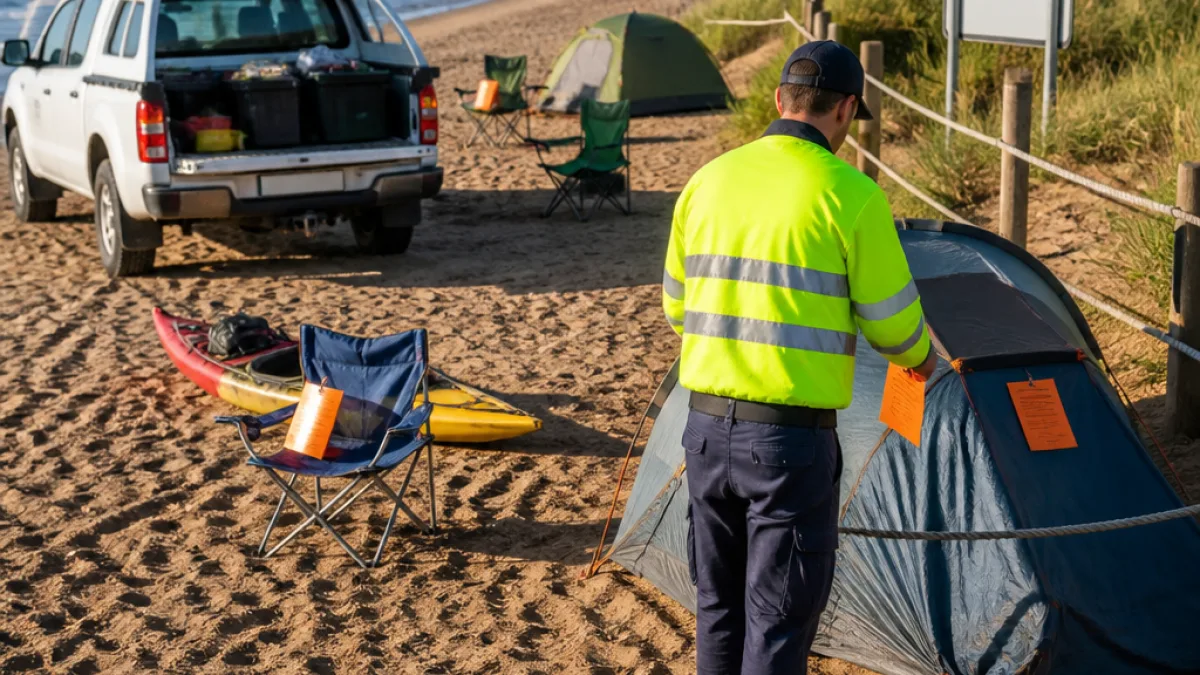
Lewes is once again dealing with a familiar summer problem: people leaving tents, chairs, kayaks and other personal belongings on the beach overnight despite a standing city ordinance. The rule, part of the city’s seasonal beach regulations, forbids overnight storage of personal items on the sand between 1 May and 30 September.
What the code says and how the city acts
The local code sets clear boundaries for behaviour within the designated beach area. In addition to the overnight storage ban, the regulations also prohibit a range of activities including boating, fishing, launching kayaks or paddleboards, and the use of four-post canopies within the guarded sections of the beach.
Enforcement, however, is not straightforward. Maintenance crews carry out daily patrols, but those routine checks rarely result in immediate removal of abandoned items. Instead, the council schedules a large-scale cleanup each October to clear belongings left behind at the close of the season. Where items or structures are placed in the dune grass, the city treats the matter with urgency and generally contacts the Department of Natural Resources and Environmental Control (DNREC) for assistance.
Public reaction and responsibilities
Visitors and weekday beach-users interviewed by local media expressed surprise and frustration when they encounter items left behind. Many told reporters that clearing up after a day at the shore should be a matter of personal responsibility.
"Take your stuff with you,"
said one beachgoer. Another questioned whether some people expect their equipment to remain untouched if they return the following day.
- Seasonal restriction: 1 May–30 September — no personal items left overnight
- Daily action: maintenance crews patrol the beach each day
- Annual action: October large-scale cleanup to remove remaining items
- Dune protection: structures or belongings in dunes prompt DNREC involvement
Local consequences and practicalities
The persistence of abandoned gear raises several local issues. Leftover tents and canopies can obstruct access, create hazards for other beach users and wildlife, and complicate maintenance work. Dune incursions are a particular concern: vegetation and sand structures that are disturbed or damaged can reduce natural protection against erosion and require regulatory intervention.
| Issue | Typical city response |
|---|---|
| Overnight personal items (general beach) | Daily patrols; October bulk removal |
| Structures/ belongings in dunes | Contact DNREC; removal as needed |
City officials remind the public that tents and canopies are permitted on the unguarded beaches, but the prohibition on leaving items overnight applies across guarded and unguarded stretches during the restricted season. For residents and visitors, the simplest way to avoid fines, removal, or the risk of losing equipment is to pack items away at the end of each day.
The matter is one of ongoing local management: balancing open access to Lewes’ shoreline with safety, conservation of dunes and the practicalities of policing a busy summer beach. The council’s current approach combines everyday patrols with a seasonal cleanup, while relying on partner agencies for dune protection.