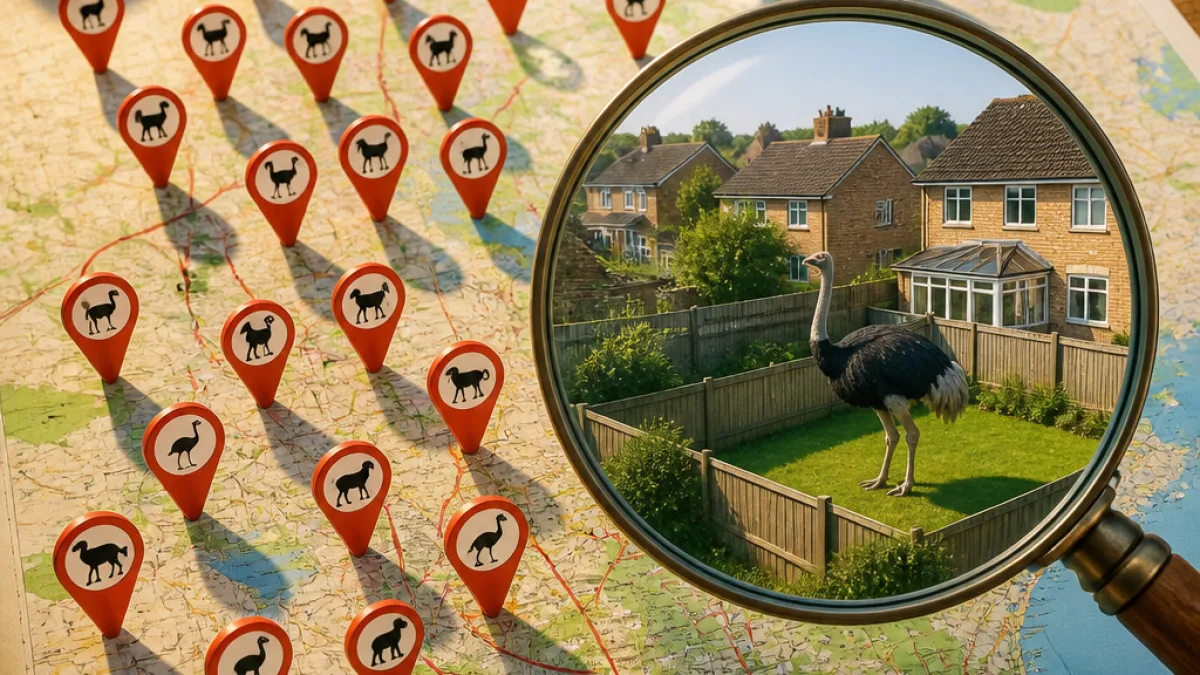
An interactive map compiled by animal welfare charity Born Free reveals that private addresses in Buckinghamshire are the licensed home to scores of animals classified under the Dangerous Wild Animals Act 1976.
Numbers and species recorded locally
The data shows the county has issued licences covering a total of 176 animals listed as dangerous, including antelope, lemurs, ostriches and capuchin monkeys. The figures supplied to the map include:
- 15 Blackbuck antelope
- 3 Sitatunga antelope
- 17 ring‑tailed lemurs
- 2 red‑ruffed lemurs
- 2 black‑and‑white ruffed lemurs
- 132 ostriches
- 5 capuchin monkeys
The national picture compiled by Born Free suggests around 187 private addresses across more than 100 local authorities hold licences for wild animals under the Act, allowing over 2,700 such creatures to be kept privately in Great Britain.
How licensing is supposed to work
Under the Dangerous Wild Animals Act 1976, anyone keeping an animal designated as dangerous must hold a licence from the local authority. Applicants are required to demonstrate that the animal is securely contained to prevent escape and that measures are in place to protect the public.
| Species | Number recorded in Bucks |
|---|---|
| Blackbuck antelope | 15 |
| Sitatunga antelope | 3 |
| Ring‑tailed lemur | 17 |
| Red‑ruffed lemur | 2 |
| Black‑and‑white ruffed lemur | 2 |
| Ostrich | 132 |
| Capuchin monkeys | 5 |
Concerns raised about the legislation
Born Free has pointed out that the Act has not been substantially reviewed in more than four decades, and the charity says this may leave gaps in how modern exotic pets are regulated. The charity’s interactive map is intended to show the geographic spread and scale of privately kept wild animals, and to prompt discussion about whether the law still provides adequate protection for both people and animals.
Separate entries on the map note that in some locations within the wider region — listed by the charity as Milton Keynes — there are records of capuchin monkeys of different types being kept: two Black‑Capped and two Weeper capuchin monkeys.
What this means for residents
For local people, the presence of such animals under licence raises practical questions about safety, escape prevention and emergency planning. Councils are responsible for assessing licence applications and conducting any necessary inspections to ensure animals are kept in secure conditions.
Residents who are concerned about animal welfare or safety should contact the council’s licensing team. The Born Free interactive map is publicly accessible for anyone wishing to examine the distribution of licensed dangerous animals in their area.