The Welsh NHS Confederation has published a snapshot of life inside Betsi Cadwaladr University Health Board, setting out the scale of services it provides and the day‑to‑day demand faced by the largest health board in Wales.
What the new figures show
The confederation, which represents NHS leaders across Wales, has produced “day‑in‑the‑life” fact sheets describing routine activity across the board area, which covers Anglesey, Gwynedd, Conwy, Denbighshire, Flintshire and Wrexham. The health board is responsible for care for around 700,000 people across a geography of about 2,500 square miles.
The materials highlight the board’s role in providing primary, community, mental health and hospital services and name its three main hospitals as Ysbyty Gwynedd in Bangor, Ysbyty Glan Clwyd in Bodelwyddan and the Maelor in Wrexham.
"In conjunction with our member organisations, we’ve developed ‘day‑in‑the‑life’ fact sheets that give a s"
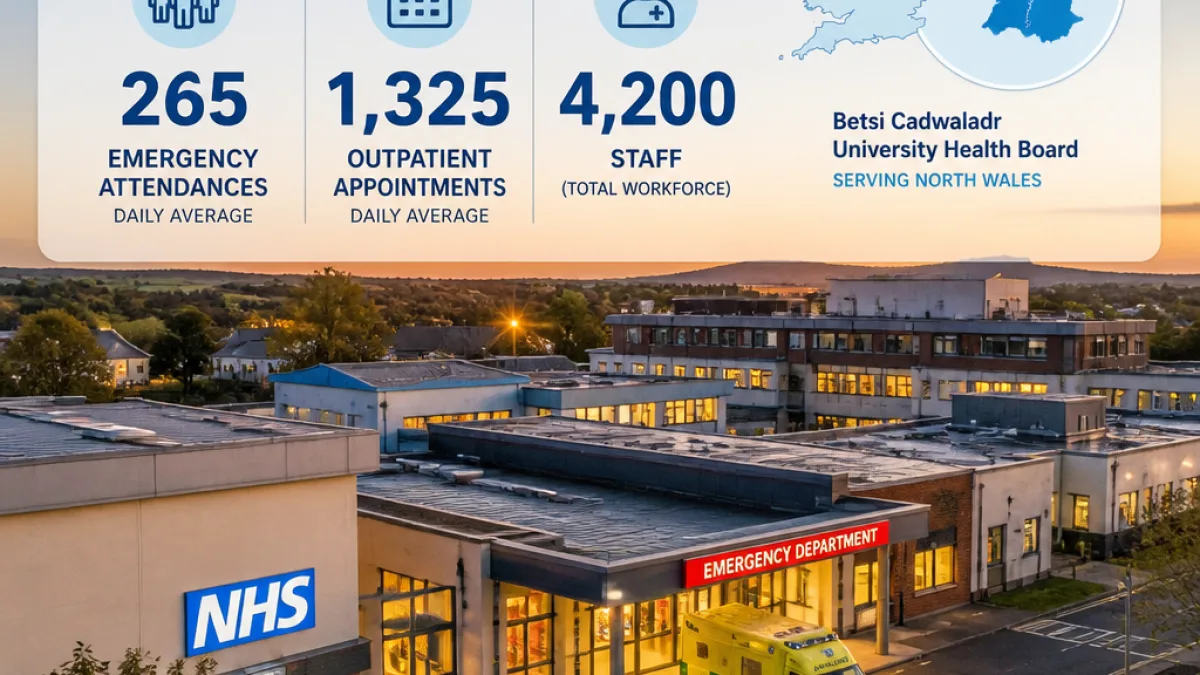
Alongside the narrative, the confederation has published headline figures covering staffing, primary care provision and the average daily levels of activity at emergency departments and outpatient services.
- Staff: 21,100 people employed by the health board, making it the largest employer in the region.
- GP practices: 95 surgeries operating across North Wales.
- Other primary care providers: 71 dental and orthodontic practices, 70 optometry/optician practices and 144 community pharmacies.
- Emergency activity: an average of 677 attendances at emergency departments each day.
- Outpatient appointments: an average of 24,451 appointments daily (as reported).
- Births: an average of 15 babies born per day across the region.
Numbers at a glance
| Metric | Figure |
|---|---|
| Population served | 700,000 |
| Area covered | 2,500 sq mi |
| Staff | 21,100 |
| GP practices | 95 |
| Daily ED attendances | 677 |
| Daily outpatient appointments | 24,451 |
| Daily births | 15 |
What this means locally
For residents of Denbighshire, the fact sheet underlines the scale of services that must be organised across a large and often rural patch of North Wales. The figures help to explain the workload facing local GPs, community services and hospital departments, and why planning and workforce recruitment remain priorities for the board.
While the figures are descriptive rather than explanatory, they offer context for operational pressures such as long waiting times, staff shortages and the seasonal rises in emergency attendances. They also reinforce that the health board is a major local employer and service provider.
Local people looking for more detail or assurance on particular services should consult Betsi Cadwaladr University Health Board’s own publications and the Welsh NHS Confederation resources for the fuller fact sheets and background information.
The confederation says the new materials were developed with member organisations to give a clearer picture of everyday NHS activity across the region. In publishing them, it aims to help the public, stakeholders and policy makers better understand the scale and nature of services delivered on a typical day.
The fact sheets form part of wider national and regional conversations about NHS capacity, workforce planning and how health services are designed to meet the needs of dispersed and ageing populations.