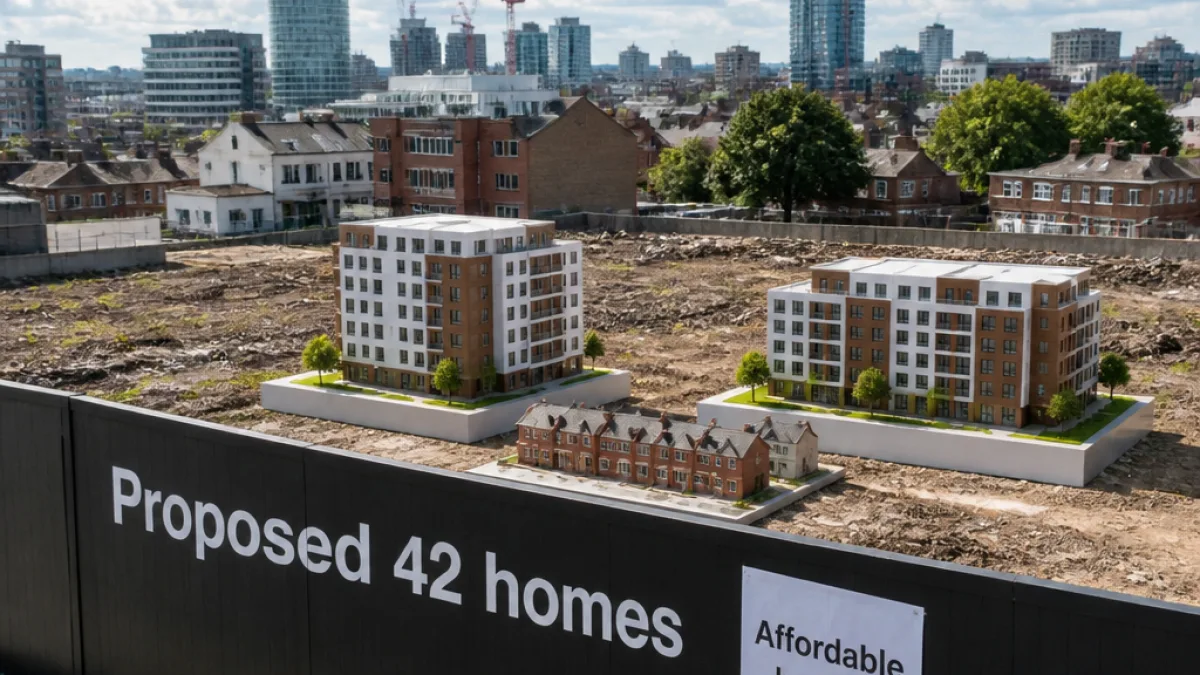
Plans to build 42 homes on Upper Crown Street, within walking distance of The Oracle and Reading town centre, have reopened debate about the availability of affordable housing in the borough after the developer sought permission to reduce the number of affordable units on the site.
What the scheme proposes
The project, originally approved in October 2023, comprises two apartment blocks totalling 42 flats and a terrace of four three‑bedroom houses, replacing a car park and storage site. Irongate Property has applied to amend the scheme, proposing internal changes such as adding en-suite bathrooms and electric vehicle charging points, and — crucially — a reduction in the affordable housing offer.
How the affordable housing offer has changed
Under the 2023 approval the developer proposed 14 affordable homes, which met Reading Borough Council's policy target of 30% for the scheme. The revised submission reduces that number to five affordable units, a net loss of nine homes that had been promised to the borough at social or shared‑ownership levels.
| Previously proposed | Revised proposal |
|---|---|
| 14 affordable units (mix of Reading Affordable Rent and shared ownership) | 5 affordable units (mix of Reading Affordable Rent and shared ownership) |
Council reaction and the planning meeting
At the planning applications committee meeting on 22 July councillors clashed over the change. Some members warned that removing much of the affordable element stripped away a significant public benefit that had helped justify the original approval. Others acknowledged the developer’s financial viability assessment, which argues the changes are necessary on viability grounds.
“One of the significant weights in its favour was the 30 per cent affordable housing. If you take away that significant weight, you remove a big plank that was holding up a scheme our officers hadn't liked,”
The exchange underlined a broader tension in Reading’s development decisions: balancing delivery of new homes and urban regeneration against securing sufficient affordable housing. Councillors also discussed the risk the council could face an appeal if it resisted the changes.
Local implications
For Reading residents the dispute matters for several reasons:
- Housing supply — the net loss of nine affordable units reduces the stock available to households on lower incomes in close proximity to central amenities.
- Policy precedent — approval of a reduced offer on viability grounds could encourage similar applications on other schemes, making it harder for the council to meet its affordable housing targets.
- Community impact — smaller affordable provision in central locations affects access to jobs, services and transport for lower‑income residents.
Reading Borough Council must now weigh the developer’s viability case against policy aims and local need. Any decision will have consequences for how the borough negotiates affordable housing on future town‑centre developments and how it enforces its planning policies.