Across Reading and the wider region, a familiar complaint is circulating: people are reading less in the sustained, book-based way they once did. The cause most often blamed is the smartphone — not the occasional message or email, but the constant lure of short-form content that fragments attention.
Why reading can feel like an effort now
The writer who raised this issue describes themselves as both a novelist and a presenter of thinking-focused programmes for the BBC. They say that, despite ongoing access to books, the regularity and depth of their reading have slipped. The suggestion is that this shift is not always a deliberate choice but a gradual consequence of daily habits changing.
Two comparisons in the argument are worth noting. First, the author observes that while people still read a lot for quick tasks — messages, social feeds, web browsing — the capacity to sit down and be absorbed in a long book has diminished. Second, they draw a provocative analogy between smartphones and the arrival of cheap mass-market cigarettes, arguing that a product designed to be endlessly hand-held can reshape behaviour on a large scale.
“I don’t think it’s a coincidence that smartphones are about the same size and shape as a packet of cigarettes.”
What a 'couch-to-5k for books' might look like
The idea of a progressive, habit-forming programme for reading borrows from fitness methods that build endurance bit by bit. The author and many readers who recognise the problem propose structured steps to restore reading as a routine. Practical suggestions include deliberately scheduling short reading sessions, setting modest daily page or time targets and gradually extending sessions to rebuild focus.
- Start with 10-minute uninterrupted reading slots at a consistent time.
- Choose material that feels enjoyable rather than overly demanding.
- Gradually increase session length and reduce phone interruptions.
For busy households in Reading, this approach acknowledges that reclaiming reading is not about shame or failed discipline but about reshaping small habits in an environment engineered for constant distraction.
| Then | Now |
|---|---|
| Regular long-form reading sessions | Frequent short attention bursts |
| Newspapers read cover to cover | Headlines and snippets online |
| Books as daily ritual | Books acquired but read less |
That table summarises the qualitative shift the author describes, without claiming numerical measures. What changes for local readers depends on what they want. If the goal is greater pleasure, small, consistent steps are likely to be more effective than a dramatic one-off pledge.
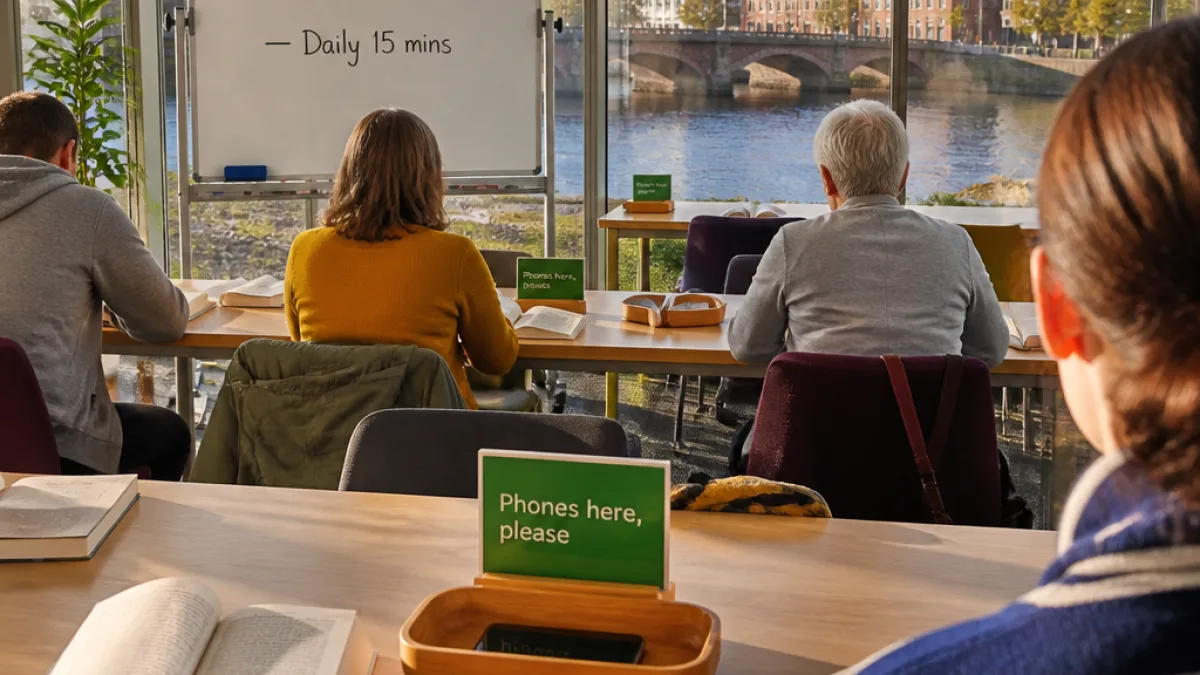
For community groups, libraries and bookshops in Reading, the concept offers an opportunity. Short guided reading sessions, informal "reading challenges" and phone-free reading corners could help people rebuild attention spans. The author notes that the pattern of loss resembles other mass-behaviour changes: it crept up, is widely shared, and may need collective interventions to reverse.
Whether you call it a couch-to-5k for books or simply a friendly nudge toward more reading, the key point is practical: adjust your environment, start small and make the act of reading as easy to begin as taking up your phone has become.