The planned shake-up of local government in Devon provoked sharp exchanges this week as councillors from across the county debated the future of services, jobs and council boundaries. The Labour leader of Plymouth City Council was publicly criticised during a South Hams meeting, reflecting deep unease about the government’s chosen reorganisation model and the process by which it was adopted.
Accusations and assurances
Cllr Julian Brazil (Lib Dem, Stokenham) told full council that the current Plymouth leader was “yesterday’s man”, adding that "Come May next year he’ll be out of a job" as members are elected to the new shadow authorities the year before the change becomes operational.
“He’s yesterday’s man. Come May next year he’ll be out of a job. We all know there’s no way Labour are going to hold on to Plymouth.”
The comments came despite recent reassurances from Tudor Evans, the Labour leader of Plymouth City Council, that staff jobs would be safe during the local government reorganisation (LGR). The planned changes will see the current county structure replaced by new unitary authorities, with shadow authorities operating alongside existing councils in the lead-up to the handover.
What the new map looks like
Under the proposals agreed by government:
- 13 parishes in the west of the current South Hams would be absorbed into an expanded Greater Plymouth unitary authority from April 2028.
- 7 parishes in the east would join an expanded Torbay.
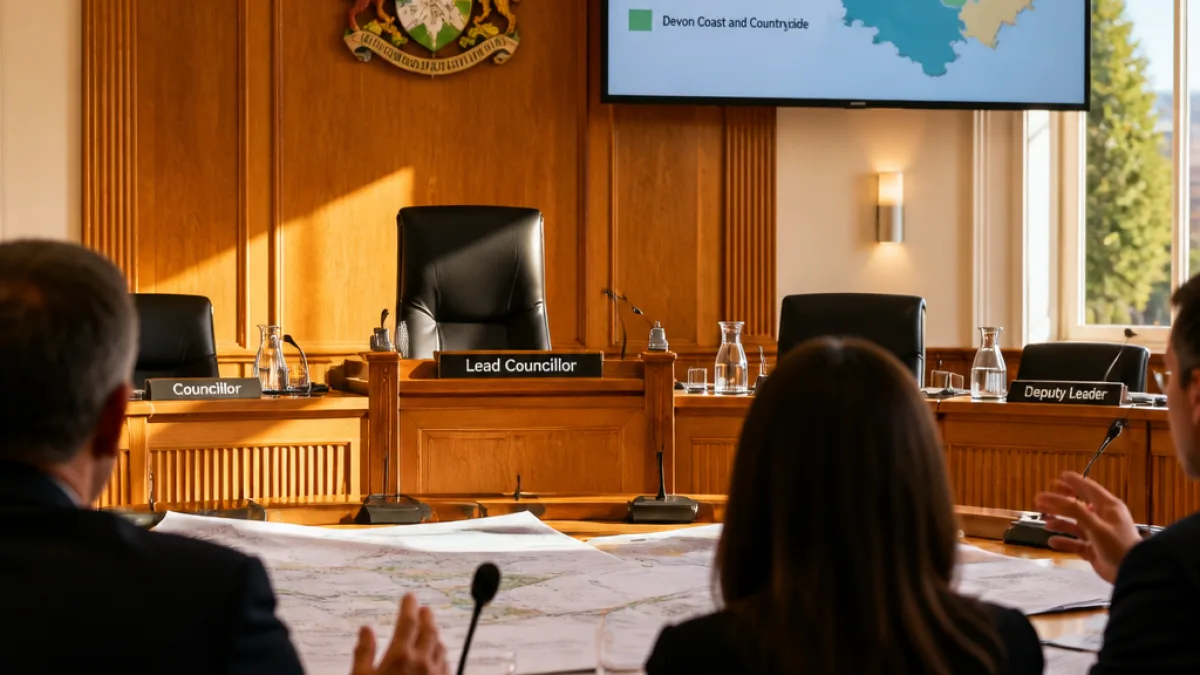
- The remainder of the South Hams area would become part of a new Devon Coast and Countryside authority.
| Key date | What happens |
|---|---|
| May next year | Election to shadow authorities |
| Spring 2028 | Existing councils abolished; shadow authorities take over |
| April 2028 | New unitary authorities operational |
Concerns over consultation and legitimacy
South Hams Council leader Dan Thomas (Lib Dem, Newton and Yealmpton) criticised the process, saying the public had effectively rejected the chosen model during the government consultation. He argued the authority had spent a year pursuing options that the government was not interested in and highlighted low public support for the final approach.
“We have wasted an entire year of this council’s work doing something the government patently wasn’t interested in,”
According to Cllr Thomas, the government’s selected plan received only 20 per cent positive support and ranked fourth out of five options in the consultation, which he said meant the model “was rejected on every major test.”
Conservative Cllr Nicky Hopwood (Woolwell) asked whether all council leaders would be offering the same reassurances to staff as Cllr Evans had done in Plymouth, signalling wider anxiety about job security across councils affected by the reorganisation.
What residents and staff should know
At present, councils will continue to run as normal while shadow authorities are established and prepare to take on responsibilities. Staff reassurances made by Plymouth’s leader suggest the council is aiming to protect employees through the transition, but the political debate underlines uncertainty about leadership and control once the shadow bodies are elected.
Residents in the parishes slated to move into Greater Plymouth or expanded Torbay can expect more local communications as the shadow authorities form and priorities are set. For council employees, the period up to spring 2028 will be one of planning and transitional arrangements as the new structures are put in place.
As the timetable unfolds, councillors and residents will be watching closely to see how services are reconfigured, which roles are preserved and how the promises made now translate into statutory arrangements in the shadow year and beyond.